


How to Avoid Costly Mistakes When Selling a Vintage Car: A Collector’s Checklist
A single missing service record or an unresolved mechanical weep can diminish a vintage vehicle's sale price by thousands of dollars. The market for high-end classics rewards transparency and punishes ambiguity. To avoid mistakes selling a vintage car, you must move beyond emotional attachment and adopt the disciplined mindset of a professional curator. This transition ensures your asset is positioned correctly within the competitive landscape.
You likely recognize that private sales often invite unqualified "tyre kickers" and low-ball offers that disregard the car's true provenance. It's frustrating to manage these interactions while worrying about post-sale liability or potential undervaluation. This guide provides a technical framework to master the nuances of vehicle disposition. You'll learn how to secure the maximum market value through strategic preparation and discreet transaction methods.
We'll examine the essential steps for organizing historical documentation, performing pre-sale mechanical audits, and vetting prospective buyers. By following this collector's checklist, you ensure a seamless transition of ownership to a respectful new steward while protecting your financial interests.
Table of Contents
Avoiding Documentation Deficits: Provenance and Paperwork
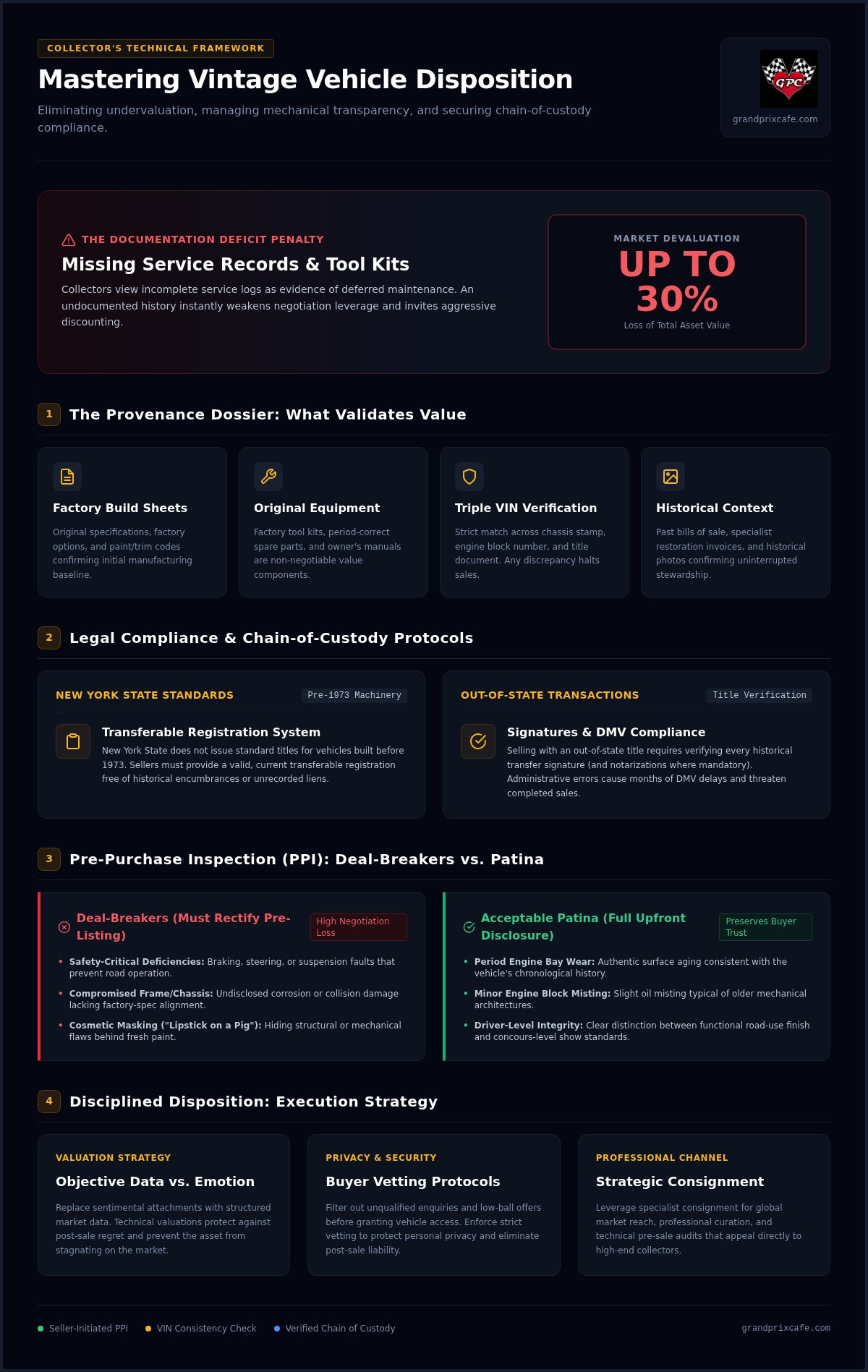
Documentation is the spine of a vintage car's value. To avoid mistakes selling a vintage car, you must recognize that paperwork is as vital as the engine block. A vehicle without a verifiable history is a liability in the eyes of a serious collector. Professional buyers prioritize transparency. They look for a cohesive narrative that spans the car's entire existence. This narrative is built through original manuals, factory tool kits, and even period-correct spare parts. These items are not mere accessories; they are essential components that validate the car's place within classic and vintage car classifications.
A disorganized history creates friction. It invites doubt and aggressive negotiation. You should compile a comprehensive provenance folder that includes every relevant data point. This includes factory build sheets, previous bills of sale, and any historical photographs. Verification is also a legal necessity. You must ensure the Vehicle Identification Number (VIN) is consistent across the chassis, engine, and title. Any discrepancy here can halt a transaction instantly and trigger unwanted scrutiny from authorities.
The Importance of a Detailed Service History
A missing or incomplete service log can devalue a high-end vehicle by up to 30 percent. Collectors view a lack of records as a sign of deferred maintenance. You must track every recurring service task and fluid change to prove mechanical stewardship. Restoration receipts act as a roadmap of the car’s integrity. They show exactly what was replaced and who performed the work. Utilizing a specialist for vintage car restoration New York adds significant credibility to your file. It demonstrates that the vehicle was maintained by experts who understand the nuances of the marque.
New York Title and Registration Compliance
New York State follows specific protocols for older machinery. For vehicles manufactured before 1973, the state does not issue a standard title. Instead, owners utilize a transferable registration. This distinction is often misunderstood by out-of-state buyers or inexperienced sellers. You must ensure this registration is current and free of any historical encumbrances or liens. If you're selling a vehicle in the Hamptons with an out-of-state title, you need to verify that all previous transfer signatures are correct and notarized if required. Errors in the chain of ownership can lead to months of administrative delays at the DMV. Accurate paperwork ensures the sale remains final and legally sound.
Mechanical Transparency: Why Hiding Flaws Costs More
Mechanical integrity is the primary driver of value in the high-end vintage market. While aesthetic appeal generates initial interest, technical soundness closes the transaction. Attempting to obscure mechanical deficiencies with cosmetic enhancements, a practice often termed "lipstick on a pig," is a tactical error that frequently leads to failed deals. To avoid mistakes selling a vintage car, you must adopt a policy of total transparency. Sophisticated collectors and their agents utilize rigorous Pre-Purchase Inspections (PPI) to identify every leak, worn bushing, and non-original component. If these flaws emerge during a buyer's inspection rather than your disclosure, you lose all leverage in price negotiations.
Initiating your own independent PPI before listing the vehicle is a strategic necessity. This proactive step allows you to categorize issues into "deal-breakers" and "acceptable patina." A deal-breaker involves safety-critical systems or significant mechanical failures that prevent the car from being driven. Minor patina, such as period-correct engine bay wear or slight oil misting on an older block, may be acceptable to certain buyers. By documenting these details upfront, you establish a baseline of trust that streamlines the final sale.
The Risks of Cosmetic-Only Restorations
Buyers distinguish clearly between "driver-level" and "concours-level" finishes. A car that looks perfect but performs poorly is a significant liability. Structural integrity is far more important than the depth of the clear coat. If a vehicle has a history of collision or corrosion, it must be addressed through specialized accident repair for vintage vehicles. Ensuring the chassis and frame are true to factory specifications is essential for high-speed stability and long-term value. A beautiful exterior cannot compensate for a compromised foundation.
Addressing Mechanical Issues Before Listing
Focus your resources on safety-critical repairs before the car enters the market. Brakes, suspension components, and fuel lines should be in excellent working order. An informed buyer expects the drivetrain to perform reliably under load. You should consult a classic car mechanic in Southampton NY for a comprehensive pre-sale audit. This audit provides a technical punch-list that you can either rectify or disclose to the buyer as a point of negotiation. Professional mechanical curatorship ensures the car is "sale-ready" and capable of passing any external scrutiny. For those seeking a managed approach to preparation and sale, exploring professional vehicle consignment services can provide the technical oversight needed to maximize your return.
Market Positioning: Avoiding Sentiment-Based Pricing
Valuation is a technical exercise, not an emotional one. To avoid mistakes selling a vintage car, you must distinguish between the "asking price" found in classified advertisements and the "realized sale price" recorded at the point of transaction. Many owners inflate their expectations based on sentimental value or the total cost of ownership over several years. The market remains indifferent to personal history. It responds only to current demand, mechanical condition, and verified provenance. Setting an unrealistic price based on emotion often leads to a stagnant listing, which eventually devalues the asset in the eyes of savvy collectors.
Benchmarks like Hagerty Price Guides and recent online auction results provide useful data points. They are not absolute rules. Auction results often reflect a specific moment of competitive bidding that may not be replicable in a private sale. These figures also frequently exclude the buyer’s premium and transportation costs. A professional valuation considers these variables alongside the vehicle's specific configuration. A European classic in a rare factory color with "matching numbers" will always command a premium over a modernized counterpart. This holds true regardless of national averages. Originality remains the gold standard for investment-grade assets.
Sentiment vs. Market Reality in the Hamptons
The Hamptons market operates with its own set of priorities. Collectors here often seek vehicles that offer immediate usability and long-term appreciation. Pricing such an asset requires removing emotional attachment and focusing on scarcity. A vehicle's value is often tied to its specific technical specifications, such as a particular engine displacement or a rare interior trim. Understanding these nuances is critical. It allows you to set a price that attracts serious inquiries while maximizing your return. High-end demand in this region favors cars with documented local history and impeccable maintenance records.
Selecting the Right Sales Channel
Choosing where to list your vehicle is as important as the price itself. Online auctions offer high visibility but carry the risk of "no-reserve" listings where the final price is left to chance. Private treaty sales provide more control over the narrative and the final figure. Engaging with classic car sales Southampton NY offers a curated environment where your vehicle is presented to a vetted audience. This method ensures discretion. It protects the asset's market standing by avoiding the public record of a failed or low-bid auction. A controlled sale prevents the market fatigue that occurs when a car remains visible on public platforms for too long.
Security and Vetting: Protecting the Asset and the Seller
Selling a high-value automotive asset requires more than just marketing; it requires a defined security strategy. To avoid mistakes selling a vintage car, you must control the environment where the vehicle is presented. In the Hamptons, where privacy is a premium commodity, hosting viewings at a private residence introduces unnecessary risks. It exposes your property and your collection to individuals whose intentions and financial standing remain unverified. A professional approach prioritizes discretion and physical security above all else. This ensures the transaction remains a business matter rather than a personal intrusion.
High-resolution professional photography and videography serve as your primary vetting tool. Detailed imagery provides a level of technical transparency that satisfies initial curiosity. This reduces the number of "lookers" who simply want to see the car in person without a genuine intent to purchase. Furthermore, you must ensure your insurance coverage remains active until the moment the title is legally transferred and the funds are fully cleared. You shouldn't cancel a policy prematurely based on a promise of payment or a signed contract.
Protecting Your Privacy and Physical Asset
Utilizing a neutral, professional facility for showings is the most effective way to safeguard your privacy. It removes the seller's personal life from the transaction entirely. This is why professional indoor car storage in Southampton NY is the ideal staging ground for high-end sales. These facilities offer a secure, climate-controlled environment where the car can be inspected under professional lighting without compromising your home security. You should also be wary of common payment scams. Wire transfers must only be confirmed through direct contact with your financial institution, and escrow services should be vetted for legitimacy before any title transfer occurs.
Qualifying Buyers to Prevent Wasted Time
Managing the "tyre kicker" problem is a significant drain on a collector's time. You must determine a buyer's level of seriousness before granting a physical viewing or a test drive. It's standard practice to ask technical questions about their collection or their specific interest in the marque. A serious buyer will have no issue providing proof of funds or a bank letter of intent when requested. In private transactions, a non-refundable deposit is an essential tool to hold a vehicle while a PPI is conducted. This ensures the buyer is financially committed to the process. Professional intermediaries often handle this "vibe check" on behalf of the seller. They act as a buffer, filtering out curiosity seekers and ensuring that only qualified individuals reach the negotiation stage. For those who value their time and privacy, engaging with an expert for vehicle consignment services ensures every aspect of security and vetting is handled with professional precision.
The Consignment Advantage: Professional Disposition in New York
Choosing the correct disposition strategy is the final step in protecting your investment. While private listings or "fast cash" buyers may seem convenient, they often fail to capture the full market potential of a high-end European classic. To avoid mistakes selling a vintage car, discerning collectors in the Hamptons increasingly turn to boutique consignment. This model provides professional representation that mirrors the quality of the vehicle itself. A specialized dealer manages the technical preparation, global marketing, and high-stakes negotiation, ensuring the seller remains insulated from the friction of the marketplace.
Professional representation removes the emotional burden that often clouds a transaction. A dealer acts as a rational intermediary, focusing on technical specifications and market data rather than personal history. This objectivity is essential when defending a premium price point. By leveraging an established reputation, a consignment partner provides a level of trust that a private seller don't possess. This trust is the foundation of every successful high-value transaction in the New York market.
Grand Prix Cafe’s Curated Sales Process
The process begins with a rigorous technical appraisal to establish a realistic, data-driven valuation. Unlike generic sales platforms, luxury car consignment New York utilizes a global network of qualified collectors and enthusiasts. This targeted approach ensures the vehicle is presented to individuals who understand its specific provenance and rarity. From the initial inspection to the final detailing, every step is designed to maximize net proceeds while maintaining the asset's integrity. A managed sale through a boutique showroom provides a controlled environment that justifies a higher realized price.
Maximizing Value Through Expert Presentation
Presentation is a technical requirement, not a cosmetic choice. Period-correct detailing and mechanical readiness are vital to passing a buyer's inspection. A vehicle must be sale-ready from the moment it enters the showroom. Utilizing a professional environment allows buyers to inspect the car under ideal conditions, which builds confidence and accelerates the closing process. The dealer handles all administrative logistics, including title transfers and transportation, providing a stress-free exit for the owner. This comprehensive approach ensures that the car transitions to a new steward who respects its historical significance, completing the cycle of professional curatorship.
Securing the Legacy of Your Automotive Asset
Successful vehicle disposition requires a deliberate transition from owner to curator. You've seen that documentation integrity and mechanical transparency are the primary foundations of market value. To avoid mistakes selling a vintage car, you must replace emotional sentiment with technical data and strategic positioning. Protecting your privacy through professional vetting ensures the transaction remains discreet and secure from start to finish.
Grand Prix Cafe provides the expert oversight necessary for these high-stakes transactions. Our team brings decades of specialized experience in European classic car curatorship to every appraisal. We utilize a state-of-the-art Southampton facility for both mechanical maintenance and curated sales presentations. This discreet, professional service is tailored specifically to the nuances of the Hamptons market and the expectations of discerning collectors.
Consult with Grand Prix Cafe for a Professional Appraisal and Consignment Strategy to begin the process of professional disposition. Your commitment to technical excellence ensures the vehicle's heritage remains intact for its next steward.
Frequently Asked Questions
What is the most common mistake when selling a vintage car?
The most common mistake is allowing emotional attachment to dictate the asking price. Sellers often overlook the necessity of a complete provenance file, including original manuals and tool kits. To avoid mistakes selling a vintage car, you must prioritize technical accuracy and market data over personal history. Disorganized records in Southampton or East Hampton markets signal deferred maintenance, which immediately reduces buyer confidence and final sale price.
Should I restore my car before selling it or sell it as-is?
You should prioritize safety-critical mechanical repairs over full cosmetic restoration. Completing a full restoration before a sale rarely yields a 100 percent return on investment. Instead, ensure the vehicle is mechanically sound and capable of passing a rigorous pre-purchase inspection. In Sag Harbor and Westhampton, informed buyers often prefer a car with authentic patina and a clear mechanical punch-list rather than a restoration that potentially obscures structural flaws.
How do I handle a test drive for a high-value classic car?
Handling a test drive for a high-value asset requires strict vetting of the prospect's financial capability. You should never host a test drive at your private residence in Manhattan or Long Island. Instead, utilize a professional facility where the buyer can be properly qualified. It's standard practice to require proof of funds or a significant deposit before allowing a drive. This protocol protects the asset's mechanical integrity and ensures your personal security.
Is consignment better than selling a classic car at auction?
Consignment is generally superior for high-value collectors seeking a discreet transaction with a fixed price floor. Auctions introduce the risk of no-reserve volatility and a public record of a failed sale. Professional consignment in Southampton allows for a curated presentation and private treaty negotiations. This method protects the car's market standing. It avoids the high fees and logistical pressures associated with transporting a vehicle to a national auction house.
What paperwork do I need to sell a vintage car in New York?
New York requires specific documentation depending on the vehicle's age. For cars manufactured before 1973, you will use a transferable registration instead of a standard title. You must also provide a notarized bill of sale and ensure the VIN is consistent across the chassis and registration documents. Collectors in East Hampton should verify that all historical liens are cleared. This prevents administrative delays at the DMV during the ownership transition.
How do I determine the fair market value of my collectible car?
Determining value requires an analysis of recent realized sale prices rather than asking prices. You should consult tools like the Hagerty Price Guide and review results from reputable online platforms. To avoid mistakes selling a vintage car, consider the vehicle's specific options, color-matching, and mechanical condition. A professional appraisal at a specialized Southampton facility provides the most accurate valuation. This considers local market demand and the car's unique technical configuration.
What are the risks of selling a vintage car privately?
Selling privately carries significant security and financial risks. You must manage unqualified inquiries and potential scams involving fraudulent wire transfers. Hosting strangers at a private Long Island property compromises your privacy and physical safety. Additionally, private sellers often face post-sale liability claims if mechanical issues arise. Professional representation mitigates these risks by providing a neutral staging ground and managing all buyer vetting and legal paperwork.
Comments