


Winter Car Storage in the Hamptons: A Guide to Mechanical Preservation
- sales299631
- 10 hours ago
- 12 min read
For a high-value vehicle, an unheated garage is not a sanctuary; it's a catalyst for mechanical degradation. The proximity to the Atlantic introduces salt-heavy air and shifting humidity levels that aggressively target delicate gaskets and specialized alloys. Securing professional winter car storage Hamptons is a necessity for owners who view their collection as a legacy rather than a seasonal utility. It's the difference between a car that survives the winter and one that's preserved through it.
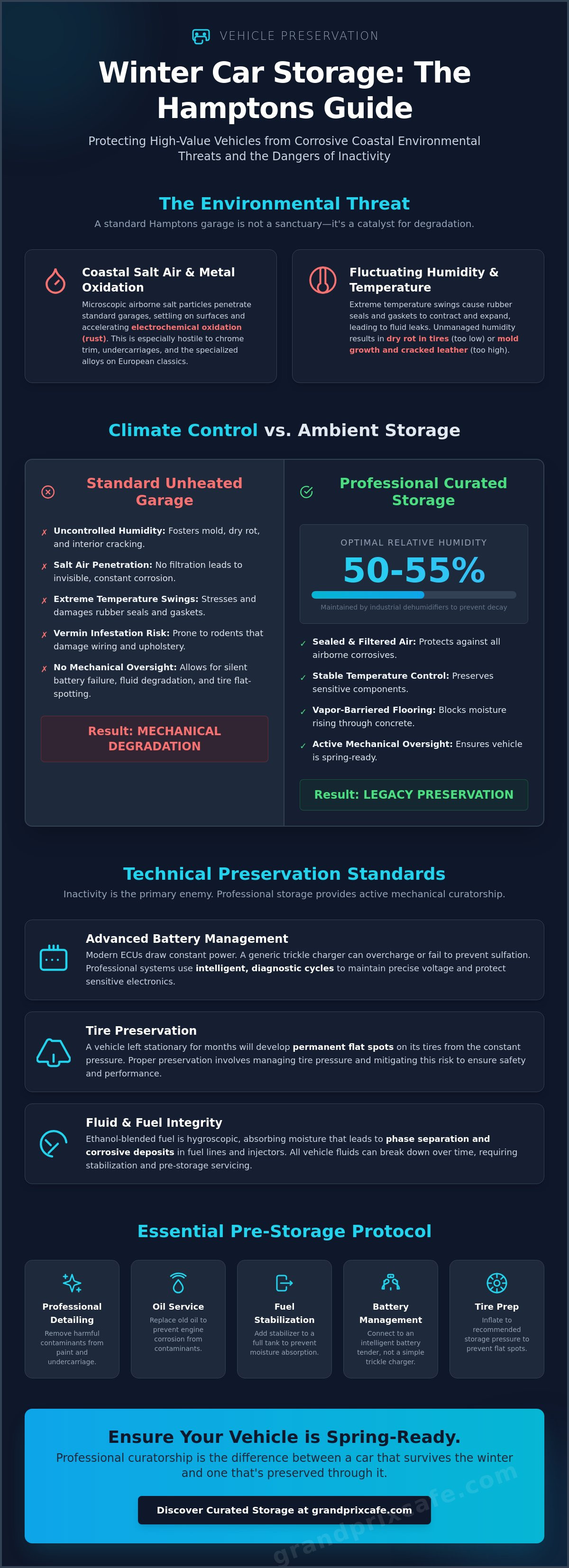
You recognize that inactivity is often more damaging than mileage. Without proper intervention, batteries fail, tires develop permanent flat spots, and fluids begin to break down. This guide details the technical requirements for preserving high-end and classic vehicles during the harsh Long Island winter months. We'll examine the specific climate standards, such as maintaining a relative humidity of 50 to 55 percent, and the mechanical oversight necessary to ensure your vehicle is spring-ready the moment the salt clears the roads. Through methodical preparation and professional curatorship, you can prevent the silent decay that follows a season of neglect.
Key Takeaways
Identify the corrosive risks that coastal salt air and fluctuating humidity pose to high-end vehicle undercarriages and interiors.
Learn the technical requirements for battery maintenance and tire preservation to prevent electronic failure and flat-spotting.
Discover why climate-controlled winter car storage Hamptons is the standard for maintaining a consistent 50 to 55 percent relative humidity.
Establish a pre-storage protocol that includes professional detailing and oil services; it's essential for removing harmful contaminants.
Understand the advantage of professional mechanical oversight; it's the only way to guarantee your vehicle is spring-ready without delay.
Table of Contents
The Environmental Risks of Winter Car Storage in the Hamptons
The geography of the East End presents a specific set of challenges for automotive preservation. Proximity to the Atlantic Ocean means the air is perpetually laden with sodium chloride, a primary catalyst for electrochemical oxidation. This environment is particularly hostile to high-performance vehicles and vintage collections. Traditional storage solutions often fail to account for the micro-climates of Long Island, leading to accelerated mechanical decay. Effective winter car storage Hamptons requires more than a roof and a locked door. It demands an understanding of how coastal variables interact with mechanical components.
Beyond the obvious threat of salt, owners must contend with extreme temperature fluctuations. During a standard winter cycle, these swings cause rubber seals and gaskets to contract and expand rapidly. This thermal stress often results in fluid leaks that remain undetected until the spring thaw. Additionally, the rural nature of many Hamptons estates increases the risk of vermin infestation. Mice and rats frequently seek shelter in engine bays and interiors. Once inside, they cause irreparable damage to wiring harnesses and upholstery. Meticulous facility management is the only defense against these biological threats.
Coastal Salt Air and Metal Oxidation
The belief that an indoor environment provides total protection against salt air is a misconception. Airborne salt particles are microscopic; they penetrate standard garage doors and settle on every surface. For owners of European classics, this is a critical concern. The finishes on vintage Porsches and Jaguars weren't designed for constant exposure to high-salinity coastal air. Without specialized air filtration and a sealed environment, oxidation begins on chrome trim and exposed undercarriage components within weeks. Adhering to professional vehicle preservation standards is the only way to mitigate this invisible threat.
Humidity Regulation vs. Simple Heating
Temperature control is only half of the preservation equation. In the Hamptons, humidity levels fluctuate significantly during the off-season. The ideal range for preserving leather, wood veneers, and rubber is strictly between 40% and 50% relative humidity. Many owners make the mistake of using simple space heaters. While heat prevents freezing, it also lowers the relative humidity too far. This leads to dry rot in tires and cracking in leather dashboards. Conversely, unmanaged high humidity fosters mold growth within the cabin. Professional-grade facilities utilize industrial dehumidification and vapor barriers in the flooring to block moisture from rising through the concrete slab. This ensures the structural integrity of the vehicle remains uncompromised.
Technical Standards for High-End Vehicle Preservation
Storing a vehicle for the winter months is an act of mechanical curatorship, not merely a real estate transaction. High-performance engines and complex electronic systems require active management to prevent decay. For those seeking winter car storage Hamptons, the priority must be the long-term health of the vehicle's internal components. Inactivity is the primary enemy of the modern supercar and the vintage classic alike; it allows for the slow degradation of seals, fluids, and electrical pathways.
Professional preservation protocols move beyond basic shelter. They involve a series of technical interventions designed to stop the clock on mechanical aging. A vehicle left unattended for five months will often suffer more damage than one driven five thousand miles. Meticulous oversight ensures that every system, from the fuel injectors to the brake calipers, remains in a state of operational readiness.
Advanced Battery Management Systems
Modern luxury vehicles utilize dozens of electronic control units (ECUs) that remain active even when the ignition is off. A generic trickle charger often lacks the intelligence to regulate voltage based on ambient temperature or specific battery chemistry. It can lead to overcharging or, conversely, fail to prevent sulfation in vintage lead-acid batteries. Professional preservation requires intelligent battery management systems. These units perform diagnostic cycles, maintain precise voltage levels, and ensure that sensitive electronics are not compromised by power surges or deep-discharge cycles.
Fluid Integrity and Fuel Stabilization
Modern fuels contain ethanol, which is hygroscopic. Over a six-month period, this fuel absorbs moisture from the air, leading to phase separation and corrosive deposits in fuel lines and injectors. A full tank of stabilized fuel is the industry standard; it minimizes the air gap where condensation can form. Beyond fuel, coolant pH levels must be monitored to prevent internal engine corrosion. Acidic coolant can eat through head gaskets and radiator cores during long periods of dormancy. Regular audits of these fluid levels are essential for long-term engine health.
Mechanical audits are the final pillar of preservation. High-performance tires are prone to flat-spotting if left at standard road pressures for extended periods. Increasing pressure to 50 PSI or utilizing specialized tire cushions is often necessary to maintain the structural integrity of the rubber. Additionally, engines should be rotated periodically to ensure that oil remains on cylinder walls and seals do not dry out. This level of professional car service ensures your vehicle returns to the road in the same condition it entered storage, free from the mechanical hiccups that plague neglected automobiles.
Climate Control vs. Ambient Storage: A Comparison
Selecting an appropriate environment for winter car storage Hamptons requires a distinction between simple shelter and professional preservation. Standard residential garages and public self-storage units are subject to the volatile temperature cycles of the Long Island coast. These ambient spaces offer protection from precipitation but fail to regulate the thermal and atmospheric variables that degrade mechanical integrity. A professional facility functions as a controlled laboratory, maintaining a consistent state that preserves the vehicle's provenance and condition.
The stability provided by a dedicated facility extends to the physical security of the asset. High-value collections require a level of discretion and monitoring that public access facilities cannot provide. While a drive-up unit may seem convenient, it introduces risks ranging from unauthorized proximity to inadequate structural insulation. Professional curatorship ensures that every vehicle is treated as a significant investment rather than a mere piece of property.
Stability of Internal Components
Maintaining a consistent temperature range of 65 to 70 degrees Fahrenheit is essential for the longevity of organic materials. Rubber gaskets, suspension bushings, and cooling hoses are susceptible to becoming brittle when exposed to freezing cycles. Ambient storage allows for the "sweating" of metal components during the rapid temperature shifts of a spring thaw. Professional climate control maintains a steady dew point to prevent condensation on internal engine surfaces. This regulation prevents the formation of internal oxidation in the cylinders and ensures that delicate electronics remain dry and functional throughout the winter months.
Particulate management is equally critical for paint preservation. Standard garages often accumulate dust that, when combined with shifting humidity, can bond to a vehicle's clear coat. Professional facilities utilize high-efficiency filtration systems to remove airborne contaminants. This prevents the microscopic abrasion that occurs when a vehicle is uncovered or moved after months of dormancy. A clean, filtered environment is a prerequisite for any vehicle with a concours-level finish.
Security and Discreet Access
Security protocols at a specialized facility are designed for the protection of collectible assets. Unlike public-access self-storage, where foot traffic is unmonitored, a professional environment utilizes 24/7 surveillance and restricted entry. This level of oversight is often a requirement for specialized insurance policies covering high-value or rare vehicles. Storing a vehicle in a professional facility reduces the liability associated with theft, vandalism, or accidental damage from neighboring tenants.
Grand Prix Cafe maintains a commitment to privacy and discreet handling for all clients in the Southampton area. Every vehicle is managed with a methodical approach that respects the owner's anonymity and the vehicle's significance. This professional oversight ensures that the asset is not only secure but also maintained to a standard that satisfies the most rigorous insurance and valuation requirements. Moving beyond simple parking, this curated environment provides the peace of mind necessary for the long-term preservation of an automotive legacy.
Preparing Your Vehicle for Winter Hibernation
Effective winter car storage Hamptons begins long before the vehicle is positioned in its bay. Mechanical hibernation requires a proactive approach to neutralize the chemical and physical stresses that occur during dormancy. A vehicle shouldn't be stored in its current "as-driven" state. Contaminants accumulated during the final autumn drives, if left untreated, will cause permanent damage to both mechanical components and aesthetic finishes.
Preparation is a methodical process of stabilization. It involves removing acidic residues, refreshing vital fluids, and protecting structural materials from the unique atmospheric conditions of the East End. By adhering to a rigorous pre-storage protocol, owners ensure that their automotive assets remain preserved rather than merely parked. This proactive stance prevents the common mechanical failures that often plague vehicles during the first drive of the spring.
Pre-Storage Mechanical Audit
The most critical step in mechanical preservation is the removal of used engine oil. Combustion byproducts create acidic compounds that, over several months of inactivity, can lead to internal etching of bearing surfaces and cylinder walls. Fresh oil provides a neutral environment and maintains the integrity of internal seals. Similarly, checking brake fluid moisture content is vital. Brake fluid is hygroscopic; it pulls moisture from the air, which leads to internal corrosion of the master cylinder and calipers during the winter. This is the ideal time to identify potential issues that require classic car maintenance before the spring season begins.
Tire management is another technical priority. High-performance rubber compounds are susceptible to flat-spotting when left under the weight of a stationary vehicle for months. Increasing tire pressure to approximately 50 PSI or utilizing specialized tire cradles helps maintain the tire's structural roundness. Additionally, applying a specialized protective coating to exposed undercarriage components provides an extra layer of defense against any residual salt air that might bypass primary filtration systems.
Cosmetic Preservation and Detailing
Cosmetic preparation goes beyond a standard wash. It requires a comprehensive detail to remove road salt, environmental fallout, and organic residues that are acidic by nature. If these contaminants are trapped under a car cover, they'll etch into the clear coat. Once the surface is decontaminated, a breathable, custom-fit vehicle cover should be used. Non-breathable plastic covers trap moisture against the paint, which leads to micro-blistering. Interior surfaces also require attention; leather upholstery must be treated with high-quality conditioners to prevent desiccation in the dry, climate-controlled air. This ensures that every material remains in showroom condition. To secure your vehicle's condition, contact our team to schedule your pre-storage inspection and detailing service.
The Grand Prix Cafe Experience: Curated Storage in Southampton
Grand Prix Cafe provides a facility designed to meet the rigorous requirements of the Southampton collector. Our approach to winter car storage Hamptons transcends basic vehicle housing by offering a comprehensive ecosystem of mechanical care. Located in the heart of the East End, the facility serves as a secure sanctuary where high-value assets are monitored by a team with deep expertise in provenance and performance. This isn't a passive environment; it's an active center for automotive curatorship.
The integration of storage with our professional automotive restoration and repair services allows for efficient off-season management. Owners can address long-term projects or necessary maintenance without interrupting the driving season. This seamless transition between preservation and performance is what defines the Grand Prix Cafe experience. Every vehicle is treated as a significant historical or engineering asset, requiring specialized knowledge to maintain its value and condition.
Mechanical Oversight by Specialized Technicians
Our facility is staffed by seasoned restoration experts who understand the nuances of vintage and high-performance machinery. Unlike standard storage managers, our technicians perform routine visual inspections to identify potential leaks or pressure changes before they become critical issues. This proactive oversight ensures that the mechanical integrity established during the preparation phase remains uncompromised throughout the winter. Should a vehicle require specialized attention, our on-site capabilities for accident repair and mechanical refurbishment are readily available. This allows for a curated approach to vehicle health that is impossible in a traditional storage setting.
Spring Commissioning Services
The conclusion of the winter season requires a methodical return to operational status. We perform a rigorous 50-point checklist on every vehicle before it's released from our care. This protocol includes fluid level verification, battery health diagnostics, and specific system warm-up cycles designed to circulate lubricants after months of dormancy. Our technicians ensure that tire pressures are returned to road specifications and that all electronic systems are fully functional. We verify that the vehicle is not just running, but performing to its intended specifications.
This detailed commissioning process guarantees that your first drive of the season is both flawless and safe. We eliminate the uncertainty often associated with taking a car out of long-term storage. To complement this technical precision, we offer concierge-level logistics, including professional transport and valet options. Your vehicle arrives at your residence in peak condition, fully prepared for the road. This level of service reflects our commitment to the preservation and enjoyment of the world's finest automobiles.
Securing Mechanical Integrity for the Spring Season
Preserving a high-value vehicle through the Long Island winter requires a transition from passive parking to active curatorship. The documented threats of coastal salt air and fluctuating humidity demand a controlled environment that standard residential garages don't provide. Technical stabilization of fuel systems, battery health, and tire integrity ensures that your asset remains in peak operational condition throughout the months of dormancy. It's the only way to prevent the silent degradation that often follows a season of neglect.
Securing professional winter car storage Hamptons is a direct investment in the long-term provenance of your collection. Grand Prix Cafe provides this through a specialized restoration facility featuring 24/7 climate and security monitoring. Our expert mechanical staff remains on-site to oversee every detail of the preservation process, from initial decontamination to final spring commissioning. Reserve Your Winter Storage Space at Grand Prix Cafe to ensure your vehicle receives the professional oversight it requires. Your collection deserves the highest standard of mechanical curatorship.
Frequently Asked Questions
Is climate-controlled storage necessary for a modern luxury car?
Climate control is essential for modern luxury vehicles to protect complex electronic control units and sensitive interior materials. Ambient temperature shifts cause condensation on internal circuitry and accelerate the desiccation of leather and rubber components. Maintaining a consistent relative humidity of 50 to 55 percent prevents these issues and ensures the vehicle's long-term mechanical integrity.
What is the minimum storage duration for winter car storage in the Hamptons?
Storage durations are typically structured to cover the off-season months, though flexible arrangements are available to meet individual needs. Most collectors utilize winter car storage Hamptons from late October through April to avoid the period of highest salt exposure on Long Island roads. This ensures the vehicle remains protected until the spring thaw is complete.
Can I access my vehicle during the winter storage period?
Access to your vehicle is available by appointment to maintain the integrity of the facility's security and climate protocols. We maintain a strictly controlled environment; therefore, coordinated entries are necessary to preserve the stable dew point and dust-free atmosphere. Our concierge team manages these requests to ensure your vehicle remains accessible while its preservation environment is protected.
Do I need to maintain insurance on my car while it is in professional storage?
Owners must maintain comprehensive insurance coverage for their vehicles during the storage period. While our facility provides high-level security and environmental protection, personal insurance covers the specific valuation and liability requirements of the asset. Many specialized insurance providers require proof of professional storage to maintain seasonal coverage rates.
How does Grand Prix Cafe prevent flat-spotting on high-performance tires?
We prevent flat-spotting by increasing tire pressure to 50 PSI or utilizing specialized tire cradles that distribute the vehicle's weight more evenly. High-performance rubber compounds are susceptible to permanent deformation when left stationary for extended periods. Our technicians monitor these pressures throughout the storage cycle to ensure the structural roundness of the tire is maintained.
What is included in the spring commissioning process?
The spring commissioning process involves a rigorous 50-point mechanical and safety inspection. This includes verifying all fluid levels, performing battery diagnostics, and executing a controlled system warm-up to circulate lubricants through the engine and drivetrain. We ensure that every component, from the braking system to the electronic interfaces, is fully operational before the vehicle is released.
Why is professional storage better than using a car bubble in my own garage?
Professional facilities offer active mechanical oversight and industrial-grade air filtration that residential solutions cannot replicate. While a car bubble protects against dust, it doesn't provide the specialized fluid management or routine technical audits necessary for true preservation. Our technicians actively monitor the vehicle's mechanical state, providing a level of care that exceeds simple physical shielding.
How do you handle battery maintenance for older classic cars with 6-volt systems?
We utilize specialized intelligent management systems specifically designed for 6-volt electrical architectures. These units prevent sulfation without the risk of overcharging vintage lead-acid batteries, which is a common failure point with generic chargers. Our staff is trained in the maintenance of legacy systems, ensuring that classic components are preserved with the same precision as modern electronics.

Comments