


Classic Car Consignment Fees in the Hamptons: A Collector’s Guide to Costs and Value (2026)
Updated: Aug 13
Is a lower commission rate a genuine saving if the vehicle remains stagnant for months? For many owners, the true cost of selling a high-value vintage vehicle isn't the percentage paid at the end, but the hidden expenses and lost time accrued during an inefficient process. Understanding classic car consignment fees Hamptons specialists charge is essential for any collector seeking a discreet, high-value exit. You likely value financial transparency, yet the market often presents a confusing array of setup fees and marketing surcharges that can erode your final return.
This guide clarifies the commission structures and value-added services involved in consigning premium vehicles in 2026. We'll examine how professional curation justifies its cost by attracting qualified global buyers and managing the complex logistics of transport and documentation. You'll also learn about the specific New York state legal requirements for consignment agreements that protect your asset. We provide a detailed look at how strategic market timing and mechanical preparation ensure your vehicle achieves its maximum potential value without the typical headaches or unqualified buyers associated with a private sale.
Table of Contents
Understanding the Hamptons Classic Car Consignment Model
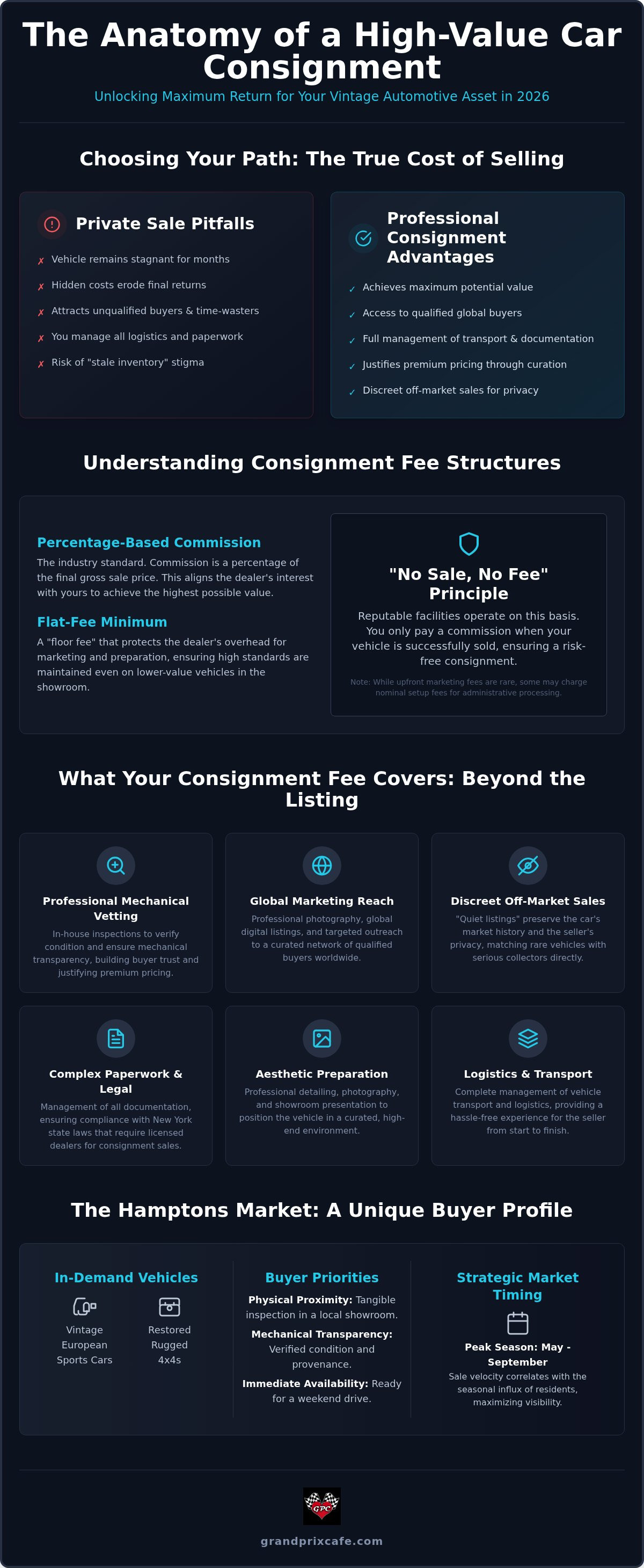
The East End automotive market in 2026 operates on a foundation of trust and physical proximity. While digital platforms offer global reach, they lack the high-touch vetting required for six-figure assets. A Southampton showroom provides a tangible point of contact for buyers who prefer to inspect a vehicle's mechanical integrity in person. This specialized consignment arrangement allows sellers to leverage local expertise while retaining ownership until the final transaction. In a market where provenance is everything, the physical presence of a car in a reputable facility acts as a silent endorsement of its quality.
The Hamptons Buyer Profile
Discreet Sales for Private Collections
Privacy is a non-negotiable requirement for many high-profile collectors. A discreet consignment model utilizes off-market networks to match rare, blue-chip vehicles with serious buyers without public exposure. This "quiet listing" approach preserves the car's market history and the seller's identity. It avoids the "stale inventory" stigma that can occur with poorly managed public listings. By leveraging a curated buyer network, a professional consignor can facilitate a transaction that feels more like a private gallery acquisition than a standard car sale. This method ensures the asset maintains its prestige throughout the entire process, protecting its long-term investment value.
Standard Consignment Fee Structures and Commission Rates
The financial framework of a consignment agreement is designed to align the interests of the owner and the dealer. In the luxury automotive sector, this alignment typically manifests through a commission based on the final gross sale price. Understanding the typical classic car consignment fees Hamptons specialists employ requires a look at both percentage-based structures and the operational minimums that protect the dealer's overhead. Most reputable facilities operate on a "no sale, no fee" basis, ensuring that the consignor only incurs a commission when the desired outcome is achieved.
Percentage vs. Flat Fee Models
Standard industry commissions are typically calculated as a percentage of the final transaction value. This structure covers the professional labor, facility costs, and negotiation expertise required to close a high-value sale. For ultra-rare or blue-chip assets exceeding seven figures, these rates are often adjusted to reflect the unique market positioning of the vehicle. Many dealers also implement a flat-fee minimum or a floor fee. This ensures that the extensive work of vetting, detailing, and marketing is covered even if the vehicle's market value is lower than the showroom average. As collector car market trends indicate a more discerning buyer pool in 2026, these structures allow dealers to maintain high standards of presentation regardless of the asset's final price point.
Upfront Costs and Marketing Fees
While some agencies charge a nominal setup fee for administrative processing, many elite showrooms avoid upfront marketing charges. The cost of professional photography, global digital listings, and targeted outreach is usually absorbed into the final commission. It's a model that places the financial risk on the dealer, incentivizing a swift and profitable sale. Owners should request a transparent breakdown of any non-commission charges before signing an agreement. This includes potential costs for storage or mechanical prep work necessary to bring a vehicle to showroom standards. A professional vehicle consignment service will provide a clear estimate of these requirements during the initial evaluation. Transparency at this stage prevents surprises and builds the trust necessary for a successful long-term partnership.
What Your Consignment Fee Covers: Beyond the Listing
A professional consignment fee is an investment in a comprehensive sales strategy rather than a simple transaction cost. In the Hamptons, high-value automotive assets require a level of presentation that matches their prestige. When you analyze classic car consignment fees Hamptons specialists provide, you're looking at the cost of a full-service agency. This includes professional studio photography, cinematic video production, and targeted advertising in elite circles. Global placement in publications like Hemmings and DuPont Registry is standard. However, the most significant value lies in the vetting of prospective buyers. This ensures that only qualified individuals engage with the vehicle, protecting the seller's time and privacy.
Logistical management is another critical component covered by these fees. A professional consignor handles the coordination of enclosed transport, manages all private viewings, and oversees the complex title transfers. This thorough approach ensures a seamless transition of ownership without the logistical burdens typically associated with private sales. The goal is to provide a white-glove experience where the financial transparency of the commission structure mirrors the clarity of the sales process itself.
Mechanical Vetting and Valuation
A vehicle's market value is intrinsically tied to its mechanical integrity and documented provenance. Reputable consignors utilize in-house technical teams to conduct an exhaustive mechanical vetting of every entry. This process identifies minor issues that could otherwise become significant points of negotiation during a sale. Addressing these details early preserves the vehicle's valuation and reinforces buyer confidence. Utilizing a team skilled in vintage car restoration New York allows the showroom to present a vehicle that is not just aesthetically pleasing but mechanically sound. This curatorial oversight is essential for justifying premium pricing in a discerning market.
Secure Storage During the Sales Process
Preserving the condition of a vintage vehicle while it is on the market is a primary responsibility of the consignor. While a vehicle is awaiting sale, it must be protected from environmental degradation and unauthorized access. High-end consignment services include placement in climate-controlled, secure facilities. Professional indoor car storage Southampton NY prevents the deterioration of sensitive materials like leather and rubber seals. It also ensures the vehicle remains in showroom condition for every private viewing. This secure environment, coupled with comprehensive insurance coverage and routine maintenance checks, provides the owner with peace of mind throughout the duration of the consignment agreement.
Financial Advantages of Professional Consignment in NY
Professional consignment offers fiscal benefits that often outweigh the initial classic car consignment fees Hamptons dealers require. It's a strategic approach to capital preservation. By utilizing a professional showroom, sellers tap into a network where the "Trade-In Effect" facilitates smoother transactions. Dealers can accept a buyer's existing vehicle as partial payment, a capability private sellers lack. This flexibility broadens the pool of qualified buyers and often leads to a higher net return. Professional negotiation also ensures that the final sale price reflects the true market value rather than an emotional compromise.
The reduction of liability is another significant financial advantage. Private sales expose owners to risks ranging from fraudulent payments to physical liability during test drives. A professional consignor manages these risks entirely. They provide a secure environment for inspections and handle all administrative hurdles, including lien payoffs and title transfers. This meticulous attention to detail prevents legal complications that could prove far more costly than a commission. For those seeking a seamless exit from an investment, a professional vehicle consignment service is the most efficient path.
The New York Sales Tax Credit
New York state regulations offer a specific financial incentive for collectors who utilize licensed dealers. When you consign a vehicle and subsequently purchase another through the same dealer, you may be eligible for a sales tax credit. This credit is calculated based on the value of the consigned vehicle, potentially saving the collector thousands of dollars on their next acquisition. It's a specialized tax advantage that does not apply to private, peer-to-peer transactions. Collectors should consult with their financial advisors to verify the current 2026 tax percentages and ensure all documentation meets NY state requirements for dealership-facilitated sales.
Market Timing and Appraisal Accuracy
Setting an accurate price is critical for maintaining an asset's market prestige. An inflated asking price leads to a "stale" listing, which often necessitates deep discounts later. Conversely, an undervalued car represents a loss of potential ROI. Professional consignors use historical data and current market analytics to establish a competitive yet profitable price point. They understand the nuances of market timing, ensuring a vehicle is listed when demand is highest. The cost of a commission is a small price to pay for the expertise that prevents a vehicle from languishing on the market and losing its perceived value.
The Grand Prix Cafe Approach to Consignment
Grand Prix Cafe operates as a discerning curator rather than a high-volume dealership. Our Southampton facility serves as a specialized environment where high-end European and vintage models receive individual attention. We prioritize quality over quantity. This philosophy ensures every vehicle in our inventory is presented with its full historical context and mechanical integrity intact. Sellers gain direct access to our in-house restoration experts and specialized mechanics. These professionals provide a level of technical oversight that is rare in the standard brokerage market. By integrating our mechanical workshop with our sales operation, we verify every detail before a car ever reaches the showroom floor.
Our approach is designed for the unique requirements of the East End community. We understand that a successful sale in this market relies on more than just a listing; it requires a reputation for excellence and a deep respect for automotive heritage. Our clients value the quiet authority we bring to every transaction. Whether you are selling a single blue-chip asset or managing a larger collection, our team provides the professional consistency needed to protect your investment's value throughout the sales lifecycle.
Bespoke Marketing for Unique Assets
Every asset requires a tailored strategy. We don't rely on generic templates or automated listings. Our team develops narrative-driven descriptions that highlight a vehicle's specific provenance and technical specifications. We possess deep expertise in 1960s Land Rovers and vintage Porsche models. This allows us to speak with precision to serious collectors who value accuracy. Our marketing includes custom photography and targeted outreach to an established network of high-net-worth individuals. When analyzing the classic car consignment fees Hamptons collectors expect, it's clear that the value lies in this level of specialized, high-impact exposure.
Getting Started: The Valuation Process
The process begins with a discreet appraisal. We understand the need for privacy among our Hamptons clientele. During the initial consultation, we evaluate the vehicle's condition, documented history, and current market position. We then provide a clear roadmap for preparing the car for our Southampton showroom. This preparation may include specialized detailing or minor mechanical refinements to ensure the vehicle meets our rigorous standards. Transparency is a core pillar of our operation. Every agreement includes a comprehensive breakdown of the commission structure. This ensures the owner fully understands the classic car consignment fees Hamptons experts utilize to achieve a successful, professional sale at or above market value.
Securing the Maximum Value for Your Automotive Legacy
Consigning a high-value vehicle in the East End requires a balance of financial transparency and specialized expertise. Professional fees are an investment in the mechanical vetting and global marketing that justify premium price points. These structures ensure your asset is presented with its full historical context intact. Understanding the structure of classic car consignment fees Hamptons specialists utilize is the first step toward a successful disposition that avoids the risks of private sales. It's about more than a transaction; it's about preserving the prestige of your collection.
Grand Prix Cafe offers a Southampton-based boutique showroom supported by an on-site mechanical and restoration team. We manage every high-value transaction with the discretion and professional consistency your collection deserves. Our process simplifies the logistics of transport and documentation while maximizing your net return through expert negotiation. If you're ready to explore the market potential of your vintage vehicle, we invite you to Request a Professional Consignment Valuation. Your vehicle's history is unique; its sale should be handled with the same level of care and technical precision that has preserved it for decades.
Frequently Asked Questions
What is the average commission for classic car consignment in the Hamptons?
Standard commissions for classic car consignment fees Hamptons specialists typically range from 10% to 15% of the final sale price. This percentage covers professional marketing, buyer vetting, and logistical management. Some facilities implement flat-fee minimums to ensure operational costs are covered for lower-value vintage inventory. These structures align the dealer's incentives with the seller's goal of achieving a premium market return through professional curation and expert negotiation.
Are there any upfront fees for consigning my car with Grand Prix Cafe?
We prioritize transparency and typically structure our agreements to align with a successful sale. Any administrative or setup requirements are discussed during the initial valuation. When evaluating classic car consignment fees Hamptons specialists offer, owners should look for this level of clarity. We provide a detailed breakdown of all terms during the evaluation process to ensure there are no surprises. This approach builds trust and ensures both parties are focused on a high-value result.
How long does a typical classic car consignment contract last?
Most consignment agreements span a period of 60 to 90 days. This timeframe allows for professional photography, global marketing placement, and the vetting of qualified buyers. If a vehicle hasn't sold within this window, we review market feedback and adjust the strategy. The contract duration ensures sufficient exposure while respecting the seller's timeline. It's a methodical process designed to attract serious collectors rather than casual browsers.
Can I still drive my car while it is on consignment?
Vehicles on consignment are generally required to remain in the showroom to ensure they're available for immediate inspection. Keeping the car on-site preserves its condition and mileage as documented in the listing. It also allows our team to manage private viewings and maintain the vehicle's aesthetic presentation. This consistency is vital for building buyer confidence and securing a timely sale. It ensures the asset is always ready for a discerning collector's review.
Do I get a sales tax credit if I consign my car in New York?
Yes, New York state allows for a sales tax credit when you consign a vehicle through a licensed dealer and purchase a replacement. This credit applies to the purchase of another vehicle from the same dealer's inventory. It's a significant financial advantage that can save collectors thousands of dollars. We recommend verifying the current 2026 regulations with a tax professional to confirm your specific eligibility and the exact credit percentages available.
Who is responsible for insurance while the car is at the dealership?
The owner typically maintains their primary insurance policy, while the dealership provides garage keepers liability coverage. This dual-layer approach ensures the asset is protected against theft, damage, or accidents while in our care. We require proof of insurance before a vehicle enters our facility. This protocol maintains the high standards of risk management expected in the luxury automotive sector and provides peace of mind throughout the entire consignment period.
What documentation do I need to provide for a consignment sale?
You must provide the original vehicle title, a valid government ID, and any relevant service records or provenance documentation. New York law requires a written consignment agreement that includes the vehicle's VIN and proof of ownership. Detailed maintenance history and restoration receipts significantly enhance the vehicle's market value. These documents are essential for the curatorial process and the final title transfer. They provide the transparency that qualified buyers require.
Will my car be stored indoors during the consignment period?
Every vehicle on consignment is housed in our secure, climate-controlled indoor facility. Indoor storage is essential for preserving sensitive mechanical components and interior materials. It protects the car from environmental factors and ensures it remains in showroom condition for every viewing. This level of care is a standard part of the professional consignment experience. It ensures the vehicle's integrity is maintained while it awaits a successful transaction.
Comments