


Classic Car Suspension Tuning in Sag Harbor: Precision Chassis Management for Collectors
Driving a vintage European sports car through the narrow, high-crowned lanes of Sag Harbor should feel like a precise mechanical dialogue, not a struggle with vague steering or unsettled rebound. Many collectors find that local road conditions demand a specialized approach to classic car suspension tuning Sag Harbor enthusiasts trust to maintain vehicle integrity. You recognize that while a classic's soul resides in its engine, its true character is expressed through the chassis. It's frustrating when degraded bushings or outdated geometry turn a spirited drive along Route 114 into a series of nervous corrections and harsh feedback.
This guide details the technical nuances required to restore factory precision while protecting your vehicle's historical provenance. We examine the intersection of modern damping technology and period-correct aesthetics. You'll discover how professional calibration improves safety and predictability on demanding Hamptons backroads. The following sections outline an expert approach to mechanical curatorship, from corner balancing to the selection of vulcanized rubber components that satisfy both the driver and the concours judge. Our focus remains on preserving the driving standards that define your collection's legacy.
Table of Contents
The Necessity of Classic Car Suspension Tuning in Sag Harbor
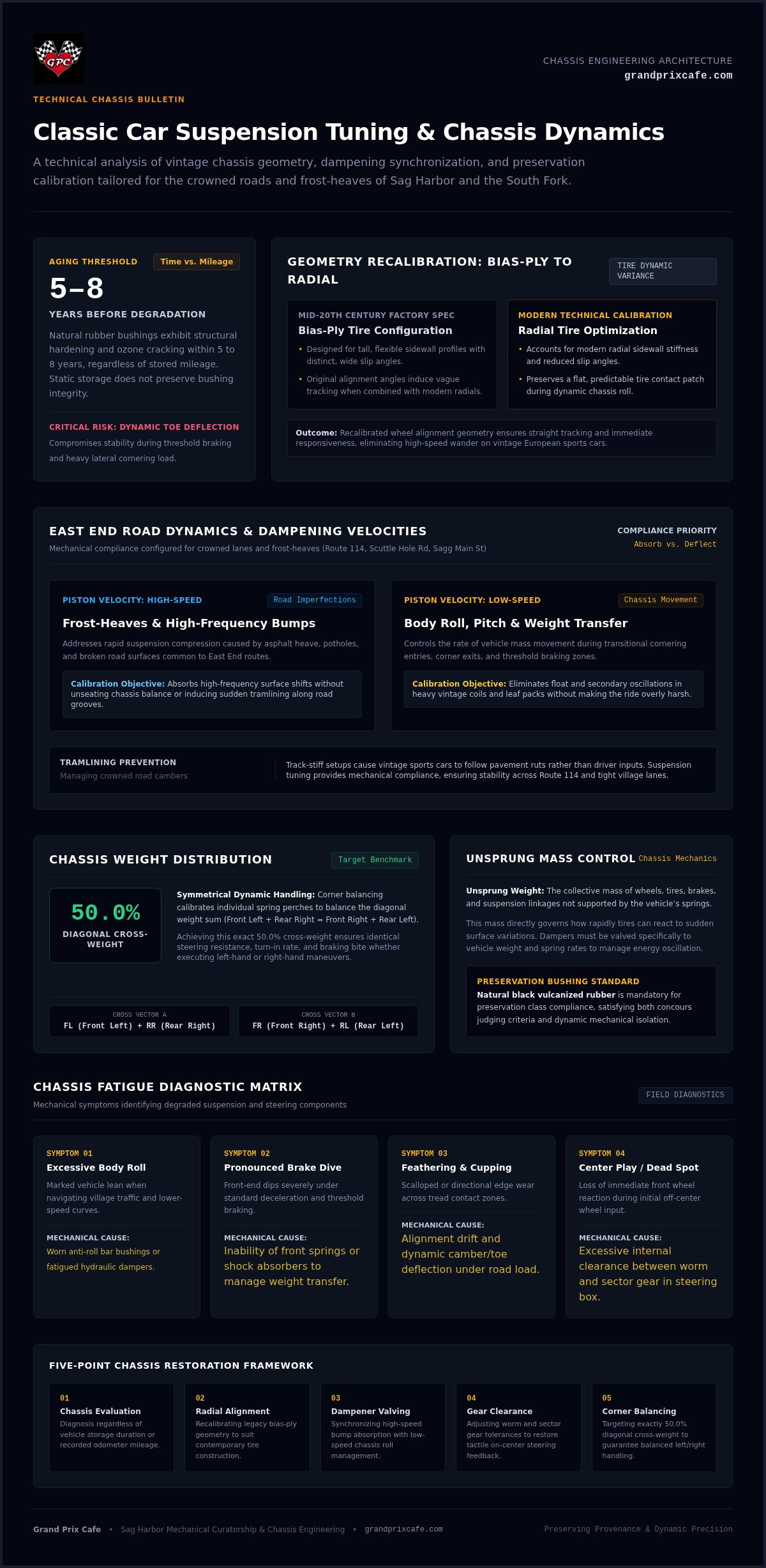
Classic car suspension tuning is the systematic optimization of chassis geometry and dampening to ensure a vehicle behaves predictably under load. For collectors, the classic car suspension tuning Sag Harbor specialists provide is essential because vintage components degrade regardless of mileage. Natural rubber bushings typically show structural hardening and ozone cracking within five to eight years. This degradation leads to dynamic toe deflection, which compromises safety during threshold braking or heavy cornering on the undulating roads of the South Fork. A vehicle that sat in climate-controlled storage for a decade still requires a chassis evaluation; time is as much an enemy to rubber and seals as mileage.
Factory specifications from the mid-20th century were formulated for bias-ply tires. Modern radial tires possess different slip angles and sidewall stiffness, requiring updated settings to maintain an optimal contact patch. Professional tuning involves recalibrating the wheel alignment geometry to match contemporary tire technology. This ensures the car tracks straight and responds accurately to driver input, preventing the vague handling often associated with vintage machinery.
Navigating the East End’s Unique Road Dynamics
Sag Harbor’s historic lanes feature high centers and frost-heave undulations that present unique challenges for vintage chassis management. These surfaces often amplify tramlining, a condition where the vehicle follows grooves in the asphalt rather than the driver’s intended path. A chassis tuned for a smooth track is frequently too stiff for East Hampton or Bridgehampton touring. Effective tuning prioritizes mechanical compliance, allowing the suspension to absorb high-frequency bumps without upsetting the vehicle's balance. This compliance is critical for maintaining stability on Scuttle Hole Road or Sagg Main Street.
Identifying the Symptoms of Chassis Fatigue
Chassis fatigue manifests through several distinct behaviors that indicate a need for professional intervention. Excessive body roll when navigating village traffic suggests worn anti-roll bar bushings or tired dampers. Pronounced suspension dive during braking indicates that the front springs or shock absorbers can no longer manage weight transfer effectively. Unusual tire wear patterns, such as feathering or cupping, are clear indicators that the alignment has drifted. Collectors should also monitor for inconsistent steering feel or unsettled handling on uneven backroads, as these symptoms suggest the mechanical integrity of the suspension is compromised and requires classic car suspension tuning Sag Harbor experts to rectify.
Technical Foundations of Vintage Chassis Management
Effective vintage chassis management requires an understanding of how individual components collaborate to maintain the tire contact patch. Shock absorber calibration is central to this effort. Dampers must be valved specifically to the vehicle's mass and spring rates; generic units often fail to control the oscillating energy of heavy vintage coils or leaf packs. Precision classic car suspension tuning Sag Harbor collectors require focuses on synchronizing these rates to prevent the "float" common in aged European marques. Steering box adjustments also play a critical role. Over time, internal clearances increase, leading to a dead spot at the center position. Meticulous adjustment of the worm and sector gear restores the tactile connection between the driver and the road.
Dampening and Spring Rate Synchronization
Bushing Integrity and Material Science
Material choice dictates the balance between comfort and precision. Natural black vulcanized rubber bushings are preferred for preservation class compliance, providing the original factory feel while isolating noise, vibration, and harshness. However, these components show structural hardening within five to eight years. Perished joints can lead to dynamic toe deflection of up to 1.5 degrees under heavy load. Technical discussions regarding vintage chassis suspension tuning often explore polyurethane alternatives for owners prioritizing steering response over original softness. Polyurethane reduces deflection but may transmit more road noise into the cabin. Visual inspections focus on identifying ozone cracking or eccentric deformation in the bushing cores. Professional classic car suspension tuning Sag Harbor services ensure that material selection aligns with the vehicle’s provenance and the owner’s performance goals.
Balancing Period-Correct Integrity with Performance
Mechanical curatorship is the guiding principle for collectors who value both historical accuracy and dynamic competence. This approach views the chassis as a living document of automotive history that requires careful stewardship rather than radical modernization. When performing classic car suspension tuning Sag Harbor collectors prioritize optimization over transformation. The goal is to refine the vehicle’s original characteristics, ensuring it remains safe and predictable at contemporary road speeds without losing the tactile feedback that defines its era. Professional classic car suspension tuning Sag Harbor ensures that these technical adjustments translate into a safer, more rewarding experience on the road.
Maintaining visual provenance is critical for investment-grade assets. Collectors often choose reversible suspension upgrades for classic cars, such as modern valved dampers housed in period-correct casings. These stealth modifications provide the dampening control required for modern radial tires while satisfying the strict requirements of preservation class judging. For instance, replacing original twin-tube shocks with custom-valved units from Bilstein or Koni preserves the exterior aesthetic while eliminating the float typical of aged, fluid-leaking dampers.
Consider the optimization of a 1960s European sports car. While the factory setup might've prioritized a soft ride for bias-ply tires, modern traffic requires enhanced lateral stability. By achieving a target 50.0% diagonal cross-weight through corner balancing, technicians ensure the car responds identically in both left and right turns. This precision is vital for navigating the high-speed sections of the Sunrise Highway or the tight corners of Sag Harbor’s historic district. Every adjustment is documented to maintain the vehicle's historical record and mechanical provenance.
Preserving Historical Driving Character
The essence of a vintage machine lies in its sensory output. Over-tuning a suspension with excessively stiff springs or polyurethane bushings can lead to a harsh, synthetic feel that masks the car's personality. Our approach to vintage car restoration New York emphasizes maintaining the delicate balance between road feel and driver comfort. We focus on restoring the progressive breakaway characteristics and steering transparency that defined the motoring experience of the 1950s and 60s.
Safety-Centric Upgrades for Modern Traffic
Modern traffic densities demand higher levels of emergency maneuverability. Enhancing lateral stability through subtly uprated sway bars reduces body roll without sacrificing the compliance needed for uneven pavement. These upgrades must be integrated into an expert European classic car service program to ensure all components work in harmony. A well-tuned chassis reduces mechanical stress on the frame and mounting points, effectively extending the lifespan of the vehicle's structural components while providing the driver with greater confidence during sudden maneuvers.
The Professional Tuning Process at Grand Prix Cafe
The professional tuning process at Grand Prix Cafe is a methodical sequence designed to restore mechanical harmony. Technical excellence in classic car suspension tuning Sag Harbor requires more than just modern software; it requires a physical understanding of vintage metal. Our technicians perform a comprehensive chassis and frame inspection to ensure structural integrity before any adjustments occur. This stage identifies hidden fatigue in leaf springs or torsion bars that could undermine the tuning results. We examine all steering linkage play, tie-rod ends, and wheel bearing end-play to ensure every connection is within professional tolerance.
Initial Evaluation and Diagnostic Road Testing
Diagnostic road testing allows our technicians to evaluate real-world handling characteristics on varying East End surfaces. We look for steering wander and ball joint deflection that standard static tests might miss. During this phase, we assess the health of leaf springs and torsion bars under dynamic load. It's essential to determine if a vehicle requires accident repair vintage vehicle services to correct frame misalignments or previous structural damage. Tuning a compromised chassis is counterproductive; the foundation must be perfectly square to achieve lasting precision.
Alignment Geometry and Corner Balancing
Alignment focuses on the "magic triangle" of caster, camber, and toe. While modern shops rely on generic databases, we utilize period-appropriate specifications or optimized custom settings tailored to modern radial tires. Caster is adjusted to provide the correct self-centering feel, while camber is set to maximize the tire contact patch during cornering. Corner balancing follows, using calibrated electronic scales to ensure even weight distribution across all four tires. We aim for a 50.0% diagonal cross-weight, placing ballast in the driver’s seat to replicate real-world conditions. This ensures the car responds identically in both left and right turns, providing threshold braking stability and predictable turn-in behavior. This level of technical detail is what defines professional classic car suspension tuning Sag Harbor for discerning collectors.
Final verification involves a post-tuning road test on specific Hamptons routes, ensuring the vehicle handles the unique undulations and high-crown centers of the region with composure. We verify that all steering linkage play is eliminated and that the vehicle tracks straight without tramlining. Detailed documentation of all final geometry settings is provided to preserve the vehicle’s mechanical provenance and investment value. To begin your chassis optimization, schedule a technical consultation at Grand Prix Cafe.
Securing Your Automotive Investment in the Hamptons
Maintaining a collector vehicle in Sag Harbor requires a comprehensive view of mechanical integrity. Suspension maintenance is a critical component of long-term value preservation. Collector car market data indicates that mechanically sorted vehicles with documented chassis work command a 10% to 20% premium over those with unaddressed wear. Professional classic car suspension tuning Sag Harbor specialists provide serves to protect the structural equity of the asset. A well-calibrated chassis reduces parasitic mechanical stress on the frame and body mounting points. By absorbing road energy effectively, the suspension prevents high-frequency vibrations from causing metal fatigue or interior trim rattles. It's a proactive approach to curatorship that pays dividends during private treaty sales or auction placements.
Professional documentation of tuning settings and component replacements enhances a vehicle's resale value. It provides a transparent record of mechanical curatorship that discerning buyers prioritize. When a vehicle's handling is optimized, it reduces the load on the drivetrain and steering components, extending the operational life of the entire machine. This level of technical oversight ensures the vehicle remains a functional tourer rather than a static display piece.
Integrated Care: From Tuning to Storage
The transition between active driving and seasonal preservation is a vulnerable period for a vintage chassis. Rubber components can harden or develop eccentric deformations if left under static load in improper conditions. Our facility ensures that suspension components remain protected during indoor car storage Southampton NY by maintaining a climate-controlled environment that slows the degradation of natural materials. Preparing the chassis for seasonal use involves a post-storage inspection of all seals and fluid levels. Utilizing a single partner for sales, service, and storage ensures a cohesive maintenance history. This integrated approach is vital for maintaining the provenance and mechanical standards required for high-end European marques.
The Grand Prix Cafe Commitment
Grand Prix Cafe functions as a trusted advisor for the East End collector community. We provide refined, technical expertise for those who demand mechanical excellence without compromise. Our approach to classic car suspension tuning Sag Harbor is characterized by a methodical delivery of facts and a deliberate, professional presentation of data. We focus on long-term relationships and the preservation of high mechanical standards. If your vehicle exhibits unsettled handling or harsh ride quality, a professional chassis evaluation is the necessary next step. You can rely on our Southampton facility for a technical assessment of your vehicle's suspension and steering geometry to ensure your investment remains road-ready and secure.
Restoring the Dynamic Integrity of Your Vintage Collection
Precision chassis management is a fundamental requirement for any serious collector. It ensures that historical driving characteristics remain intact while meeting the safety demands of modern Hamptons traffic. The professional classic car suspension tuning Sag Harbor collectors prioritize balances technical optimization with historical preservation, protecting both the vehicle's structural health and its market value. Our specialized technicians for European marques bring decades of experience in automotive curatorship to every project. It's our goal to ensure your vehicle behaves with the composure it possessed when it first left the factory.
Grand Prix Cafe operates a comprehensive restoration and storage facility in Southampton, providing a unified solution for mechanical maintenance and preservation. By addressing bushing degradation and geometry drift, you secure the long-term provenance of your asset. We invite you to schedule a professional chassis evaluation at Grand Prix Cafe to verify your vehicle's current alignment and dampening status. Your next drive through the East End should be defined by confidence and mechanical harmony.
Frequently Asked Questions
How often should a classic car's suspension be inspected?
Suspension components should undergo a technical inspection at least once per year or every 3,000 miles. In New York, vehicles over 25 years old require an annual safety inspection that covers steering linkage and mounting points. Regular evaluations are necessary because atmospheric corrosion in coastal environments like Sag Harbor accelerates the degradation of rubber seals and adjustment threads. Proactive monitoring prevents minor alignment drift from becoming a significant safety concern during seasonal use.
Will tuning my suspension lower the value of my vintage car?
Professional tuning typically enhances vehicle value by documenting mechanical curatorship and ensuring the car remains roadworthy. Using reversible suspension upgrades and period-correct materials preserves the vehicle's historical provenance. Collector market data suggests that mechanically sorted cars command a premium of 10% to 20% over unmaintained examples. Documented classic car suspension tuning Sag Harbor specialists provide serves as evidence of high-level maintenance, which is a significant asset during resale or consignment.
What is the difference between a standard alignment and classic car tuning?
Standard alignments often rely on generic modern databases that lack specific data for 50-year-old chassis. Professional classic tuning incorporates corner balancing to achieve a 50.0% diagonal cross-weight and adjusts geometry specifically for modern radial tires. This process accounts for the different slip angles and sidewall stiffness of contemporary rubber. It involves a deeper analysis of the vehicle’s structural health and weight distribution rather than simply matching factory toe settings on a digital screen.
Can you restore the original ride quality of a 50-year-old car?
Original ride quality can be restored by replacing hardened rubber bushings and recalibrating the dampening rates. Natural rubber bushings typically lose their structural integrity within five to eight years, leading to a harsh or unsettled feel. By installing fresh OEM-spec components and ensuring the shock absorbers are valved to the correct spring rates, we can replicate the progressive feedback and compliance the vehicle possessed when it was new. This restores the intended driving character.
Do I need to upgrade to modern shocks to get better handling?
You don't need modern shocks, but they offer significant benefits for road-going classics. Many collectors choose period-discreet dampers from manufacturers like Koni or Bilstein. These units fit inside original housings or maintain a period-correct appearance while providing modern valving technology. This approach improves high-frequency bump absorption on uneven Hamptons roads without compromising the vehicle's visual authenticity or its standing in preservation class judging. It balances historical accuracy with modern performance standards.
How long does a professional suspension tuning typically take?
A comprehensive tuning process generally requires one to three business days. This timeframe allows for a detailed initial diagnostic road test, structural inspection, and the precise adjustment of geometry. Complex systems, such as re-indexing classic Porsche torsion bars, take longer than adjusting threaded coilover collars. The duration also accounts for the final verification road test to ensure the handling characteristics meet our professional standards before the vehicle is returned to the owner.
Is suspension tuning necessary if I only drive my car in Sag Harbor?
Tuning is particularly necessary for local driving due to Sag Harbor's unique road infrastructure. The village's historic asphalt lanes often feature high-crown centers and frost-heave undulations that amplify steering wander. classic car suspension tuning Sag Harbor enthusiasts require focuses on mechanical compliance to manage these specific conditions. A well-tuned chassis ensures the car remains predictable and comfortable when navigating narrow colonial-era streets or the unpaved waterfront estate driveways common in the region.
What are the signs that my classic car's bushings need replacement?
Common indicators of perished bushings include excessive body roll, inconsistent braking feel, and audible clunking over bumps. You might notice the car "wanders" or follows grooves in the road, a condition known as tramlining. Visual signs include ozone cracking, structural hardening, or eccentric deformation of the rubber core. If the steering feels vague or the car exhibits unsettled rebound on uneven pavement, it's likely the natural rubber components have exceeded their functional lifespan.
Comments