


Classic Car Maintenance in Southampton: A Guide to Mechanical Curatorship
Can a vintage vehicle ever truly be considered at rest when parked only miles from the Atlantic? For the discerning collector, the quiet of a garage in the Hamptons often masks the active chemical processes of salt-air corrosion and atmospheric moisture. You recognize that effective classic car maintenance Southampton is less about simple ownership and more about active curatorship. Maintaining a legacy requires more than an occasional oil change. It demands a rigorous defense against a unique coastal microclimate.
You understand that the preservation of provenance requires a level of precision that standard service centers cannot provide. This guide outlines the technical requirements for preserving your vehicle's mechanical reliability and historical value in a demanding environment. We will detail the essential protocols for seasonal storage, the necessity of specialized technical oversight, and the specific maintenance schedules required to ensure your vintage investment remains roadworthy for the summer season.
Table of Contents
The Southampton Environment: Challenges for Classic Car Maintenance
Southampton’s proximity to the Atlantic creates an environment that is chemically aggressive toward vintage automobiles. Salt-laden air and high humidity levels don't just affect the surface; they penetrate mechanical gaps and porous materials. Effective classic car maintenance Southampton requires an understanding of these coastal stressors. Unlike inland regions, the Hamptons climate accelerates oxidation and material degradation, necessitating a proactive, rather than reactive, service philosophy.
Atmospheric Corrosion and Paint Integrity
The primary threat in a coastal environment is chloride-induced corrosion. Salt particles suspended in the air settle on surfaces, attracting moisture and creating an electrolytic cell on exposed metallurgy. You might notice early signs of micro-pitting on chrome brightwork or "clouding" on single-stage paint. While traditional carnauba waxes provide a temporary barrier, they often lack the longevity to withstand a full Hamptons summer. Modern ceramic coatings or specialized sealants offer superior hydrophobic properties. Additionally, the undercarriage requires professional cleaning after seasonal use. Road salt from late spring and ocean spray can accumulate in frame rails and suspension mounts, leading to structural decay if left unaddressed.
Humidity Control for Interior Preservation
Vintage interiors are particularly susceptible to the fluctuating humidity of Eastern Long Island. Materials like Connolly leather and wood veneers are organic and hygroscopic. They expand and contract as moisture levels shift. High humidity encourages the growth of mold and mildew within seat foam and door cards. Conversely, sudden drops in humidity can cause wood veneers to crack and leather to lose its essential oils. Grand Prix Cafe maintains strict standards for environmental stability within its indoor storage facilities. We focus on consistent humidity levels to prevent the shrinkage of rubber window seals and the warping of interior trim.
The seasonal driving patterns typical of New York further complicate preservation. Many vehicles remain idle during the winter months, leading to seal desiccation and fluid stratification. When these cars are finally driven in heavy summer traffic, cooling systems and seals often fail under the sudden stress. A specialized maintenance schedule is mandatory to account for these long periods of inactivity followed by intense seasonal use. Consistency in professional oversight ensures that these environmental factors don't compromise the vehicle's long-term provenance or mechanical integrity.
Technical Pillars of Vintage Vehicle Mechanical Curatorship
Mechanical curatorship is as much about chemistry as it is about mechanics. In the Southampton climate, fluid hygroscopy is a persistent threat to internal components. Brake fluid and motor oil naturally absorb moisture from the humid Atlantic air. This process degrades performance and initiates internal oxidation long before the car reaches its mileage interval. Consistent classic car maintenance Southampton requires a calendar-based approach rather than a distance-based one.
Fluid Chemistry and Component Longevity
Low-mileage engines are prone to oil acidification. Short trips don't allow the oil to reach operating temperatures long enough to evaporate moisture. This leads to sludge and corrosive byproduct accumulation. Coolant requires similar vigilance. We monitor pH levels to prevent electrolysis, which can erode vintage copper and brass radiators from the inside. These standards align with our vintage Porsche restoration New York protocols, where every fluid specification must match historical requirements while accounting for modern environmental stressors.
Modern ethanol blends are particularly destructive to vintage fuel systems. Ethanol is hygroscopic; it attracts atmospheric water and can cause phase separation in fuel tanks during winter dormancy. This moisture leads to tank corrosion and "gumming" within carburetor jets. Ethanol also aggressively degrades original rubber fuel lines and cork gaskets. Systematic mechanical exercise, specifically running the engine to operating temperature regularly, is the only way to keep these seals hydrated. If a car remains stationary, the gaskets dry, shrink, and eventually fail upon the first summer start.
Electrical System Reliability
Vintage 6V and 12V systems require distinct management strategies. Lead-acid batteries lose their charge over time, leading to sulfation and permanent capacity loss. We utilize specialized battery tendering to maintain chemical stability without the risk of overcharging rare collectibles. Managing parasitic draw is equally critical. Even small clocks or early alarm systems can drain a battery over several weeks.
We also perform visual inspections of wiring looms. Brittle cloth or early plastic insulation often cracks with age, creating significant fire risks in original engine bays. For collectors seeking a sanctuary for their vehicles, our professional car service ensures these technical pillars are managed with precision.
Maintenance vs. Storage: Preventing Mechanical Decay
Static vehicles are not preserved vehicles. This "Storage Paradox" defines the reality of classic car maintenance Southampton; an idle engine often degrades faster than one in regular use. When a vehicle remains stationary, gravity pulls oil away from the upper cylinder walls and camshafts. This leads to "dry starts," where metal-to-metal contact occurs before the oil pump can provide adequate lubrication. Professional curatorship involves more than just parking. It requires active system management to ensure mechanical longevity.
Tires require specific oversight during winter months. Constant pressure on a single point leads to flat-spotting, particularly in older bias-ply or early radial constructions. We manage this through increased inflation pressures or the use of contoured tire cradles. Systematic pressure monitoring ensures the tire carcass maintains its shape. This prevents the vibrations and safety risks associated with long-term static storage.
The Mechanics of Dormancy
Chemical degradation begins the moment a car is switched off. Fuel varnishing can occur in as little as 90 days, clogging delicate carburetor jets with resinous deposits. Brake systems are equally vulnerable. Without periodic actuation, pistons can seize within their calipers due to internal moisture accumulation. Grand Prix Cafe utilizes a rigorous "awakening" protocol for vehicles exiting dormancy. This process includes manual engine rotation, fluid pressure verification, and comprehensive system cycling before the first ignition.
Climate-Controlled Preservation
True preservation requires integrating exotic car storage Southampton with active maintenance cycles. There is a critical distinction between "dry" storage and climate-controlled curatorship. A simple dry garage does not prevent the thermal expansion and contraction that stresses vintage aluminum engine blocks and head gaskets. Consistent temperature regulation minimizes these cycles. It preserves the structural integrity of the engine castings. A controlled environment is also the first line of defense against dust accumulation and pest intrusion. These factors can cause irreparable damage to wiring looms and interior upholstery if left unmonitored.
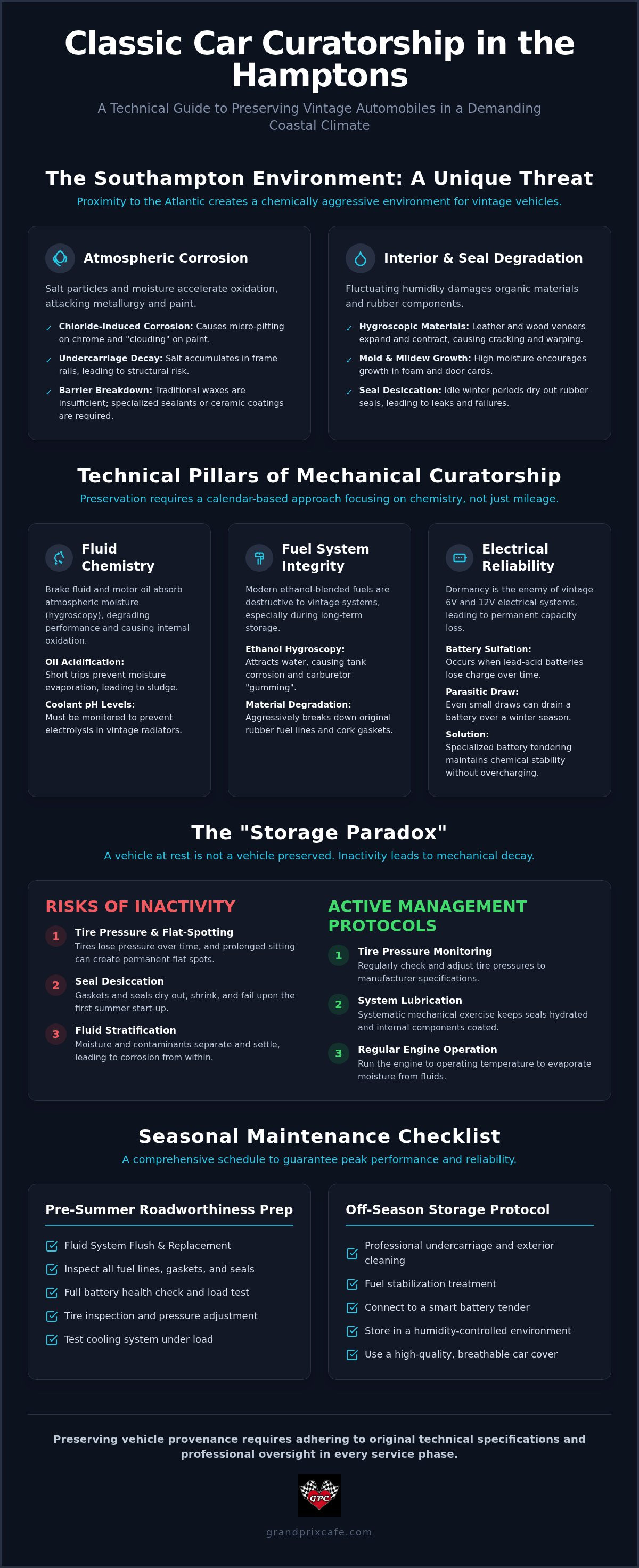
Seasonal Checklist for Classic Car Owners in the Hamptons
Effective classic car maintenance Southampton follows the rhythm of the seasons. In a coastal environment, the transition from winter dormancy to summer operation requires a methodical approach. Skipping a single step in this cycle often leads to mechanical failure during the peak driving months. A structured checklist ensures that every technical specification remains within its optimal tolerance. Consistency is the foundation of long-term vehicle preservation.
Pre-Season Mechanical Evaluation
Before the first drive in May, a comprehensive safety audit is mandatory. Brake line integrity must be verified; rubber lines can perish even in climate-controlled environments. Pedal feel should be firm and consistent. Tires require scrutiny beyond tread depth. High-performance classics often sit on rubber that has aged out chemically despite having ample tread. We recommend consulting a classic car mechanic Southampton NY for a multi-point inspection. This evaluation includes:
Verification of hydraulic fluid levels and moisture content.
Inspection of fuel lines for ethanol-induced cracking or leaks.
Testing of all lighting, electrical signaling, and charging systems.
Chassis lubrication at all specified grease points.
In-Season Maintenance and Reliability
Summer in the Hamptons introduces specific mechanical stresses. Stop-and-go traffic on Route 27 tests the limits of vintage cooling systems. Owners must monitor operating temperatures closely. High ambient heat can also reveal suspension bushing wear that was less apparent in cooler weather. Listen for new squeaks or changes in steering precision. Professional detailing also plays a role here; removing salt spray and road grime immediately preserves the exterior provenance. For those requiring immediate technical support, our car service provides the necessary oversight to maintain reliability during the season.
Autumn preparation marks the transition back to preservation. This phase involves more than just a car cover. It requires stabilizing the fuel system and ensuring the battery is prepared for long-term tendering. Winter oversight then shifts to monthly monitoring. Even in professional storage, we check tire pressures and ensure no fluid leaks have developed under the chassis. This constant vigilance prevents small issues from becoming major restoration projects by the following spring. Professional oversight doesn't stop when the engine does.
The Grand Prix Cafe Approach to Mechanical Curatorship
Our operation creates a unique synergy by housing sales, restoration, and year-round maintenance under one roof. This integrated model allows us to oversee the entire lifecycle of a vehicle's preservation. We understand the Hamptons market preference for "turn-key" vehicles. Buyers in early 2026 continue to prioritize cars that are mechanically reliable and ready for immediate summer use. By maintaining high standards of oversight, we ensure your vehicle remains a source of enjoyment rather than a project in constant need of repair.
Professional Restoration and Repair
For blue-chip collectibles, we adhere to frame-off restoration standards that respect original manufacturing methods. This meticulous process ensures that every component, from the chassis to the smallest trim piece, meets period-correct specifications. When managing accident repair vintage vehicle projects, our technicians focus on structural integrity and mechanical authenticity. Sourcing period-correct parts is a core part of our methodology. We avoid modern substitutes that might compromise the vehicle's historical value or performance characteristics.
A Legacy of Automotive Excellence
Preservation extends beyond the engine bay. Grand Prix Cafe emphasizes the importance of meticulous documentation. Every service, fluid change, and restoration step is recorded to preserve the vehicle’s provenance. This transparency is vital for future resale value. In a period where the collector car market is becoming more selective, a complete service history is a significant asset. Secure the future of your classic. Schedule a consultation with Grand Prix Cafe to discuss a tailored maintenance or storage plan for your collection.
Securing the Future of Automotive Heritage
Preserving a vintage vehicle in the Hamptons is an active commitment to mechanical integrity. You've seen how the coastal environment demands more than just a covered garage. It's a technical defense against salt-air corrosion and the chemical degradation of fluids. Effective classic car maintenance Southampton centers on this proactive oversight. By integrating specialized technical service with climate-controlled storage, you ensure that your investment remains roadworthy and historically accurate.
Grand Prix Cafe provides a comprehensive sanctuary for your collection. Our facility features specialized European classic car technicians and year-round climate-controlled indoor storage in Southampton. Whether you require meticulous restoration or expert accident repair services, our team maintains the highest standards of professional curatorship. We document every service to protect your vehicle's provenance. Preserve your automotive legacy at Grand Prix Cafe and ensure your vehicle is prepared for every summer season ahead. Your collection deserves an environment that respects its heritage as much as you do.
Frequently Asked Questions
How often does a classic car need an oil change if it is rarely driven?
A classic car requires an oil change at least once per year, regardless of mileage. In coastal environments, we recommend a six-month interval to combat moisture accumulation. Short trips often fail to evaporate internal condensation, leading to oil acidification and sludge. This proactive approach to classic car maintenance Southampton ensures that corrosive byproducts don't compromise internal engine components during periods of inactivity.
What is the best way to prevent rust on a classic car in Southampton?
The most effective defense against coastal oxidation is the combination of professional ceramic coatings and climate-controlled indoor storage. Salt air is pervasive in the Hamptons and requires a physical barrier on all metal surfaces. We emphasize the importance of professional undercarriage cleaning after any seasonal use. This removes chloride deposits from frame rails and suspension components before they initiate structural decay or micro-pitting on brightwork.
Does my vintage car need special fuel additives for modern gas?
Yes, ethanol stabilizers are essential for any vehicle utilizing original carburetors or rubber fuel lines. Modern E10 and E15 fuel blends are hygroscopic, meaning they attract atmospheric water. This leads to phase separation and tank corrosion during dormancy. Specialized additives prevent fuel varnishing and protect vintage gaskets from the aggressive solvent properties of ethanol. This maintains fuel system integrity and ensures reliable ignition after storage.
Why is climate-controlled storage better than a standard garage for classic cars?
Climate-controlled environments stabilize temperature and humidity to prevent the thermal expansion cycles that stress vintage engine blocks. A standard garage allows for significant moisture fluctuations, which can lead to mold in leather interiors and desiccation of rubber seals. Our Southampton facility maintains consistent atmospheric conditions. This preservation strategy protects organic materials like wood veneers and Connolly leather from the warping and cracking associated with unmanaged environments.
Can Grand Prix Cafe handle mechanical work for rare European imports?
Yes, we employ specialized technicians with specific expertise in European and luxury vintage models. Our facility utilizes specialized diagnostic tools and adheres to original technical specifications for every service. We prioritize mechanical authenticity and historical accuracy. This specialized oversight is a core pillar of classic car maintenance Southampton, ensuring that rare imports receive the precise care required to maintain their long-term provenance and market value.
What should be included in a pre-purchase inspection for a classic car?
A comprehensive pre-purchase inspection must evaluate mechanical integrity, structural corrosion, and provenance documentation. We perform a multi-point audit that includes compression testing, borescope inspections, and a thorough check for hidden coastal decay. Verifying the authenticity of serial numbers and matching components is equally critical. This technical vetting process provides a transparent assessment of the vehicle's condition, protecting your investment from unforeseen restoration requirements or title discrepancies.
How do I prepare my vintage vehicle for long-term winter storage?
Preparation involves stabilizing the fuel system, increasing tire pressures to prevent flat-spotting, and connecting a specialized battery tender. We also recommend a fresh oil change to remove contaminants before dormancy. All fluids should be topped off to minimize air gaps where moisture can collect. These steps, combined with a climate-controlled environment, ensure the vehicle remains in a state of mechanical readiness for the following summer season.
Are modern synthetic oils safe for older vintage engines?
Modern synthetic oils are often unsuitable for vintage engines, particularly those with flat-tappet camshafts. Many older designs require high-zinc (ZDDP) mineral oils to provide essential wear protection for high-friction components. Additionally, the detergent packages in modern synthetics can sometimes cause leaks in original cork or rope seals. We specify lubricants that match the original engineering requirements of the vehicle while accounting for modern driving conditions and temperatures.
I’m very happy with the tax-free used vehicle I recently bought. I wanted something dependable enough for daily driving but still affordable and comfortable. The vehicle I selected was in excellent overall condition and had all the features I needed. It has been performing smoothly, and I’m pleased with the quality, reliability, and value of my purchase. http://www.patriot-autos.net