


Classic Car Market Trends Long Island: 2026 Collector’s Report
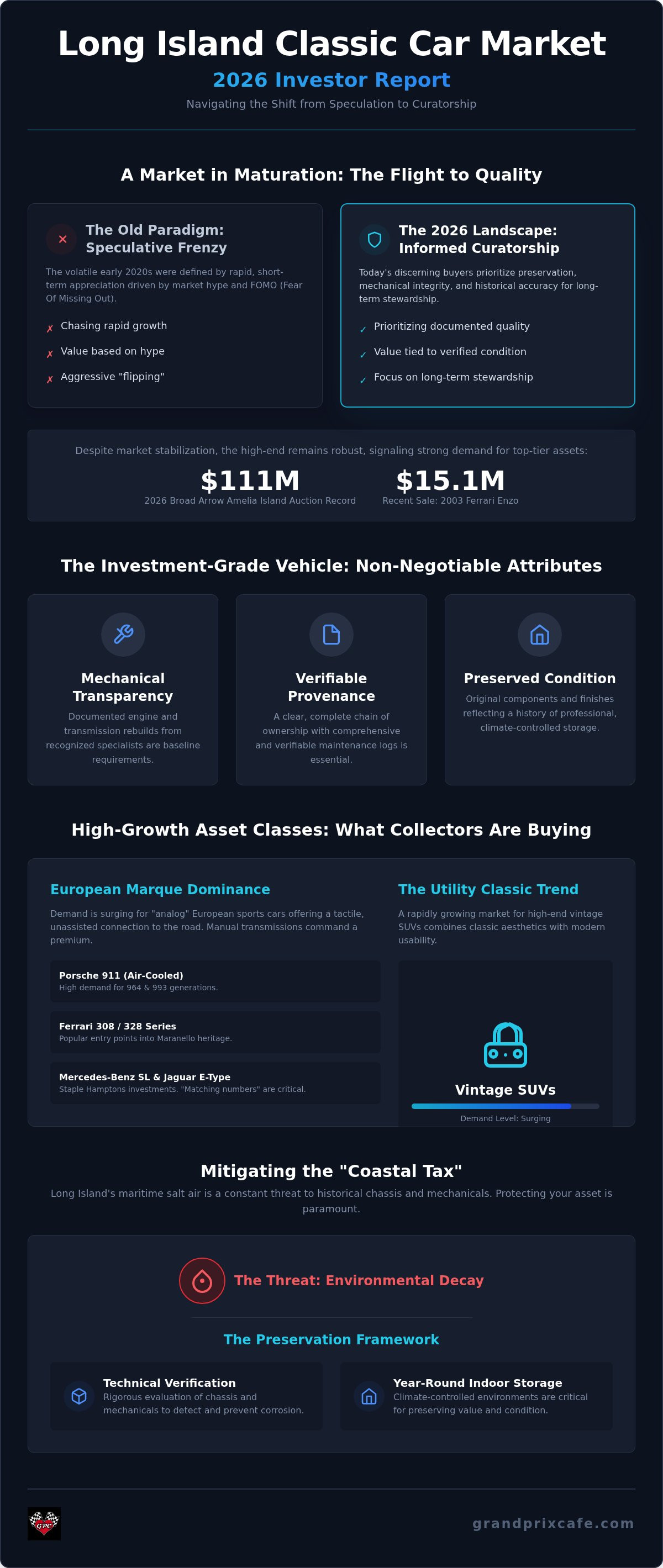
While the speculative frenzy of 2022 has subsided, the 2026 Broad Arrow Amelia Island Auction reached a record $111 million. This signals that the classic car market trends Long Island collectors follow have shifted toward documented quality and mechanical integrity. A 2003 Ferrari Enzo recently commanded $15,185,000; this proves that the appetite for top-tier assets remains robust for those who prioritize technical transparency.
It's evident that the market has transitioned from a period of rapid growth to a more discerning buyer's landscape. You've likely felt the weight of the "coastal tax" when evaluating local inventory. Long Island's maritime air poses a constant threat to historical chassis and European mechanicals. This report identifies high-growth asset classes and regional value drivers for 2026 to help you navigate these complexities with confidence.
We will analyze why modern classics from the 1990s and 2000s are outperforming traditional blue-chip models. We also detail the specific maintenance standards required to protect your investment from regional environmental decay. By the end of this analysis, you'll understand how to secure stable, investment-grade vehicles through a lens of professional curatorship.
Table of Contents
The Evolution of the Long Island Classic Car Market in 2026
The 2026 vintage automotive landscape reflects a significant departure from the volatility of the early 2020s. Following the correction that succeeded the 2022 peak, the classic car market trends Long Island enthusiasts monitor have entered a phase of disciplined maturation. This period is defined by a distinct shift from speculative acquisition toward long-term curatorship. Buyers no longer chase rapid, short-term appreciation. Instead, they prioritize the preservation of mechanical integrity and historical accuracy. Long Island remains a central hub for this liquidity due to its high concentration of multi-generational private collections and specialized maintenance infrastructure in the Hamptons.
National Stabilization vs. Local Resilience
While national auction data might suggest a cooling market, the New York corridor remains uniquely resilient. High-end demand in the Hamptons and Manhattan often operates independently of broader economic shifts. Market stabilization in 2026 is characterized by the convergence of asset pricing and verified condition. In this environment, a vehicle's value is tethered to its documented history rather than market hype. Local private collectors provide a floor for prices by absorbing blue-chip European marques, such as Porsche and Ferrari, that meet rigorous standards. The regional market rewards patience and technical excellence over aggressive flipping.
The Rise of the Informed Collector
Modern collectors operate with a level of technical literacy that was rare a decade ago. Digital provenance and comprehensive service records are now baseline requirements for any transaction. The influence of FOMO has largely vanished. It's been replaced by a "flight to quality" where only the most exceptional examples command premiums. Organizations like the Classic Car Club of America (CCCA) provide the frameworks that collectors use to categorize and value these assets. Technical verification is no longer an optional step; it's the foundation of the acquisition process in 2026.
This evolution has created a market where certain attributes are non-negotiable for investment-grade vehicles:
Mechanical Transparency: Documented engine and transmission rebuilds from recognized specialists.
Provenance: A clear chain of ownership with verifiable maintenance logs.
Preserved Condition: Original components and finishes that reflect a history of climate-controlled storage.
Collectors now view these cars as historical artifacts rather than mere commodities. This perspective ensures that the classic car market trends Long Island experiences stay grounded in tangible value. The focus has shifted from the next big sale to the next decade of stewardship.
Emerging Asset Classes: What Long Island Collectors are Buying
Long Island's purchasing patterns in 2026 reveal a distinct preference for visceral driving dynamics and historical authenticity. While the broader market has stabilized, certain segments are experiencing targeted growth. Collectors are moving away from purely aesthetic acquisitions. They now prioritize vehicles that offer a tactile, unassisted connection to the road. This demand for "analog" experiences is driving premiums for manual-transmission European sports cars and professionally restored utility vehicles. Analyzing current classic car market trends Long Island reveals that buyers are increasingly focused on usability and cultural relevance.
The European Marque Dominance
The 1960s and 70s European sports cars continue to anchor local portfolios. Air-cooled Porsche 911s, specifically the 964 and 993 generations, remain in high demand due to their blend of classic silhouettes and modern reliability. Ferrari 308 and 328 series have also seen renewed interest as collectors seek entry points into the Maranello heritage. In the Hamptons, the Mercedes-Benz SL and Jaguar E-Type remain staple investments. For these models, "matching numbers" and original factory specifications are the primary value drivers. Collectors don't just want the car; they want the specific mechanical DNA that left the factory. According to SEMA Market Research, the interest in authentic restoration and period-correct modifications continues to shape high-end buyer demographics.
The Utility Classic Trend
There is a surging market for high-end vintage SUVs that align with the Hamptons lifestyle. Restored 1960s Land Rover Defenders, Range Rover Classics, and early Ford Broncos are commanding significant prices. These vehicles are no longer viewed as mere workhorses. They're now considered "lifestyle classics" that offer versatility without sacrificing prestige. A professionally restored Defender with modern cooling systems and galvanized chassis components represents a perfect marriage of vintage charm and regional practicality. This segment rewards quality over quantity. A well-documented, frame-off restoration will consistently outperform a cosmetically refreshed example.
The 2026 Amelia Island Auction highlighted a significant shift toward "Modern Classics" from the 1990s and 2000s. Seven of the top ten sales at that event were post-1990 vehicles. This trend is mirrored on Long Island, where younger collectors are acquiring the supercars of their youth. Vehicles like the Ferrari Enzo and Lamborghini Miura SV continue to set records, but the growth is in the usable, high-performance icons of the late 20th century. Collectors who prioritize long-term value often seek a trusted local partner to navigate the technical vetting required for these complex machines. This focus on technical integrity ensures that these assets remain viable in a stabilized market.
Regional Factors: Long Island’s Environmental Impact on Value
Long Island's geography is a defining variable for vehicle valuation. While a "Hamptons car" carries social prestige, it also suggests exposure to one of the most corrosive environments in the United States. The constant presence of maritime salt air and high humidity creates a "coastal tax" that buyers calculate before making an offer. Understanding how these classic car market trends Long Island collectors face impact long-term value is essential for maintaining asset liquidity. Resale values in this region are strictly tied to how well a vehicle has been shielded from the elements.
The Science of Coastal Corrosion
Salt air acts as a catalyst for oxidation in vintage steel and aluminum. It penetrates beyond exterior panels to affect intricate electrical systems and suspension bushings. Surface rust is often manageable, but structural compromise in chassis rails or floor pans can necessitate a full frame-off restoration to restore market value. In these humid coastal zones, hygroscopic brake fluid absorbs moisture from the air, which leads to internal caliper corrosion and compromised pedal feel. These technical failures are often invisible to the untrained eye but drastically impact a vehicle's standing in a professional inspection.
The "Coastal Tax" often includes remediation for specific environmental damage:
Frame Oxidation: Structural degradation caused by prolonged exposure to salt-laden moisture.
Electrical Decay: Green corrosion on copper wiring and connectors that leads to intermittent system failures.
Cosmetic Pitting: Permanent damage to chrome trim and aluminum brightwork from salt spray.
Preservation as a Value Driver
Documented climate-controlled storage is no longer a luxury; it's a baseline requirement for investment-grade assets in this region. A vehicle that has spent its life in a regulated environment avoids the thermal expansion cycles that damage vintage paint and interior trim. According to the SEMA Future Trends Report, the market is placing an increasing premium on "survivor" condition and documented environmental protection. These preservation efforts are a cornerstone of the classic car market trends Long Island specialists observe in 2026.
A documented storage history provides a layer of transparency that mitigates buyer risk. In the New York market, vehicles with verifiable year-round indoor storage consistently command significant premiums over those with ambiguous provenance. Buyers don't just look for service records; they demand proof of professional curatorship. Specialized maintenance protocols designed for coastal areas, such as desiccant-based humidity control and frequent undercarriage inspections, are critical for long-term preservation and resale success.
Strategic Acquisition and Disposition in a Stabilized Market
The 2026 acquisition framework prioritizes technical verification and historical research over aesthetic appeal. Success in this environment requires a shift from emotional impulse to data-driven decision-making. The classic car market trends Long Island collectors currently navigate suggest that buyers who bypass rigorous vetting often face significant financial exposure. A stabilized market does not forgive overlooked mechanical issues or undocumented provenance. Strategic buyers now utilize a "curatorship first" mindset, where the vehicle's maintenance history is as important as the car itself.
The Importance of Technical Verification
A standard mechanic is typically insufficient for evaluating high-end vintage vehicles. Specialized European marques require technicians who understand the specific engineering nuances of Porsche, Ferrari, and Jaguar. A Pre-Purchase Inspection (PPI) should be treated as a non-negotiable negotiation tool rather than a mere formality. This process must focus on chassis integrity, engine compression, and the period correctness of major components. A definitive condition report serves to protect your capital by quantifying the cost of future maintenance and remediation. It provides the empirical evidence needed to adjust offer prices based on actual mechanical standing.
Maximizing Value During Disposition
Preparation is the primary driver of resale value. Detailing a vehicle to a professional standard involves deep mechanical cleaning and the preservation of original finishes. This level of presentation signals to the market that the car has benefited from expert stewardship. While public auctions provide high visibility, professional consignment is often the preferred strategy for rare or high-value assets. It allows for a discreet, curated sales process that appeals to the discerning collectors of the Hamptons and Manhattan who value privacy and technical transparency.
Platform selection is equally critical when responding to the classic car market trends Long Island is currently experiencing. For vehicles with exceptional provenance, a private sale through a trusted partner often yields a higher net return than a public auction where fees and market volatility can erode gains. For collectors prioritizing a streamlined exit, an outright vehicle purchase offers immediate liquidity and removes the risks associated with market timing. This approach bypasses the complexities of public listings and ensures a professional transition of ownership. If you're considering a change in your portfolio, you can consult our specialists for a professional acquisition or disposition strategy to ensure your assets are positioned for maximum market performance.
Professional Curatorship: The Grand Prix Cafe Advantage
Grand Prix Cafe functions as a specialized center for the "curatorship economy" defining the current landscape. While broader classic car market trends Long Island enthusiasts observe may fluctuate, our focus remains on the technical preservation of high-value assets. We provide a single point of contact for acquisition, restoration, and long-term storage. This integrated model ensures that every vehicle in a collection maintains its mechanical integrity and historical significance regardless of regional environmental challenges. Our approach treats every vintage automobile as a historical artifact that requires precise, expert stewardship.
A Boutique Approach to Automotive Sales
Our facility serves as the premier destination for classic car sales in Southampton. We maintain a curated inventory of European marques, specifically focusing on the Porsche, Ferrari, and Jaguar examples that define the New York collector landscape. Transparency is the foundation of our business operations. Whether you're utilizing our vehicle consignment services or seeking an outright vehicle purchase, we provide comprehensive technical documentation for every transaction. This commitment to provenance ensures that our clients acquire assets with verified histories and investment-grade specifications. We don't rely on flashy marketing; we rely on the mechanical excellence of the cars we represent.
Comprehensive Preservation Services
Preservation in a coastal environment requires more than occasional maintenance. Our services range from meticulous frame-off restorations to specialized accident repair for vintage vehicles. We understand that local expertise is critical for the long-term health of a vehicle exposed to the unique climate of the Hamptons. Our year-round indoor car storage provides a climate-controlled environment that halts the progression of salt-induced corrosion. By combining restoration expertise with secure storage, we protect the capital our clients invest in their automotive portfolios. This holistic view of vehicle health is what sets us apart from standard service centers.
The 2026 market rewards those who prioritize quality over speculation. We invite you to visit our Southampton facility for a personal consultation regarding your collection. Our specialists are available to discuss the specific needs of your vehicles and help you navigate the evolving classic car market trends Long Island presents. We remain dedicated to the art of mechanical curatorship and the preservation of automotive heritage. Our goal is to ensure your investment remains as mechanically sound as it is aesthetically compelling for years to come.
Securing Your Automotive Legacy in 2026
The transition toward a curatorship economy has redefined the standards for vintage vehicle ownership. Success in this stabilized environment requires a commitment to mechanical transparency and rigorous environmental protection. As the classic car market trends Long Island enthusiasts navigate continue to favor technical integrity over speculation, the value of a well-documented history cannot be overstated. It's a baseline requirement for any investment-grade portfolio to protect assets from the regional "coastal tax" through climate-controlled preservation.
Grand Prix Cafe provides the specialized expertise necessary to maintain these high standards. With over 20 years of restoration excellence and a team of specialized European marque technicians, we ensure your vehicle remains a benchmark of quality. Our secure, climate-controlled Southampton storage facility offers the ultimate defense against the maritime air. We invite you to Explore Our Curated Inventory of Classic Cars in Southampton to find your next acquisition. Your journey toward a professionally managed collection starts with a partner dedicated to historical accuracy and mechanical perfection.
Frequently Asked Questions
What are the most popular classic car models on Long Island in 2026?
Current demand on Long Island focuses on air-cooled Porsche 911s and Ferrari 308/328 series. Modern classics from the 1990s and 2000s, such as the Ferrari Enzo, are also seeing significant growth. Additionally, lifestyle classics like restored 1960s Land Rover Defenders are highly sought after for their regional utility. These models reflect the broader classic car market trends Long Island collectors prioritize, combining mechanical engagement with cultural relevance and prestige.
How does the coastal climate in the Hamptons affect classic car value?
The maritime environment presents high risks of salt-induced corrosion and mechanical decay. Proximity to the Atlantic Ocean means constant exposure to salt air, which can penetrate electrical systems and chassis components. This environmental factor often results in a coastal tax for remediation. Consequently, vehicles with a documented history of climate-controlled storage command higher values. Resale liquidity in the Hamptons is directly tied to a vehicle's protection from these aggressive regional elements.
Is a Pre-Purchase Inspection (PPI) necessary for a classic car purchase?
A Pre-Purchase Inspection is a mandatory tool for capital protection in 2026. Standard mechanical checks are insufficient; a specialized technician must verify chassis integrity, engine compression, and period-correct specifications. This report serves as a critical negotiation instrument, quantifying the cost of future maintenance or necessary repairs. Technical verification ensures that you aren't acquiring hidden liabilities. It provides the empirical data required to make an informed investment decision in a stabilized market.
What is the benefit of classic car consignment versus an online auction?
Consignment offers a discreet, curated sales environment that appeals to high-end collectors. Unlike online auctions, professional consignment ensures your vehicle is presented with technical transparency and expert detailing. This process mitigates the risks of market volatility and public pricing failures. It also provides a buffer against the high fees and impersonal nature of digital platforms. For rare European marques, a private, professionally managed sale often yields a higher net return and a more streamlined transition.
Which European marques are currently seeing the most growth in New York?
Porsche and Ferrari continue to dominate the growth sectors in New York. Specifically, the 964 and 993 generations of the 911 are performing well due to their analog driving characteristics. There is also a surging interest in 1990s supercars among younger collectors. These vehicles represent the classic car market trends Long Island is seeing as buyers shift toward usable, high-performance icons. Jaguar E-Types and Mercedes-Benz SLs remain staple investments with consistent regional demand.
How should I store my vintage vehicle during the winter months on Long Island?
Vintage vehicles should be kept in secure, climate-controlled indoor storage during the winter. Long Island's humidity and fluctuating temperatures can lead to condensation and thermal expansion, which damage paint and interior materials. Professional storage facilities prevent these issues by maintaining a stable environment. This level of care is essential for preserving the vehicle's mechanical integrity and resale value. Neglecting proper winter protection can lead to costly remediation once the driving season returns.
What documentation is most important when selling a classic car in 2026?
The most critical documents include a comprehensive service history, proof of provenance, and recent technical verification reports. In 2026, buyers demand transparency regarding mechanical stewardship. Documented engine rebuilds, transmission work, and original specification certificates are vital for commanding premiums. Service records from specialized local facilities prove that the car has been maintained to professional standards. This documentation provides the confidence required for a high-value transaction in a market that rewards quality and curatorship.
Can Grand Prix Cafe help with both the restoration and sale of my vehicle?
Grand Prix Cafe provides a comprehensive suite of services including professional restoration, classic car sales, and vehicle consignment. Our Southampton facility is equipped for everything from frame-off restorations to specialized accident repair. We also offer year-round indoor storage to protect your investment. This integrated approach allows us to manage the entire lifecycle of your vehicle, ensuring mechanical integrity and historical accuracy are maintained to the highest standards for both preservation and eventual disposition.
Comments