


How to Prevent Flat Spots on Stored Car Tires
A car can leave storage with a vibration even when its tires were in good condition when parked. If you’re researching how to prevent flat spots on stored car tires, start with three factors: how long the vehicle will sit, how much weight each tire carries, and the tires’ condition. A stationary tire supports the car on one contact patch. If the tire is underinflated or remains in the same position for an extended period, that area can flatten.
Some flat spots are temporary. After a shorter period of parking, vibration may fade as the tires warm and flex during driving. If the vibration persists after longer storage, or comes with visible damage, have the tires assessed before continuing to drive.
This guide explains how to reduce flat-spot risk with practical steps for tire pressure, vehicle movement, and storage supports. You’ll learn how storage duration affects your plan and what to inspect before driving. For collectors in Southampton, Westhampton, East Hampton, Sag Harbor, Long Island, and Manhattan, tire care is one part of preserving a vehicle during its time off the road. Grand Prix Cafe provides secure, year-round indoor vehicle storage in Southampton.
Table of Contents
Why Stored Car Tires Develop Flat Spots, and When to Be Concerned
A flat spot is a change in a tire’s shape or feel after it has remained stationary under load. The vehicle’s weight presses each tire against the floor at one section of tread. If the car stays parked long enough, that contact area may flatten temporarily. The result depends on the tires, storage conditions, and time stationary. Not every stored car develops lasting flat spots.
As a tire rolls, its rubber flexes and the contact area shifts. During storage, the same section of tread carries the load without moving. The effect can be more noticeable if a tire is underinflated, worn, aged, or exposed to colder conditions. Flat spotting can feel like an imbalance, but vibration can have other causes too, which is why comprehensive service centers like Eagle Transmission & Auto Repair often check drivetrain and suspension components alongside the wheels. Treat the sensation as a reason to assess the car, not as a diagnosis by itself.
What does tire flat spotting feel like after storage?
After a car has been parked, you may notice a rhythmic vibration through the steering wheel, seat, or cabin. A temporary flat spot may become less noticeable as the tires warm and flex during driving. The sensation can fade after a few miles, but that pattern alone cannot confirm that the tires are sound.
Before driving, inspect the tires in good light. If vibration is severe, continues, or occurs alongside cracking, bulges, or other concerning changes, stop in a safe place and arrange an inspection before continuing. Don’t assume persistent vibration will resolve with more driving.
Which storage conditions can increase flat-spot risk?
Consider the whole storage situation rather than relying on a single rule. A longer stationary period gives the same tread area more time under load. Vehicle weight, tire construction and condition, and inflation pressure can also affect how a tire responds. Cold conditions may lower tire pressure, so a reading taken in warmer conditions may not reflect the pressure later in storage.
Check the vehicle manual and tire manufacturer’s instructions for pressure and storage recommendations. There is no single storage-pressure figure that suits every vehicle and tire combination. Follow the relevant guidance, especially for a vehicle with non-original wheels or tires—aftermarket wheel and tire specialists like Platinum Wheels recommend checking the specific tire manufacturer’s load and inflation charts for custom setups.
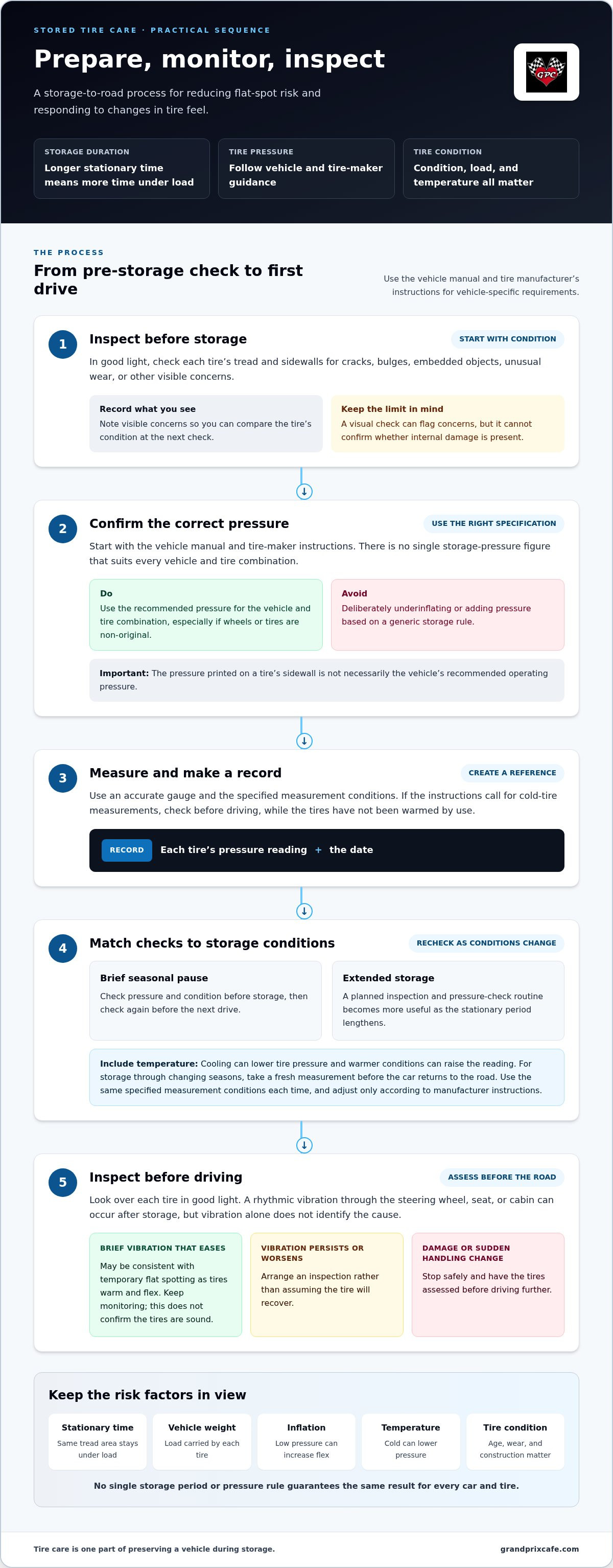
Before moving a stored car, inspect each tire in good light. Look across the tread and sidewalls for cracks, bulges, embedded objects, or unusual wear. These observations can flag a concern, but a visual check cannot establish whether internal damage is present.
Brief vibration that eases: This may be consistent with temporary flat spotting, but keep monitoring the sensation.
Vibration that persists or worsens: Arrange an inspection instead of assuming the tire will recover.
Visible damage or a sudden change in handling: Stop safely and have the tires assessed before driving further.
These signs help you decide how to prevent flat spots on stored car tires and what to do if a tire feels different after storage. Don’t treat every vibration as damage, but don’t dismiss persistent symptoms as harmless either. Match your response to the tire’s condition and what you notice.
How Tire Pressure, Temperature, and Storage Time Affect Flat Spots
Flat-spot risk depends partly on how a tire carries the vehicle’s weight over time. A properly inflated tire supports that load across its designed contact area. If pressure is too low, the sidewall flexes more and the tire may flatten further where it meets the floor. Leaving the same area under load for longer can make a temporary change more noticeable, although no single storage period guarantees damage.
In brief: Vehicle load, tire pressure, temperature, tire condition, and time stationary all influence how a tire responds in storage.
Should you adjust tire pressure before storing a car?
Start with the vehicle manual and tire-maker instructions. They provide pressure guidance for the vehicle and tire combination. Don’t deliberately underinflate tires to make the car sit lower, and don’t add pressure based on a generic storage rule. Either approach may take the tires outside their intended specifications.
Use an accurate gauge and follow the specified measurement conditions. If the instructions call for checking cold tires, measure before driving, when the tires have not been warmed by use. Record each reading and the date so you have a useful reference for the next check. The pressure printed on a tire’s sidewall is not necessarily the vehicle’s recommended operating pressure.
Does storage duration change the precautions to take?
A short seasonal pause and extended storage don’t call for the same level of attention. For a brief interval, checking pressure and condition before storage, then checking again before the next drive, can help identify changes. As the stationary period lengthens, a planned inspection and pressure-check routine becomes more useful. Set the timing according to the vehicle and tire-maker guidance rather than a universal calendar threshold.
Include temperature in that routine. As the air inside a tire cools, its pressure can fall; warmer conditions can raise the reading. A car stored through changing seasons may need a fresh measurement before it returns to the road. Use the same specified measurement conditions each time so readings are easier to compare, and adjust only according to the manufacturer’s instructions.
Storage time is only one factor. An older tire, visible wear, previous pressure loss, or a heavier vehicle may call for closer attention than a newer tire in sound condition under a lighter vehicle. If a reading is unexpectedly low or a tire’s condition has changed, don’t compensate by adding arbitrary pressure. Have the cause assessed before relying on that tire.
For a longer storage period, keep a written record of pressure, tire condition, and check dates. This makes the care plan easier to follow and helps distinguish a gradual pressure change from a new concern. It can sit alongside the wider preservation plan for the vehicle. Grand Prix Cafe provides year-round indoor car storage in Southampton, a secure storage option for owners planning their vehicle’s return to the road.
Moving the Car, Tire Cradles, or Tire Stands: Compare Flat-Spot Prevention Options
No single method suits every stored vehicle. Repositioning changes which part of the tread bears the load. Tire cradles spread contact over a broader area. Approved vehicle supports can take the load off the tires. The right option depends on the car, storage conditions, how long it will remain stationary, and the relevant manufacturer instructions.
Can moving a stored car help prevent flat spots?
Moving the car shifts the tire contact areas, but do so only when there is a safe, suitable route and the vehicle is fit to move. Before starting, consider the battery, brakes, and any storage requirements. Follow vehicle-specific guidance on whether and how often to reposition the car rather than applying a fixed driving interval to every vehicle.
Repositioning is not a substitute for checking tire condition and pressure. If the car should not be driven, don’t move it simply to rotate the tires.
When might tire cradles or other supports be appropriate?
Purpose-designed tire cradles support a tire over a shaped surface intended to distribute contact. Use them only as specified by their manufacturer and make sure they suit the vehicle and tires. They support the tires while the car remains on its wheels. They are not the same as lifting the vehicle to remove the load.
Lifting requires appropriate equipment, safe procedures, and the vehicle’s approved support points. Don’t improvise with unstable supports or use a cradle as a substitute for a properly supported vehicle.
Use the table to compare options, not as a ranking. A method that works for one car may not suit another, particularly when vehicle weight, tire condition, or storage requirements differ. Check the vehicle and tire guidance before deciding how to prevent flat spots on stored car tires, and follow the instructions for any support equipment.
For storage that considers the vehicle as a whole, Grand Prix Cafe offers secure, year-round indoor car storage in Southampton. Tire care can form part of the wider preparation for a car’s time off the road.
Pre-Storage Tire Checklist for Classic & Collector Cars
A consistent checklist gives you a clear record of tire condition before the vehicle is left standing. It also makes the first inspection after storage more useful: you can compare what you see with what you documented instead of relying on memory. For owners in Southampton and across Long Island, seasonal storage is a prompt to plan these checks, not a reason to use a different tire-pressure rule.
Inspect each tire. Check tread and sidewalls for unusual wear, cracking, embedded objects, bulges, or other visible damage. A visual check cannot diagnose these signs. If something concerns you, arrange a qualified inspection before storing or driving the car.
Consult the specifications. Review the vehicle manual and tire manufacturer’s guidance for pressure and storage instructions. This is especially relevant if the car has replacement tires or a non-standard wheel setup.
Measure and set pressure. Use an accurate gauge and follow the manufacturer’s specified measurement conditions. Record each tire’s reading rather than relying on a general storage figure.
Plan the support method. Decide whether the vehicle will remain on its tires, use suitable cradles, or be supported with approved equipment. Follow the relevant instructions and safe lifting procedures.
Record the condition. Note the date, pressure readings, and any visible concerns. Take clear photographs of areas you want to monitor, using consistent angles when you check again.
What should you inspect before the car sits?
Make the initial inspection in good light, with the car safely positioned. Record tread wear and visible sidewall condition alongside pressure readings taken as directed by the vehicle maker. Photographs can help you compare a crack, scuff, or wear pattern later, but they can’t determine whether damage is safe. Persistent pressure loss, visible damage, or uncertainty about roadworthiness calls for a qualified inspection.
Include tire preparation in the wider preservation plan. A considered long-term classic car storage plan accounts for the vehicle’s condition and the period it will be off the road instead of treating tires as a separate concern.
What should you check before driving the car again?
Before the first drive, inspect each tire again and recheck pressure using the specified procedure. Compare what you see with your pre-storage notes, looking for new damage or a pressure reading that has fallen. Begin cautiously in a safe setting and pay attention to vibration or handling changes. If symptoms are severe, persist, or accompany visible tire damage, don’t continue driving. Arrange an inspection first.
A dated record helps you follow the same process before and after storage. Grand Prix Cafe provides secure, year-round vehicle storage in Southampton. Explore indoor car storage as part of a practical plan for caring for a collector vehicle while it is off the road.
When Professional Indoor Car Storage Can Support Tire Preservation
Tire care is one part of preserving a collector vehicle while it is off the road. A sound storage plan considers the car as a whole: its condition, manufacturer guidance, intended storage period, and the steps needed before it returns to use. Tire precautions vary by vehicle, so check a familiar routine against the relevant specifications.
How does tire care fit into a broader storage plan?
Build tire checks into the same plan as other preparations for storage and return to the road. Record tire condition and pressure, follow the vehicle and tire-maker instructions, and set a reminder to inspect the tires before driving again. These steps support a more complete approach to classic car service in Southampton, where attention to mechanical condition is part of caring for a collector car.
For a secure, year-round storage solution, Grand Prix Cafe provides indoor vehicle storage in Southampton alongside specialized vehicle servicing, maintenance, and restoration. Indoor storage is one element of the plan, not a replacement for vehicle-specific tire care or checks.
When should a stored car’s tires receive professional attention?
Arrange an assessment if vibration persists after the car is back in use, a tire shows visible damage, pressure repeatedly falls, or you’re uncertain whether the vehicle is roadworthy. These signs call for inspection, not an automatic conclusion that a tire must be replaced. Avoid driving if symptoms are severe or damage is apparent until the car has been assessed.
For a collector vehicle, a measured response matters. An assessment can help determine whether a tire concern is temporary, related to another issue, or needs further work. Grand Prix Cafe’s car service and restoration support the wider care of classic and collector vehicles. Any technical recommendation should reflect the specific vehicle and tire guidance.
Advice on how to prevent flat spots on stored car tires is most useful when it becomes part of a consistent storage routine. Pair tire records and checks with a plan for the car’s overall preservation, whether it will be stored briefly or for an extended period.
Grand Prix Cafe offers year-round indoor car storage in Southampton for collectors in Southampton, Westhampton, East Hampton, Sag Harbor, Long Island, and Manhattan. Explore professional indoor car storage as a practical next step in planning for your vehicle’s time off the road.
Build a Care Plan for the Car’s Next Chapter
Give each storage period a clear beginning and end. Decide who will keep the tire records, when the car’s condition will be reviewed, and what checks are needed before it returns to the road. That continuity turns guidance on how to prevent flat spots on stored car tires into a routine suited to the individual vehicle rather than a one-size-fits-all rule.
For a collector car, storage is also an opportunity to plan its wider care. Grand Prix Cafe provides secure, year-round indoor vehicle storage in Southampton alongside specialized servicing, maintenance, and restoration for collector vehicles. These services can support a considered plan for the time a car is off the road and its return to use.
Explore indoor car storage and vehicle services at Grand Prix Cafe as you plan the car’s next storage period. With a clear routine and attention to the vehicle’s needs, you can approach its time away from the road with greater confidence.
Frequently Asked Questions
Can tires develop flat spots after a car is parked for a few weeks?
Yes, flat spotting can develop during a few weeks of stationary storage, but it isn’t inevitable. The likelihood depends on tire condition, inflation, vehicle weight, and storage conditions. Before putting a car away, note any existing vibration or uneven wear so you have a useful comparison later. After storage, inspect the tires and check pressure before driving. A calendar alone can’t determine whether they’re safe.
Are flat spots on stored car tires permanent?
No, not all flat spots are permanent. A temporary change may ease as the tire warms during normal driving, while a flat spot after a longer period may persist. Don’t assume either outcome based only on how the tire feels at first. If vibration doesn’t lessen, worsens, or comes with visible damage, arrange an inspection before continuing to drive. Tire age and condition also matter when assessing a stored vehicle.
Should I overinflate my tires before storing my car?
No. Don’t add pressure beyond the vehicle or tire manufacturer’s storage instructions based on a generic rule. The pressure listed on a tire’s sidewall is not necessarily the vehicle’s recommended setting. Check the owner’s manual and tire guidance, then use a reliable gauge under the conditions they specify. If your classic car has a non-standard wheel or tire setup, don’t guess at a target pressure.
Do tire cradles prevent flat spots on a stored car?
Tire cradles are designed to support tires over a shaped contact surface, which can help distribute the vehicle’s load. They may be useful if they suit the car and are used as directed, but they don’t guarantee that flat spotting won’t occur. Follow the cradle’s instructions and confirm it is suitable for your vehicle. Cradles are not lifting equipment and shouldn’t replace approved supports.
Should I move my car during long-term storage to prevent flat spots?
Repositioning may help if the vehicle’s storage guidance allows it and you can move the car safely. There’s no single driving interval that fits every car. Before moving it, consider whether the battery, brakes, and storage arrangements are ready for use. Follow vehicle-specific instructions rather than starting or driving the car solely to meet a generic schedule.
Can cold weather cause flat spots on car tires?
Cold conditions can make temporary flat spotting more noticeable, and tire pressure can fall as temperatures drop. That doesn’t mean cold weather alone will cause lasting damage. For seasonal storage in Southampton or elsewhere on Long Island, measure pressure according to the vehicle and tire-maker instructions, especially before the first drive after a temperature change. Use the manufacturer’s specified measurement conditions instead of comparing readings taken under different conditions.
Is it safe to drive a car if the tires feel flat-spotted after storage?
First inspect the tires and check pressure against the vehicle’s specifications. If there’s visible damage, severe vibration, or a change in handling, don’t continue driving. Arrange a qualified inspection. If the tires appear sound and the vibration is mild, it may ease as they warm, but monitor the car carefully in a safe setting. Persistent or worsening symptoms need assessment, not the assumption that driving will correct them.
Comments