


Trusted classic car mechanic near me for repairs and maintenance
The right classic-car mechanic is measured by the clarity of the work, not the length of the estimate. A trusted classic car mechanic near me should explain each repair recommendation, distinguish urgent work from routine maintenance, and relate the plan to the car’s condition. Clear communication matters as much as mechanical skill.
It’s reasonable to expect careful work that respects your vehicle’s originality, service history, and intended use. Before approving repairs, make sure you understand what the mechanic found, why the work is needed, and what can be monitored over time.
This guide explains how to assess repair recommendations and customer service, what to discuss when planning maintenance, and how to approach oil changes for a classic vehicle. You’ll also learn how age, condition, and use shape service needs, so you can make informed decisions and recognize when a specialist service center is the right next step.
Table of Contents
Repair recommendations and customer experiences
Good repair advice connects a diagnosis to the car’s condition, intended use, and preservation priorities. In Bay Shore, restoration timelines range from a few weeks for some projects to several months or longer for extensive work.
Repair Estimates and Customer Service
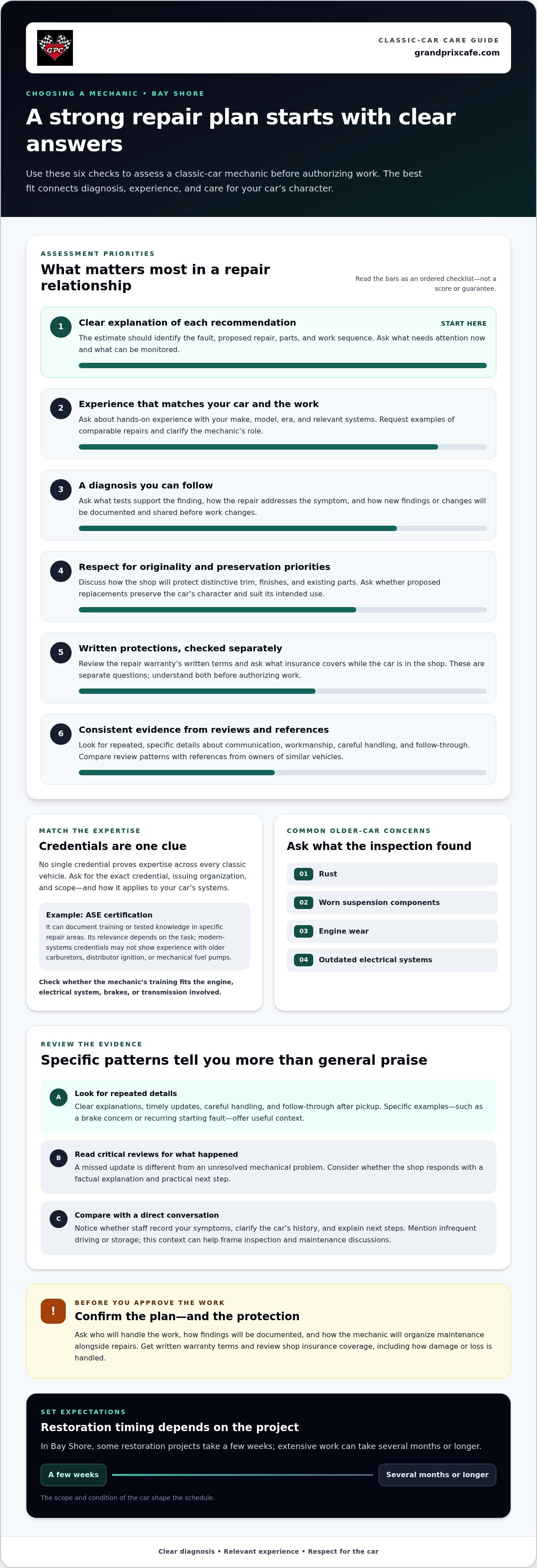
A useful estimate identifies the fault, proposed repair, parts, and work sequence. Ask which findings need attention now and which can be monitored. For a British car, discuss the specific model and systems involved, such as its cooling circuit, electrical components, or suspension. Common concerns in older vehicles include rust, worn suspension components, engine wear, and outdated electrical systems.
Customer service shows in the explanation, not just the estimate. Look for clear updates, documented changes, and a direct explanation when inspection reveals additional work. For cooling or heating problems, ask what tests support the diagnosis and how the recommended repair addresses the symptom. A classic car or truck repair in Bay Shore may involve different priorities depending on condition, use, and the owner’s preservation goals.
Hiring Checks, Shop Protections, and Repair Risks
Ask about experience with your make and era, how findings are documented, and who will handle the work. Certifications can indicate training, but ask how that knowledge applies to your vehicle’s particular systems. Request written warranty terms for the repair and ask what insurance covers while the car is in the shop. These are separate questions, and clear written answers help define protections and responsibilities.
Repair warranties and insurance depend on their written terms and coverage. Review both before authorizing work, including what the warranty covers and how the shop handles damage or loss.
An inexperienced shop may misdiagnose faults, fit unsuitable parts, or disturb original components during repair. Ask how the mechanic will protect distinctive trim, finishes, and existing parts, and whether proposed replacements preserve the car’s character. Specific answers show whether the repair plan respects both mechanical function and historical integrity.
Customer reviews and service experience
Reviews offer clues about communication, consistency, and how a shop handles unexpected findings. Look for specific examples, not praise alone.
Customer Review Patterns
Look for repeated details across reviews: clear explanations, timely updates, careful handling, and follow-through after pickup. A review describing a brake concern or recurring starting fault gives more useful context than a general compliment. Note whether customers explain the work performed and the outcome. Similar comments from different owners can reveal patterns in the service experience.
Read critical reviews for useful specifics, too. A complaint about missed updates differs from one describing an unresolved mechanical problem. Consider how the shop responds: a factual explanation and practical next step are more informative than a defensive reply. Reviews are individual accounts, so compare their details with your priorities rather than treating one comment as a final verdict.
Experience and Reference Checks
To assess a mechanic’s experience, ask about work on your vehicle’s make, model, and era, then request examples of comparable repairs. References from owners with similar vehicles can help you understand the mechanic’s communication and workmanship. Ask which systems were repaired and whether the work involved preservation, routine service, or fault diagnosis.
Use a brief conversation to assess how clearly the mechanic discusses the car. For example, describe an intermittent electrical fault and listen for a focused explanation of the diagnostic steps. Ask how updates are shared and how new findings are communicated before the work changes. Specific, consistent answers help you judge whether the shop’s approach suits your expectations.
Customer service also appears in practical details. Notice whether staff record the symptoms you report, clarify the vehicle’s history, and explain the next step without rushing the discussion. If your classic car has been stored or driven infrequently, mention that context; it can help frame the inspection and maintenance conversation.
Compare review patterns with direct references and your own interaction. For a further perspective on specialist care, explore classic-car expertise.
What certifications should a classic car mechanic have
No single credential proves expertise across every classic vehicle. A mechanic’s training should match the work, the car’s systems, and its period. For example, an electrical fault in a Jaguar may require different diagnostic experience than carburetor tuning on an MG. Treat certifications as one useful indicator, then assess hands-on experience and the mechanic’s explanation of the proposed work.
Automotive credentials, including certifications from the National Institute for Automotive Service Excellence (ASE), can document training or tested knowledge in specific repair areas. Their relevance depends on the task. A credential focused on modern systems alone may say little about servicing an older carburetor, distributor ignition, or mechanical fuel pump. Ask what the credential covers and how the mechanic applies that knowledge to your vehicle.
Match the specialty: Ask about training related to the car’s engine, electrical system, brakes, or transmission.
Review the evidence: Request the credential’s exact title, issuing organization, and scope.
Connect it to experience: Ask for examples of comparable classic-car repairs and the mechanic’s role.
Credentials can support confidence in focused work, such as diagnosing a charging problem or rebuilding a braking system. They don’t replace familiarity with marque-specific details, parts availability, or preservation priorities. Ask the mechanic to explain how training informs the diagnosis, what checks will establish the fault, and how the repair plan protects original components where appropriate. A clear answer connects qualifications to practical steps, not just a certificate title.
For a restoration or complex repair, ask who will perform each part of the work and how their experience fits the car. One mechanic may have broad service knowledge while another technician handles specialized tasks. Clarifying those roles helps you understand who is responsible for diagnosis, workmanship, and communication throughout the project. The right qualification supports the specific repair, backed by relevant experience and an approach you can understand.
Questions to ask before hiring a classic car mechanic
Use the first conversation to understand how the shop approaches your vehicle, not just its immediate fault. Questions about diagnosis, parts, approval, and maintenance reveal whether the process fits your priorities. Finding a trusted classic car mechanic near me starts with asking for clear reasoning behind the proposed work.
How will you diagnose this symptom? For an intermittent misfire, ask which checks can distinguish ignition, fuel, and compression problems.
Have you worked on this make and model? Ask for a relevant example, such as service on a British sports car with a carbureted engine.
Which parts do you recommend? Clarify whether parts are original, rebuilt, or replacement components, and why they suit the repair.
How do you handle additional findings? Ask when you’ll receive an update and how approval works before the plan changes.
What records will I receive? Discuss itemized work notes, replaced parts, and maintenance recommendations for the vehicle’s history file.
How should I prepare the car? Share its service records, storage history, recent symptoms, and intended use before inspection.
Listen for answers that connect evidence to action. If a mechanic recommends replacing a component, ask what inspection or test supports that conclusion. A clear explanation should distinguish immediate repair needs from work that can be scheduled later. This helps you compare proposed plans by scope and reasoning, not wording alone.
Discuss how the shop will preserve existing components and document changes. On a vehicle with original trim or period-specific equipment, identify parts that should remain untouched unless repair requires otherwise. Agree on the communication method and who is responsible for updates, especially if several technicians handle different tasks.
Before committing, summarize the agreed scope in writing: the reported concern, diagnostic steps, approved work, and update process. A trusted classic car mechanic near me should be able to explain that plan in terms you understand. If your decision also includes choosing a vehicle, you can browse classic cars for sale as a separate consideration.
Grand Prix Cafe: Car Service
Grand Prix Cafe provides car service for owners seeking ongoing attention for a classic vehicle. Turn to its service offering when the car needs maintenance or repair and you want one automotive center to consider its condition and care needs.
For owners considering a different vehicle, Grand Prix Cafe also offers classic car sales and vehicle consignment services. Year-round indoor car storage is another option for protecting a vehicle between drives or during a period of limited use. Each service addresses a distinct ownership need, from maintaining a car to arranging its sale or storage.
Share the vehicle’s history, current concerns, and intended use when discussing service. That context helps shape the work around your priorities and the car itself. Contact Grand Prix Cafe in Southampton to discuss service for your classic vehicle.
Make Your Next Step Part of the Car’s Care
A classic vehicle’s next service decision can affect how it performs and how well its character is preserved. Choose a mechanic whose communication and approach suit your priorities, then keep a clear record of the work. That record can guide future maintenance, support ownership decisions, and make changes in the car’s condition easier to track.
If you’re still looking for a trusted classic car mechanic near me, Grand Prix Cafe provides car service alongside classic car sales and vehicle consignment services. Whether you’re arranging maintenance or considering the car’s next chapter, start with a conversation about its condition and your plans for it.
Contact Grand Prix Cafe today to discuss your classic car. A thoughtful next step can help you care for the vehicle with greater confidence.
Frequently Asked Questions
How to find a trusted classic car mechanic near me?
To find a trusted classic car mechanic near me, shortlist workshops with experience on your car’s make, model, and era, then ask how they diagnose faults and document repairs. Request an itemized estimate before authorizing work, and ask how replacement parts are sourced. In Southampton, Westhampton, East Hampton, and Sag Harbor, Grand Prix Cafe provides car service and restoration for owners seeking specialist attention.
Classic car mechanic reviews and ratings near me?
Compare reviews for detailed accounts of work on vehicles similar to yours, rather than relying on an overall rating alone. Look for comments about diagnosis, communication, parts sourcing, and how the shop handled unexpected findings. Ask the mechanic for examples of relevant repair work and the records provided afterward. For owners across Long Island and Manhattan, these details can help distinguish classic-car experience from general repair service.
How much does classic car repair cost near me?
Classic car repair costs depend on the fault, vehicle condition, parts availability, and whether the work involves routine maintenance, repair, or restoration. Ask for a written estimate that separates diagnosis, labor, and parts, and confirm that additional work requires your approval. In Southampton, Grand Prix Cafe provides car service and restoration; discuss the vehicle’s symptoms and history to plan the next steps.
Comments