


Classic Car Bodywork Repair on Long Island: Preserving Automotive Heritage
A standard collision center is the wrong environment for an investment-grade vintage vehicle. For owners seeking classic car bodywork repair Long Island offers various options, yet few facilities understand the critical distinction between a modern fix and historical preservation. True restoration is an exercise in mechanical curatorship. It's about erasing damage while protecting the vehicle's provenance. Every panel beat and every coat of paint must align with the car's specific era and original manufacturing standards.
You likely understand that a single error in paint matching or a shortcut in metalwork can compromise a car's market value and its structural soul. The anxiety over hidden rust being covered rather than cured is a valid concern for any serious collector. This article explores the technical precision and specialized craftsmanship required to restore the structural and aesthetic integrity of investment-grade vintage vehicles. We'll examine the methodologies used to treat corrosion at the source, the chemistry of period-correct finishes, and the rigorous standards required to maintain a vehicle's historical accuracy. You'll discover how specialized technicians use technical data and traditional skills to ensure your vehicle remains a true representation of its heritage.
Table of Contents
The Distinction Between Classic Bodywork and Modern Collision Repair
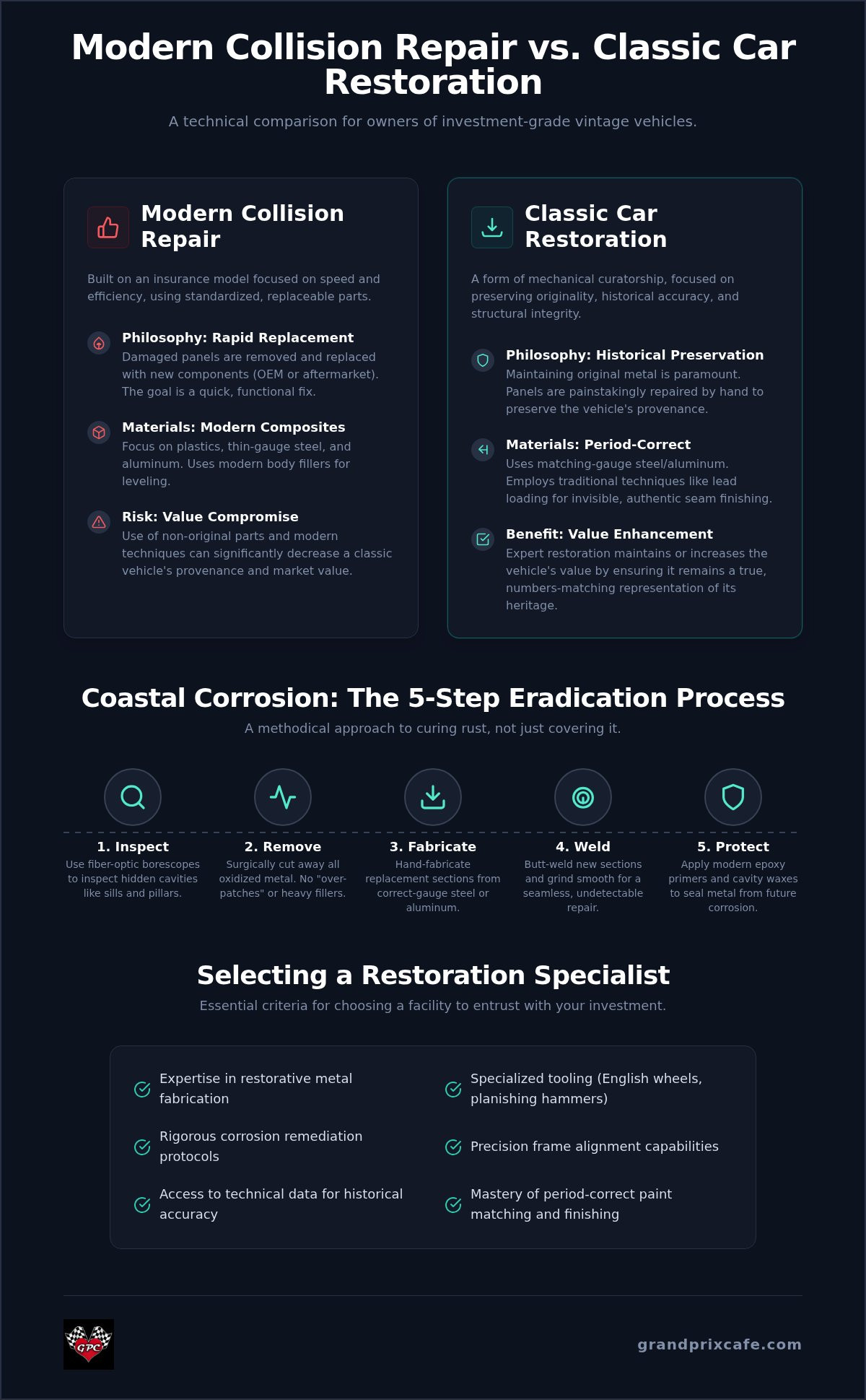
Modern collision repair is built on the insurance model of rapid component replacement. Technicians remove damaged plastic or thin-gauge steel panels and bolt on new ones. Conversely, high-end automotive restoration is a subtractive and additive process that prioritizes the structural integrity of the original chassis. Vintage vehicles often utilize body-on-frame or early monocoque designs that require a deep understanding of load-bearing metalwork. When performing classic car bodywork repair Long Island specialists must treat the vehicle as a singular historical artifact rather than a collection of swappable parts.
Preserving the Provenance of Original Panels
Maintaining the original skin of a vehicle is paramount for investment-grade assets. Original, numbers-matching steel or aluminum carries a history that new reproductions cannot replicate. In the context of Concours d'Elegance judging, the presence of original metal and factory-correct welds significantly impacts a vehicle's score. Expert panel beating allows for the correction of distortions without compromising the thickness or temper of the material. Replacement is a last resort. It's only considered when the structural integrity of the metal is beyond the reach of traditional remediation.
Tooling Requirements for Vintage Marques
Most insurance-driven shops lack the specialized equipment necessary for vintage alloys. Modern centers are optimized for spot welding and plastic bonding; for instance, owners of contemporary vehicles can explore Collision and Mechanical Repair Service Fees to see how professional facilities like Fix My Car handle standard technical requirements. Conversely, a specialized facility for classic car bodywork repair Long Island utilizes traditional tools such as English wheels, planishing hammers, and shrinker-stretchers to shape metal by hand. These tools are essential for working with diverse materials, including thin Italian superleggera aluminum or heavier British steel. Precision is the baseline. We focus on maintaining factory-correct panel gaps and shut lines that define the vehicle's silhouette.
Traditional techniques like lead loading are also absent from modern shops. While contemporary body fillers are common, lead loading provides a period-correct method for leveling seams and transitions on vintage bodies. This meticulous approach ensures that every repair remains invisible and consistent with the era of manufacture. It's a standard of mechanical curatorship that protects the vehicle’s historical soul while ensuring its aesthetic perfection.
Specialized Metal Fabrication and Rust Remediation on Long Island
Long Island's geography poses specific challenges for vintage steel. Salt air from the Atlantic permeates unsealed cavities, initiating electrochemical reactions that lead to perforation. Effective classic car bodywork repair Long Island requires a methodical approach to identifying oxidation before it compromises the chassis. We use fiber-optic borescopes to inspect internal sills, pillars, and box sections. Once identified, oxidized metal is surgically removed. We don't use "over-patches" or heavy fillers that merely trap moisture. Instead, we hand-fabricate replacement sections from cold-rolled steel or aluminum, ensuring the new metal matches the original gauge and grain. Each patch is butt-welded and ground smooth, resulting in a repair that is indistinguishable from the original panel once finished.
Coastal Corrosion Challenges for Hamptons Collectors
Salt air is relentless. It carries moisture deep into door bottoms and floor pans where it remains trapped. Media blasting is a surface preparation technique where abrasive materials are propelled against the metal at high pressure to strip away old finishes and corrosion without warping the substrate. This process reveals the true condition of the steel. While the history of automotive color shows how finishes evolved, the longevity of that color depends entirely on the remediation of the metal beneath. Modern epoxy primers and cavity waxes now provide a barrier that original manufacturers couldn't offer, sealing the metal against the Long Island climate.
Structural Integrity and Frame Alignment
Decades of use lead to metal fatigue, particularly in high-stress areas like suspension mounting points. Frame alignment is checked on dedicated jigs to ensure the vehicle tracks correctly. This is particularly vital when performing accident repair vintage vehicle services, where structural geometry must be restored to factory specifications. A frame-off restoration allows for the total inspection of the chassis, identifying stress fractures that are invisible when the body is mounted. Maintaining the highest standards for classic car bodywork repair Long Island involves more than just surface aesthetics; it requires a deep commitment to structural health. Ensuring geometric accuracy is the only way to maintain the driving dynamics of a high-end classic. If you suspect oxidation in your vehicle's sills or floor pans, our technicians can provide a detailed structural assessment at our Southampton facility.
Achieving Period-Correct Paint Finishes and Surface Integrity
Achieving a period-correct finish is the final, most visible stage of classic car bodywork repair Long Island. It's a process that requires balancing historical aesthetic standards with modern chemical durability. Collectors must often choose between a "full concours" finish-where every surface is perfected beyond factory standards-and "patina preservation," which maintains the character of aged paint. This decision dictates the entire preparation strategy. While modern clear coats offer superior UV protection and depth, they can sometimes look "too deep" for vehicles originally finished in single-stage nitrocellulose or enamel. We specialize in tailoring the finish to match the vehicle's specific era and the owner's preservation goals.
The Science of Color Matching
Matching aged factory color codes requires more than a simple database search. We utilize spectrophotometry to analyze the light-reflective properties of the existing finish. This technology allows us to account for decades of UV exposure and oxidation. Sourcing historically accurate pigments is essential for European and American classics alike. We prefer utilizing premium systems such as Glasurit or Standox to achieve the necessary color depth. Test panels are a critical part of our workflow. We evaluate the "flop," which is the shift in color tone when viewed from different angles, and the specific metallic grain to ensure the repair is indistinguishable from the original factory application.
Surface Preparation and Priming Layers
The integrity of the final finish is determined by the layers beneath it. We apply high-build epoxy primers to bare metal to provide a stable foundation and superior adhesion. This is followed by a meticulous process of guide coating and block sanding. Technicians apply a contrasting color coat and sand it back to reveal any minute imperfections in the panel surface. This cycle repeats until the surface is perfectly level. Environmental control is paramount. We manage humidity and temperature throughout the application and curing phases to prevent solvent entrapment or surface contamination. This rigorous attention to detail ensures that the final coat possesses the mirror-like clarity expected of an investment-grade restoration. It is this level of technical precision that defines professional classic car bodywork repair Long Island.
Selecting a Restoration Specialist on Long Island
Selecting a facility for classic car bodywork repair Long Island requires a rigorous vetting process. It's not enough to rely on general automotive experience. A discerning owner must evaluate a shop’s portfolio for specific marques similar to their own. Each era and manufacturer utilized unique metallurgical compositions and assembly techniques. A technician skilled in British steel may lack the specialized knowledge required for Italian aluminum superleggera. The facility itself serves as a primary indicator of quality. Cleanliness and organization are not merely aesthetic; they reflect the shop's standard for mechanical curatorship. An organized environment ensures that delicate components are cataloged and protected during the long-term restoration process.
Transparency in documentation is a non-negotiable standard. Professional specialists track labor hours meticulously and provide high-resolution photo-documentation of every stage. This record preserves the vehicle's history and justifies the investment. It's an essential component of high-end classic car maintenance New York collectors expect. Without a clear paper trail, the provenance and future market value of the vehicle can be compromised.
Questions to Ask Before Commissioning Bodywork
Technical precision begins with the right questions. Inquire about the specific welding techniques employed. While MIG welding is common, TIG welding offers the heat control necessary for thin-gauge vintage metal and aluminum. You should also clarify the shop's approach to corrosion. A quality repair involves cutting out oxidized metal and performing metal-to-metal repairs rather than relying on heavy polyester fillers. Finally, ask about their strategy for parts sourcing. Rare models often require a global network of suppliers or the in-house capability to fabricate obsolete components from scratch.
The Value of an Integrated Facility
Managing vintage car restoration New York under one roof offers significant advantages. It eliminates the logistical risks associated with transporting a freshly painted shell between disparate vendors. Damage during transit is a common and costly setback. An integrated approach ensures a cohesive final assembly. Bodywork and mechanical systems are deeply intertwined; a slight misalignment in a panel can interfere with cooling systems or suspension travel. Having technicians and mechanics collaborate in the same space ensures that aesthetic perfection never compromises mechanical function. If you're seeking a facility that prioritizes this level of technical integration, you can contact our Southampton team to discuss your project specifications.
The Grand Prix Cafe Standard for Automotive Bodywork
Grand Prix Cafe operates with a philosophy of mechanical curatorship. Our approach to classic car bodywork repair Long Island combines traditional metal-shaping techniques with modern measurement precision. We don't view bodywork as a standalone task; it's a critical phase in a vehicle's lifecycle that requires a holistic understanding of its engineering. Our Southampton facility serves as a primary hub for classic car bodywork repair Long Island, offering collectors a level of technical excellence that matches the prestige of their vehicles. Every project is accompanied by a comprehensive digital dossier. This ensures the owner remains informed of every structural correction and finish application through meticulous documentation.
This standard extends beyond the workshop floor. There is a direct synergy between our restorative services and our exotic car storage Southampton facility. Vehicles transitioning from active restoration to long-term storage benefit from a continuous chain of custody. This integrated model reduces the risks of environmental exposure and transit damage. It maintains the integrity of the freshly applied finishes and the underlying metalwork over the long term.
Boutique Service for Discerning Owners
We provide a boutique experience characterized by personalized project management. Owners receive regular technical updates and photographic progress reports to maintain total transparency. Our expertise encompasses a broad spectrum of European marques. We handle everything from the precise panel alignment of a vintage Porsche to the specialized structural requirements of an iconic Land Rover restoration. The focus remains on long-term preservation. We ensure every intervention protects your automotive investment while adhering to the highest standards of historical accuracy and mechanical integrity.
Location and Accessibility
Our facility is strategically positioned to serve the Hamptons, Manhattan, and the broader Long Island community. This accessibility allows local collectors to maintain a close relationship with the technicians overseeing their vehicles. We also offer seamless integration with our sales and consignment departments. This ensures any bodywork performed enhances the vehicle's marketability and provenance. If your vehicle requires expert attention to its structural or aesthetic integrity, Contact Grand Prix Cafe to discuss your vehicle's bodywork needs. Our team is prepared to provide a professional assessment of your specific restoration requirements.
Securing the Future of Your Automotive Legacy
Preserving an investment-grade vehicle requires a shift from standard repair mentalities toward a philosophy of mechanical curatorship. You've seen that true restoration prioritizes the preservation of original metal and the application of period-correct paint chemistry. When seeking classic car bodywork repair Long Island collectors must prioritize facilities that offer specialized technicians for vintage European marques and a transparent, documented workflow. It's this level of technical rigor that protects a vehicle's provenance and long-term value.
Our Southampton-based boutique facility provides the integrated services necessary to protect your vehicle's historical integrity. From meticulous structural remediation to comprehensive year-round storage solutions, we ensure every technical detail aligns with original factory standards. You can request a consultation for your classic car restoration at Grand Prix Cafe to discuss the specific requirements of your collection. We look forward to helping you maintain the integrity and historical soul of your vintage vehicle for many years to come.
Frequently Asked Questions
How long does a typical classic car bodywork restoration take?
Restoration timelines are dictated by the specific scope of work and the availability of rare components. A focused repair may require several weeks, whereas a comprehensive frame-off restoration often extends beyond twelve months. We prioritize technical accuracy and proper curing times over speed. This methodical pace ensures that the structural and aesthetic integrity of the vehicle remains uncompromised for the long term.
Can you match the original factory paint on a car from the 1960s?
We utilize spectrophotometry and historical color archives to replicate finishes from any era. While modern chemistry provides superior UV protection, we can adjust our application techniques to mimic the specific gloss and texture of 1960s single-stage paints. This allows for a repair that matches the original aesthetic while benefiting from contemporary durability. Test panels are always utilized to verify the metallic grain and color flop.
Is it better to repair an original fender or buy a reproduction part?
Preserving original metal is the preferred methodology for maintaining a vehicle's provenance. Original panels often possess superior fitment and historical value that reproduction parts don't replicate. We suggest replacement only when the original substrate is structurally compromised beyond the reach of traditional metal-shaping techniques. Maintaining the original skin of the vehicle is a critical factor in achieving high scores during Concours d'Elegance judging.
How do you prevent rust from returning after a repair?
Rust remediation involves the surgical removal of oxidized metal followed by the application of high-build epoxy primers. We utilize specialized cavity waxes to seal internal box sections and pillars against the corrosive salt air of the Atlantic. This multi-layered defense prevents moisture from reaching the substrate. Treating corrosion at the source is the only reliable way to ensure that oxidation doesn't return to compromise the new finish.
Do you work with aluminum-bodied cars like vintage Ferraris or Jaguars?
Our facility is equipped to handle the specialized requirements of aluminum-bodied marques. Aluminum fabrication requires dedicated tooling and TIG welding processes to prevent cross-contamination with steel particles. Technicians at our Southampton center understand the metallurgical nuances of Italian superleggera and British aluminum designs. This expertise ensures that delicate panels on vintage Ferraris or Jaguars are shaped and repaired without compromising the temper or structural integrity of the alloy.
Can you perform bodywork repairs while my car is in long-term storage?
We offer integrated services that allow for classic car bodywork repair Long Island to be completed while a vehicle is in our storage facility. This approach is ideal for off-season projects or minor aesthetic corrections. It eliminates the logistical risks of transporting the car between multiple vendors. Our team manages the transition from storage to the workshop, ensuring that the vehicle remains in a climate-controlled environment throughout the process.
What is the difference between a 'driver-quality' and 'concours-quality' finish?
A driver-quality finish focuses on aesthetic appeal and durability for vehicles intended for regular road use. It provides a high standard of protection without the exhaustive labor required for a show car. A concours-quality finish involves hundreds of hours of block sanding and surface leveling to achieve a mirror-like clarity. Every panel gap and shut line is perfected to meet or exceed original factory standards for high-level exhibition.
Will bodywork repairs affect the resale value of my classic car?
Professional classic car bodywork repair Long Island enhances resale value by securing the vehicle’s structural integrity and aesthetic provenance. Collectors value high-quality, photo-documented repairs that utilize period-correct materials and techniques. Conversely, poorly executed work or the excessive use of body fillers can significantly reduce a vehicle's market appeal. Investing in specialized craftsmanship ensures that the car remains a desirable asset within the global collector community.
Comments