


The Definitive Guide to Classic Car Engine Rebuilds on Long Island
- sales299631
- 1 day ago
- 12 min read
The integrity of a matching-numbers engine is the primary factor in a vintage vehicle's valuation and historical relevance. For owners on the South Shore or the East End, the decision to undertake a classic car engine rebuild on Long Island involves more than mechanical repair. It's an act of preservation against a notoriously corrosive coastal environment. Salt air and extended seasonal storage demand a level of technical precision that exceeds standard machining practices.
You recognize that a haphazard restoration does more than compromise performance; it erodes the provenance you've carefully maintained. This guide establishes the technical requirements and curatorial standards necessary to return your vehicle to its factory specifications while ensuring modern reliability. We'll examine the specific challenges of the New York climate, the documentation required to protect future resale value, and the precise methodology used to maintain historical accuracy for high-value European and domestic marques. From sourcing period-correct components to achieving the reliability required for summer driving in the Hamptons, this resource serves as a roadmap for the discerning collector who views their vehicle as both a mechanical masterpiece and a significant financial asset.
Table of Contents
The Philosophy of Engine Restoration: Mechanical Curatorship on Long Island
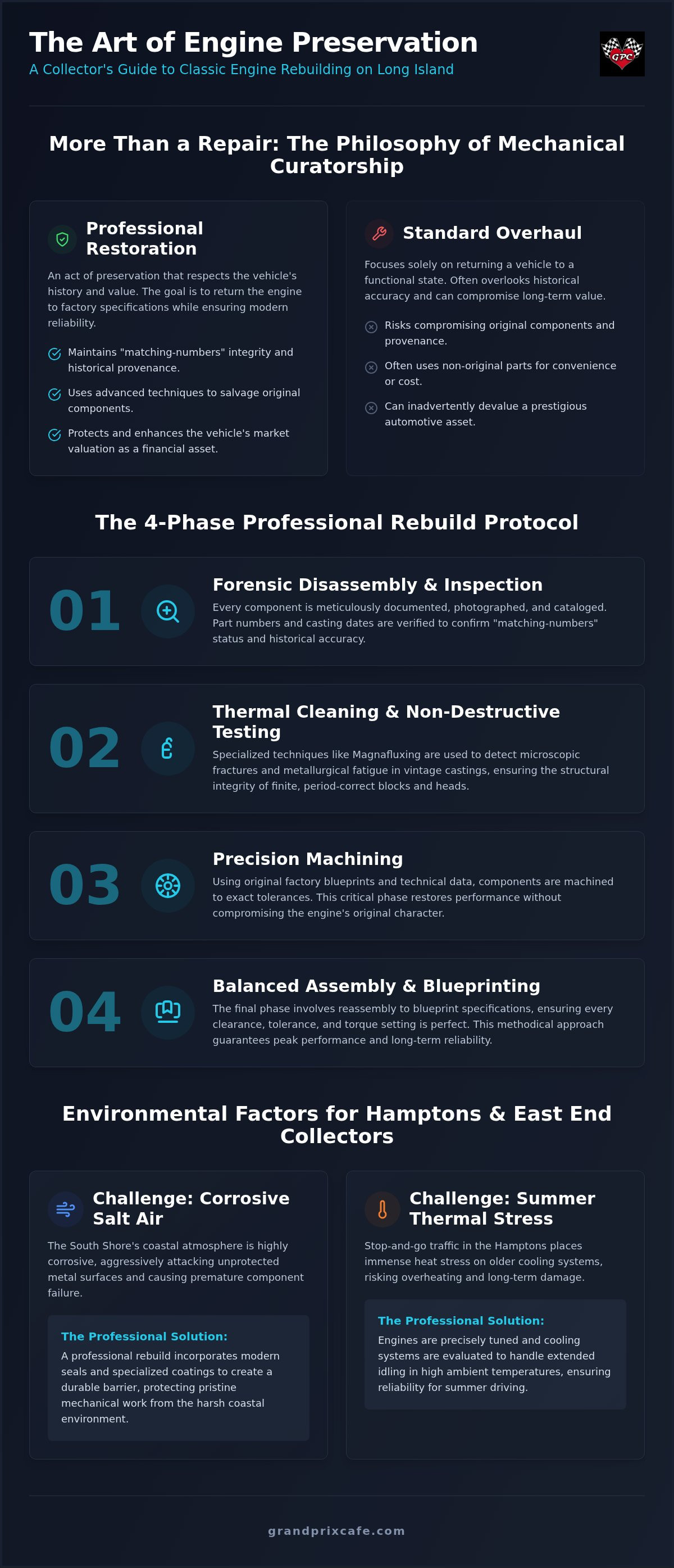
A classic car engine rebuild on Long Island is an exercise in mechanical curatorship. It is distinct from a standard engine overhaul, which focuses solely on returning a vehicle to a functional state. Curatorship involves a deep understanding of historical engineering and metallurgical integrity. The engine serves as the primary driver of a vehicle’s historical value. For collectors, maintaining a "matching-numbers" status is vital for long-term valuation. The Philosophy of Engine Restoration requires that every component be evaluated against its original factory tolerances. This ensures the vehicle remains a faithful representation of its era while performing with modern reliability. A rebuild is not just a repair; it's a commitment to preserving an automotive asset.
Collectors on the East End require a specialized approach to mechanical integrity. The engine block is a finite resource. Once a period-correct block is compromised by poor machining or non-original parts, its historical provenance is lost. A professional classic car engine rebuild Long Island respects these stakes. It prioritizes the retention of original components through advanced salvage and machining techniques. This methodology protects the vehicle's market position while ensuring it remains capable of spirited driving on local roads.
The Specialist vs. The General Mechanic
General repair shops often lack the specialized knowledge required for vintage European marques. Vintage alloys and sand-cast blocks require specific handling that modern aluminum engines don't. A boutique facility focuses on transparency and documentation. This process includes recording every measurement and sourcing period-correct hardware that generalists might overlook. Precision is the priority. Without the correct technical data, a rebuild can inadvertently devalue a prestigious asset. Specialized technicians understand the specific nuances of Porsche, Ferrari, and other high-end marques. They utilize diagnostic equipment designed for older systems, ensuring every specification meets the original manufacturer's intent.
Regional Considerations for Hamptons Collectors
Collectors in the Hamptons face environmental factors that don't affect inland vehicles. The salt air of the South Shore is highly corrosive. It attacks unprotected metal surfaces and can lead to premature component failure. A professional rebuild must account for these conditions. Modern seals and specialized coatings are often used to provide a barrier against the coastal atmosphere. Additionally, the stop-and-go traffic typical of East End summers places immense thermal stress on older cooling systems. Engines must be tuned to handle extended idling in high ambient temperatures. Utilizing professional indoor car storage in Southampton NY during and after the rebuild protects the engine from humidity. This ensures the mechanical work remains pristine for the driving season and maintains the vehicle's overall condition.
The Anatomy of a Professional Classic Engine Rebuild
A professional classic car engine rebuild on Long Island requires a disciplined, four-phase technical protocol. It begins with precision disassembly and forensic labeling. Every fastener and component is documented to ensure reassembly matches original specifications. This is followed by thermal cleaning and non-destructive testing, such as Magnafluxing, to detect microscopic fractures in vintage castings. The third phase involves machining to original factory blueprints. The process concludes with balanced assembly and blueprinting. This methodical approach ensures the engine performs at its peak while maintaining its historical identity.
Forensic Disassembly and Inspection
Maintaining provenance is the primary objective of forensic disassembly. Technicians document the "as-found" condition of every assembly through detailed photography and cataloging. This includes verifying original part numbers and casting dates to confirm "matching-numbers" status. Identifying structural fatigue in vintage blocks and cylinder heads is critical. High-value European engines often feature complex metallurgical compositions that require specialized inspection techniques. This level of technical scrutiny is the hallmark of a classic car engine rebuild Long Island. By creating a comprehensive digital and physical record, we ensure the vehicle's history remains intact throughout the restoration process. This documentation serves as a vital asset during future appraisals or auction presentations.
Machining and Component Refurbishment
Restoring a vintage block is a delicate operation. It requires Precision Engine Engineering to meet original factory tolerances while correcting decades of wear. Our facility sources rare, authentic components through a global network of specialized suppliers. Boring and honing are performed with extreme accuracy to match period-correct piston specifications. We also address modern environmental requirements. This includes valve train restoration with hardened seats and guides to ensure compatibility with modern unleaded fuel. For those seeking the highest level of technical execution, our car restoration services provide the necessary expertise to preserve mechanical integrity.
The final stage is blueprinting and balanced assembly. Every component, from connecting rods to crankshafts, is weighed and measured to eliminate vibrations and internal friction. This process optimizes power delivery and longevity. It transforms a standard mechanical assembly into a refined high-performance unit. The result is an engine that is both historically accurate and mechanically superior. This level of detail is essential for a classic car engine rebuild Long Island, especially for vehicles intended for both display and high-speed touring.
Originality vs. Drivability: Balancing Heritage with Performance
The decision-making process for a classic car engine rebuild on Long Island involves a complex evaluation of market value versus mechanical utility. Modifications that increase performance often decrease auction desirability. Organizations like the Automotive Restoration Market Organization (ARMO) emphasize the importance of industry standards in maintaining the health of the collector market. For high-value assets, a specialist ensures that any mechanical intervention respects the vehicle's heritage. A balanced approach preserves the aesthetic while enhancing the internal mechanics for modern fuel and traffic conditions. This technical guidance is vital for collectors who intend to both show and drive their vehicles.
The Importance of Matching Numbers
Numbers-matching status refers to an engine that retains the original block and components assigned by the factory. This documentation is the cornerstone of a vehicle's provenance. Our approach to Vintage Car Restoration in New York prioritizes the preservation of these original castings. Even in cases of catastrophic mechanical failure, advanced techniques like cold metal stitching or precision laser welding can often save an original block. This preserves the vehicle's historical identity where a replacement would diminish its value. A professional classic car engine rebuild Long Island must account for these technical nuances to protect the owner's investment. We prioritize the retention of original serial numbers to ensure the vehicle's pedigree remains undisputed.
Discrete Modernization for Reliable Summer Driving
Reliability is essential for summer driving in the Hamptons. Discrete modernization allows for improved performance without altering the engine bay's period-correct appearance. High-efficiency aluminum radiators can be painted to mimic original brass units; electronic ignition systems are often concealed within original distributor housings. These upgrades address Long Island's high humidity and stop-and-go traffic. Modern viton gaskets and multi-layer steel seals replace original cork or paper versions. These materials prevent the fluid leaks and mechanical decay common in stored vintage vehicles. We guide collectors through these choices to ensure the vehicle remains both a showpiece and a functional machine. It's about achieving mechanical perfection without sacrificing the soul of the machine.
Selecting a Restoration Partner on Long Island
Choosing a facility for a classic car engine rebuild Long Island requires a rigorous vetting process. A general service shop cannot provide the mechanical curatorship necessary for high-value European marques. You must verify that the facility possesses specialized diagnostic and machining equipment specifically for vintage Ferrari or Porsche blocks. Transparency in project management is equally critical. A professional shop should provide a structured timeline and clear communication regarding the status of your asset. Finally, ensure the facility offers secure, climate-controlled storage to protect components from the corrosive coastal atmosphere.
The Long Island coastal climate presents unique challenges for engine restoration. Salt air and high humidity can degrade freshly machined surfaces within hours. A suitable partner must demonstrate an understanding of these environmental risks. They should utilize climate-controlled assembly rooms and prioritize the use of corrosion-inhibiting coatings. This level of environmental control is non-negotiable for collectors in Southampton and East Hampton. Meticulous care during the assembly phase prevents future mechanical failure and preserves the longevity of the restoration.
Technical Vetting and Portfolio Review
Inquire about the facility’s specific experience with your vehicle’s marque. Ask to review previous engine restoration documentation books. These records should include detailed measurements, casting date verifications, and photographic evidence of every assembly stage. Determine the ratio of in-house work versus outsourced machining. A boutique facility that maintains internal control over the machining process ensures higher technical precision and accountability. This transparency allows you to verify that the work meets the high standards required for concours-level presentations.
Long-Term Support and Maintenance
A rebuild doesn't end when the engine is installed. Establishing a post-rebuild break-in schedule is essential for seating rings and verifying thermal stability. Working with a classic car mechanic in Southampton NY provides the benefit of local, specialized oversight. This specialist can integrate the classic car engine rebuild Long Island into a broader vehicle preservation strategy. This ensures that cooling, fuel, and electrical systems are matched to the new mechanical tolerances. Regular technical audits after the initial break-in period help maintain peak performance and protect your financial investment.
The relationship with your restoration partner should be based on technical trust and professional transparency. This ensures that the heart of your vintage vehicle remains reliable for years of summer driving. For those seeking a facility that prioritizes historical integrity and mechanical excellence, our car restoration services offer the specialized expertise required for high-end automotive assets.
Grand Prix Cafe: Precision Engine Engineering in Southampton
Grand Prix Cafe functions as a boutique restoration facility in Southampton. We specialize in the mechanical preservation of high-value European and vintage models. Our facility is designed for the discerning collector who requires absolute technical precision. A classic car engine rebuild Long Island at our workshop is treated as a curatorial project. We manage every phase from initial forensic analysis to final testing. Our commitment to historical integrity ensures that your vehicle retains its original provenance while meeting the demands of modern driving.
Our expertise extends to the most complex European marques, including Porsche, Ferrari, and Maserati. We offer a comprehensive suite of engine services tailored to the specific needs of each asset. This includes minor mechanical refreshes to address age-related wear and full blueprinting for competition-level performance. Our technicians treat each block as a unique metallurgical subject. We utilize specific machining equipment that respects the tolerances of vintage sand-castings. This level of detail prevents the common errors found in high-volume machine shops. Our localized approach is specifically designed for the Hamptons environment. We account for the unique thermal and atmospheric challenges present on the East End.
The Grand Prix Cafe Technical Standard
Our technical standard is defined by the expertise of specialized technicians. These professionals possess a deep understanding of vintage metallurgy and period-specific engineering. We utilize a global network to source authentic components and rare hardware. This ensures that every part used in a classic car engine rebuild Long Island meets or exceeds original factory specifications. Our documentation process is exhaustive. We record every clearance, torque specification, and component origin. Detailed documentation is provided for every stage. This comprehensive record serves as an essential asset for future valuation and historical verification. It ensures a transparent relationship between the curator and the owner.
Integrated Automotive Solutions
We provide a cohesive ecosystem for the high-value automotive collector. Our services integrate engine restoration with other critical preservation needs. This includes specialized accident repair for vintage vehicles and access to our classic car sales in Southampton. This holistic approach ensures that every aspect of your vehicle’s condition is managed by experts. We maintain a professional distance while remaining functional and accessible. We invite you to contact our Southampton facility to discuss your specific engine restoration goals and mechanical requirements. Our team serves as a trusted advisor for your high-value automotive assets.
Securing the Future of Your Automotive Heritage
A classic car engine rebuild Long Island is a technical commitment to historical preservation. It's the process of reconciling original engineering with the demands of modern coastal driving. Successful restoration requires forensic documentation, specialized machining, and a deep respect for matching-numbers provenance. These standards protect the vehicle’s market value while ensuring mechanical reliability. Environmental factors, particularly the salt air of the Hamptons, necessitate a climate-controlled approach to both assembly and storage.
Grand Prix Cafe operates as a trusted advisor for high-value automotive assets. Our Southampton-based boutique facility utilizes a comprehensive mechanical curatorship model to manage every technical detail. We provide specialized European marque expertise for discerning collectors who prioritize mechanical integrity. We invite you to Consult with our engine restoration specialists at Grand Prix Cafe to discuss the specific requirements of your vintage engine. Your vehicle remains a significant financial and historical asset; it deserves a level of care that reflects its prestige. We look forward to preserving the heart of your machine for the next generation of driving.
Frequently Asked Questions
What is the difference between an engine overhaul and a full rebuild?
An overhaul typically involves replacing worn external components and gaskets to address specific leaks or performance issues. In contrast, a full classic car engine rebuild Long Island requires complete disassembly to the bare block. We machine the block, crankshaft, and cylinder heads to original factory tolerances. Every internal component undergoes inspection for metallurgical fatigue. This process ensures the engine returns to factory-new specifications rather than merely being made functional for immediate use.
How long does a classic car engine rebuild typically take on Long Island?
Turnaround times vary based on part availability and the technical complexity of the marque. A comprehensive restoration project often requires several months to complete properly. This duration accounts for forensic disassembly, specialized machining, and the sourcing of rare, period-correct components from global networks. We prioritize technical precision over speed to ensure the historical integrity and mechanical longevity of the asset. Clients receive regular documentation updates throughout this methodical process.
Will a non-original engine block significantly decrease my car’s value?
A non-original engine block significantly impacts the valuation of high-pedigree vehicles. For marques like Ferrari or Porsche, a non-original casting can reduce market value by 20% to 50% depending on the model's rarity. Preservation of the original block is always our primary objective. We utilize advanced salvage techniques, such as specialized welding, to maintain provenance even when the original casting has sustained structural damage. Maintaining matching-numbers status is essential for long-term investment protection.
Can you rebuild a vintage engine to run on modern unleaded fuel?
Vintage engines can be modified to operate reliably on modern unleaded fuel during the rebuild process. This involves installing hardened valve seats and specialized guides to prevent recession caused by the absence of lead. We also adjust compression ratios and ignition timing to account for modern octane ratings. These discrete internal updates ensure the engine performs optimally without altering its external appearance or historical authenticity. This allows for confident driving in modern New York traffic conditions.
Do you provide a warranty for classic engine restoration work?
We stand behind our mechanical curatorship with professional accountability. While specific terms depend on the scope of the project, all restoration work is subject to rigorous testing and a structured break-in protocol. We maintain detailed records of all clearances and component specifications to ensure long-term reliability. Clients should discuss their specific project goals with us to understand how we support the mechanical integrity of their vehicle post-restoration. Our boutique model prioritizes long-term relationships and high standards.
How should I store my vehicle on Long Island after an engine rebuild?
Professional storage is essential to protect a freshly rebuilt engine from the corrosive Long Island salt air. We recommend year-round indoor storage in a climate-controlled environment to prevent moisture accumulation and seal degradation. Utilizing a facility in Southampton ensures your vehicle remains in a stable atmosphere during the off-season. This preservation strategy maintains the work performed during the classic car engine rebuild Long Island and protects the engine's internal surfaces from humidity-induced oxidation.
Is it possible to increase horsepower while maintaining a period-correct appearance?
It's possible to enhance performance while maintaining a strictly original aesthetic. We achieve this through internal blueprinting, precision balancing, and subtle modifications to cam profiles or piston designs. High-performance components are concealed within original housings, such as electronic ignitions inside period distributors. This approach provides the reliability and power required for modern touring without compromising the vehicle's eligibility for concours events. It represents the ideal balance of heritage and modern mechanical performance.
How do you handle the transport of non-running vehicles to your Southampton shop?
We coordinate professional, enclosed transport for non-running vehicles to our Southampton facility. This ensures the asset is protected from road debris and environmental exposure during transit. Our logistics partners are experienced in handling high-value vintage automobiles with compromised mechanical systems. Secure transport is the first step in our comprehensive restoration process. This ensures the vehicle arrives in its as-found condition for forensic documentation and initial technical assessment by our specialized technicians.
Comments