


Classic Car Consignment Agreement Explained: A Collector’s Guide
- sales299631
- 12 minutes ago
- 11 min read
Entrusting a blue-chip vehicle to a third party involves more than a simple handshake; it requires a precise legal framework that treats your investment as a historical asset rather than mere inventory. Having a classic car consignment agreement explained in professional detail is the first step toward a successful exit. You likely recognize that the current market, which Hagerty rated at a 15-year low in early 2026, demands a more strategic approach to valuation and presentation than in previous years. It's natural to feel concerned about hidden fees, vehicle safety during storage, or the complexities of title transfer legalities.
This guide ensures you master the legal and logistical nuances of high-end vehicle consignment to protect your investment and secure its proper value. We will analyze commission structures, mechanical vetting processes, and the essential disclosures needed for a discreet, professional sale. By the end of this guide, you'll have the clarity required to enter an agreement that prioritizes transparency and maximizes your return on investment.
Table of Contents
The Anatomy of a Professional Classic Car Consignment Agreement
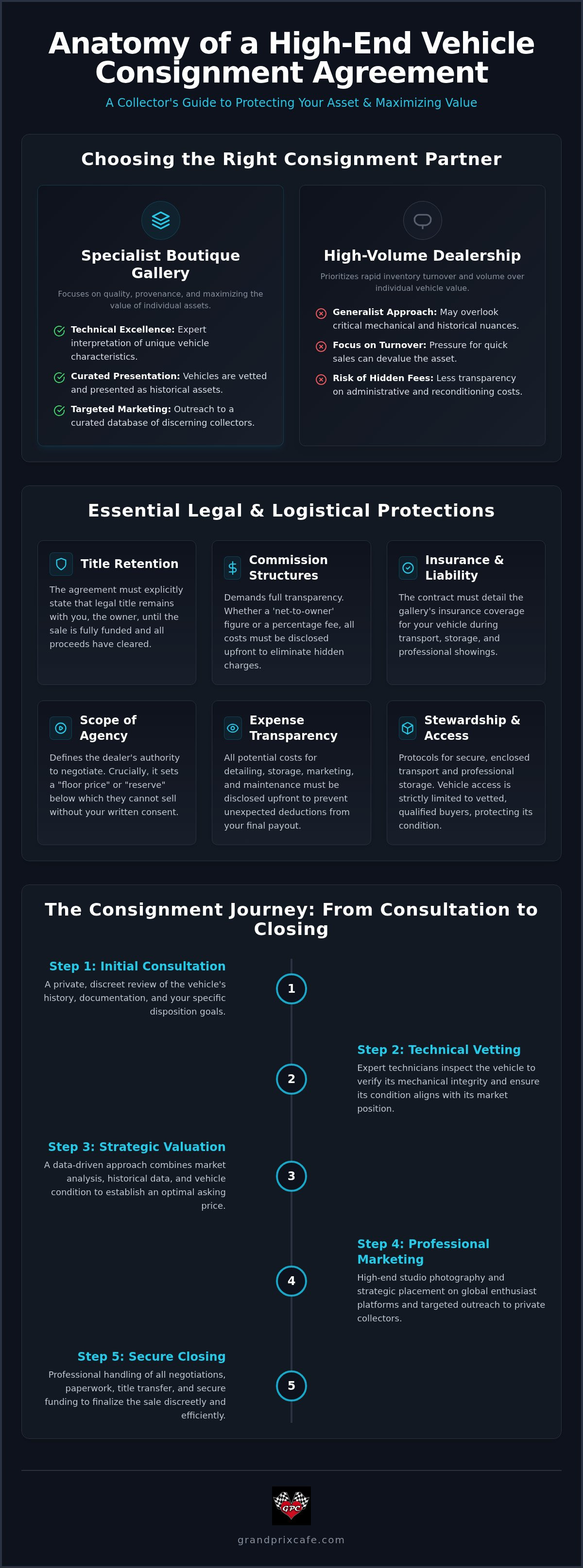
A professional Consignment Agreement is a sophisticated legal instrument. It defines the relationship between the vehicle owner and the gallery. It outlines the transfer of possession for the purpose of sale while ensuring the owner retains legal title. Having a classic car consignment agreement explained is essential for collectors who view their vehicles as significant financial assets. High-volume dealerships often prioritize rapid turnover and inventory volume. In contrast, boutique galleries in New York focus on the specific provenance and technical nuances of every vehicle. This distinction is critical when dealing with high-value investments.
Specialized representation is a requirement for marques like Porsche, Ferrari, and Mercedes-Benz. These vehicles possess unique mechanical DNA that requires expert interpretation. A generalist dealer might overlook the significance of a specific engine code or a rare factory color. At Grand Prix Cafe, our philosophy centers on technical excellence and historical respect. We don't just list cars; we curate them. Our technicians vet every vehicle to ensure its condition aligns with its market positioning. This mechanical curatorship provides a level of transparency that builds buyer confidence and protects the seller's reputation.
Legal Protections for the Consignor
A professional classic car consignment agreement explained by a seasoned expert will always prioritize the owner's security. The contract must establish a fixed duration for the representation and clear termination rights for both parties. This prevents the vehicle from being "locked" into an unproductive listing. Key legal components include:
Title Retention: The agreement must explicitly state that the title remains with the owner until the final sale is funded and cleared.
Commission Structures: Contracts typically define a "net-to-owner" figure or a percentage-based fee. Transparency here eliminates the risk of hidden administrative costs.
Insurance and Liability: The document should detail the coverage provided while the car is in the gallery's care, including during transport or storage.
The Role of Geographic Prestige
Location dictates the caliber of the prospective buyer. A Southampton showroom provides a prestige environment that reinforces the value of a collectible. The Manhattan and Hamptons markets consist of discerning collectors who value discretion and professional handling. While digital platforms offer global reach, a physical gallery presence provides the sensory confirmation high-end buyers require. Seeing a vehicle in a climate-controlled, professional setting builds a level of trust that a digital listing cannot replicate. This physical presence is a vital component of a successful disposition strategy in the New York region.
Core Components of a Luxury Vehicle Consignment Contract
The contract serves as the operational blueprint for the sale. A classic car consignment agreement explained in professional terms must define the Scope of Agency. This section specifies the dealer’s authority to negotiate on the owner's behalf. It typically sets a "floor price" or "reserve" that the dealer cannot go below without written consent. This ensures the owner remains the final arbiter of any transaction. It prevents unauthorized discounts and maintains the vehicle's market integrity.
Marketing obligations should be explicit. High-end vehicles require professional studio photography and placement on global enthusiast platforms. Expense transparency is equally vital. Detailing, storage, and maintenance costs must be disclosed upfront. This prevents the "hidden fee" anxiety common in generalist dealerships. The terms of sale should also outline the process for accepting offers and how the gallery handles buyer financing or trade-ins. This creates a clear path from the initial listing to the final funding of the sale.
Ownership, Title, and Possession Logistics
Secure transport is the first logistical hurdle. We manage enclosed transport from Manhattan or Hamptons residences to our Southampton facility. Title documents and powers of attorney are handled with absolute discretion to ensure a seamless closing. Regarding vehicle access, a professional agreement strictly limits "test drives." Only vetted, qualified buyers operate the vehicle, often accompanied by a technician. This protocol protects the mechanical health of the asset while providing serious prospects with the necessary verification of performance.
Insurance Coverage and Liability Boundaries
Insurance is often misunderstood in the consignment process. The gallery maintains garage-keeper’s insurance. This covers the vehicle while it is in the showroom or under our direct care. However, the owner must maintain their primary insurance policy for the duration of the consignment. Liability clauses should clearly distinguish between mechanical failure and physical damage. Acts of God or environmental factors are typically excluded from gallery liability. Understanding these boundaries ensures your investment remains protected. For those seeking long-term preservation before a sale, our secure indoor car storage provides the necessary climate-controlled environment.
Valuation and Marketing: Turning Data into Disposition
Establishing an accurate asking price is the most critical variable in the disposition process. In the 2026 classic car market, precision outweighs optimism. A classic car consignment agreement explained by a professional curator anchors the valuation in technical data rather than sentiment. We move beyond simple online listings. We combine high-fidelity digital exposure with direct, targeted outreach to a private database of vetted collectors. This dual approach ensures that your investment reaches the highest tier of the global marketplace without the noise of mass-market platforms.
High-end sales depend on visual integrity. Professional, studio-quality photography captures the technical specifications and cosmetic condition that discerning buyers demand. It highlights the details that justify a premium price, such as matching-numbers components or documented restoration milestones. For rare collections or high-profile consignors, discretion is paramount. We handle every transaction with a level of privacy that protects the identity of both parties while ensuring the vehicle reaches the right audience. This bespoke marketing strategy is designed for those who value results over volume.
Data-Driven Valuation Models
Our methodology utilizes recent auction results and private transaction data for specific European marques. We adjust values based on three pillars: provenance, original factory specifications, and the standard of restoration. A classic car appraisal on Long Island provides the empirical foundation for setting a realistic reserve. With the market showing increased interest in 1980s and 1990s modern classics, we analyze specific generational shifts in collector demand. This technical vetting justifies the price to potential buyers. It removes the ambiguity that often leads to prolonged negotiations or undervalued sales.
Curated Exposure vs. High-Volume Listing
Boutique placement in our Southampton gallery offers a distinct advantage over generic marketplaces. We leverage a deep network of Manhattan-based collectors who value our technical expertise. This is not a high-volume environment where vehicles are treated as commodities. Instead, we provide a gallery-grade presentation that emphasizes historical significance. Timing is also essential. We align sales with Hamptons seasonality and major automotive events to capture peak interest from high-net-worth individuals. This strategic positioning ensures your vehicle isn't just seen; it's positioned as a desirable acquisition. A classic car consignment agreement explained in this context highlights the value of specialized representation.
The Stewardship Advantage: Integrating Mechanical Vetting and Storage
A classic car consignment agreement explained through the lens of physical stewardship reveals a commitment to the vehicle's long-term integrity. While many brokers focus solely on the transaction, we prioritize the mechanical health of the asset. Our in-house classic car mechanic Southampton NY services vet every vehicle before it reaches the gallery floor. This process identifies potential mechanical liabilities early. It provides a documented baseline of performance that builds trust with sophisticated buyers. Documented mechanical curatorship is not just a service; it is a vital component of a successful exit strategy. It ensures the vehicle is presented in its best possible state, justifying its market position.
Leveraging In-House Restoration for Equity
Restoration expertise is a strategic tool for maximizing asset value. Our vintage car restoration New York facility allows us to identify and address pre-sale issues that might otherwise trigger aggressive negotiations or price reductions. We focus on value-add repairs. These are targeted mechanical or cosmetic improvements that yield a high return on the final sale price. Providing a transparent, technician-verified condition report creates a significant psychological advantage. It positions the vehicle as a turn-key investment rather than a project. Buyers are often willing to pay a premium for a car that has been vetted by specialized technicians in a professional restoration environment.
Preservation Standards During the Listing Period
Maintaining a vehicle in peak condition requires more than a clean showroom. Our secure indoor car storage protocols include regular battery maintenance, tire pressure monitoring, and climate control. These standards ensure the car remains concours-ready for every private viewing. Transparency is equally important regarding history. Any necessary accident repair for vintage vehicles must be disclosed and expertly handled to preserve provenance. A comprehensive classic car consignment agreement explained by our team will detail these preservation standards. This ensures you know exactly how your asset is being protected during the sales cycle.
If you are ready to position your vehicle for a premium sale through expert technical representation, explore our vehicle consignment services to begin the process.
Initiating Consignment: From Consultation to Closing
The path to a successful sale is methodical and structured. It begins with a private consultation. We conduct a thorough historical review of the vehicle to understand its unique provenance and market position. This initial phase ensures that the vehicle aligns with our standards of quality and historical significance. Following this review, we perform a technical evaluation. Our specialized technicians inspect the mechanical and cosmetic condition of the car to establish a baseline for valuation. During this stage, the classic car consignment agreement explained to the client is drafted. This document formalizes the reserve price, commission structure, and the scope of our representation.
Once the legal framework is established, we move to the presentation phase. We utilize our on-site studio for professional photography. These high-fidelity assets form the core of a bespoke marketing campaign. We then launch the vehicle across our curated network and specialized platforms. The final stage involves negotiation and closing. We manage all inquiries and vet potential buyers to ensure serious interest. We handle the secure transfer of funds and title documents to provide a seamless conclusion for the consignor. This methodical approach ensures that every transaction is handled with the professionalism expected in the high-end automotive market.
Documentation Required for High-Value Sales
A complete paper trail is non-negotiable for high-value transactions. Collectors must gather original titles, comprehensive service records, and provenance documents. Restoration receipts and historical photographs are particularly valuable. They provide physical evidence of the vehicle's care and authenticity. A classic car consignment agreement explained in professional detail ensures that all parties understand their obligations regarding these records. We also address any outstanding liens or title issues before the listing goes live. This proactive approach prevents delays during the closing process. It ensures the buyer receives a clear title and a well-documented asset.
Logistics for Manhattan and Hamptons Collectors
We prioritize discretion and convenience for our clients. Our white-glove enclosed transport services provide secure vehicle pickup from Manhattan or Long Island residences. We regularly serve collectors in East Hampton, Bridgehampton, and Sag Harbor. This door-to-door service minimizes the logistical burden on the owner. For those seeking an immediate disposition of their asset, we also offer an outright vehicle purchase option. This provides a direct path to liquidity without the duration of a consignment period. Whether through consignment or purchase, our goal is the professional and efficient handling of your automotive investment.
Securing the Future of Your Automotive Legacy
A professional approach to vehicle disposition requires more than just a listing; it demands a comprehensive strategy rooted in technical expertise and legal clarity. By having a classic car consignment agreement explained in detail, you ensure that every aspect of the transaction, from title retention to commission transparency, is managed with absolute precision. High-end collectors must prioritize mechanical curatorship and secure storage to maintain the market value and provenance of their investment during the sales process.
Grand Prix Cafe offers a sophisticated ecosystem for the discerning owner. Our specialized European and vintage technicians vet every vehicle, while our Southampton facility provides full-service restoration and climate-controlled storage. We deliver a discreet, white-glove service tailored to the requirements of high-net-worth individuals in the Manhattan and Hamptons markets. Whether you are liquidating a single asset or a curated collection, professional representation ensures your investment is properly valued and protected.
Ready to experience a seamless, expert-led sales process? Inquire About Our Professional Consignment Services today to begin your private consultation.
Frequently Asked Questions
What is the standard commission rate for classic car consignment in New York?
Commission rates in the New York market typically range between 5% and 12% of the final sale price. This figure depends on the vehicle's value and the level of marketing required. Lower-value assets often carry a higher percentage or a flat minimum fee. High-value blue-chip models may qualify for lower rates. Every classic car consignment agreement explained by a professional gallery should clearly define these fees to ensure total financial transparency.
Who is responsible for insuring the vehicle while it is on consignment?
Insurance responsibility is shared between the consignor and the gallery. The owner must maintain their primary collector car policy throughout the consignment period. The gallery provides garage-keeper's insurance to cover the vehicle while it is on display or during professional transport. This dual coverage ensures the asset is protected against physical damage or theft. Owners should verify these coverage boundaries before finalizing their consignment agreement to avoid liability gaps.
How long does a typical consignment agreement last at Grand Prix Cafe?
A standard consignment agreement typically remains in effect for a period of 90 to 120 days. This duration allows for professional photography, global marketing placement, and the vetting of qualified buyers. If the vehicle remains unsold after this period, the agreement may be extended or terminated by either party. This timeframe aligns with Hamptons seasonality and ensures the marketing strategy remains fresh and effective for the specific target audience.
Can I still drive my car while it is listed for consignment?
Vehicles are generally not available for personal use once they are officially consigned and stored in our Southampton facility. Maintaining a consistent "concours-ready" condition is essential for spontaneous private viewings. Frequent use increases the risk of mechanical wear or cosmetic damage, which can negatively impact the final valuation. Keeping the car on-site ensures it is always ready for inspection by high-net-worth collectors visiting our gallery from Manhattan or Long Island.
What happens if my vehicle requires mechanical repairs before it can be sold?
Our in-house restoration and service facility can address any mechanical issues identified during the initial technical evaluation. We focus on value-add repairs that improve the vehicle's marketability and final sale price. These costs are typically discussed and approved by the owner before work commences. Utilizing specialized technicians for European marques ensures that all repairs meet the high standards required by discerning buyers and collectors. This technical vetting is a core component of our stewardship.
How is the final sale price determined in the agreement?
The final sale price is established through a combination of recent auction data, private transaction records, and a technical condition report. The owner and the gallery agree upon a "reserve" or "net-to-owner" figure that serves as the minimum acceptable price. Any offers received below this threshold must be approved by the owner in writing. This collaborative approach ensures the vehicle is priced competitively within the 2026 market while protecting the consignor's investment.
Do you offer enclosed transport for vehicles coming from Manhattan?
We provide white-glove enclosed transport services for vehicle collection throughout the Manhattan and Hamptons regions. This service ensures the vehicle remains protected from road debris and environmental factors during transit to our Southampton gallery. Discreet pickup is available for high-profile clients who require privacy. Enclosed transport is a standard logistical component for high-value assets and is coordinated to fit the owner's specific schedule and requirements. We regularly serve East Hampton and Sag Harbor.
What types of vehicles are best suited for your Southampton gallery?
Our Southampton gallery specializes in high-end European vintage models and modern classics. We prioritize marques with significant historical importance, such as Porsche, Ferrari, and Mercedes-Benz. Vehicles with documented provenance, matching numbers, or high-quality restorations are particularly well-suited for our curated environment. We focus on assets that appeal to a discerning audience of Manhattan and Hamptons collectors who value mechanical excellence and historical integrity above all else.
Comments