


Choosing an Automotive Restoration Specialist in the Hamptons
A flawless finish isn’t always the right finish for a collectible car. If originality and provenance matter, choosing an automotive restoration specialist Hamptons owners can trust starts with finding a shop whose experience and approach fit the vehicle, not simply the repair list.
Before authorizing a project, clarify the car’s condition, your priorities, and which repairs or modifications could affect its character. A general repair shop may be right for a specific fault, but a restoration project can involve broader decisions about preservation, repair, and documentation. A careful assessment and clear discussion of scope can help keep the work aligned with your goals.
This article explains how to evaluate relevant experience, discuss originality and restoration choices, and establish priorities before work begins. It also looks at how restoration, accident repair, and ongoing service can fit into collectible vehicle care. Grand Prix Cafe, based in Southampton, offers automotive restoration, accident repair, and specialized vehicle service for classic and high-end cars.
Table of Contents
What an Automotive Restoration Specialist in the Hamptons Does
A restoration specialist assesses a vehicle, develops a project scope with the owner, and carries out work aligned with that plan. Restoration is more specific than general servicing, but it doesn’t automatically mean dismantling and rebuilding an entire car. The right scope may address selected areas or broader deterioration, depending on the vehicle’s condition and the owner’s objectives.
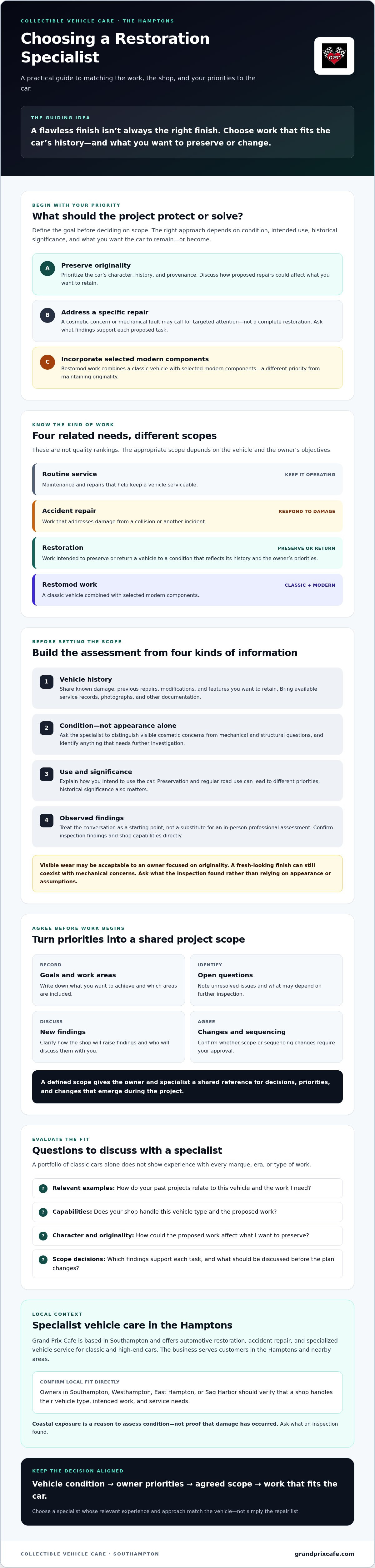
It helps to distinguish four related needs:
Routine service helps keep a vehicle operating through maintenance and repairs.
Accident repair addresses damage from a collision or another incident.
Restoration aims to preserve or return a vehicle to a condition that reflects its history and the owner’s priorities.
Restomod work combines a classic vehicle with selected modern components, a different priority from maintaining originality.
The Conservation and restoration of road vehicles overview provides useful context for these approaches. They aren’t quality rankings. The appropriate scope depends on the car’s condition, intended use, historical significance, and what the owner wants to preserve or change. Before choosing an automotive restoration specialist Hamptons owners should confirm that the shop’s experience fits their vehicle and goals. A portfolio of classic cars alone doesn’t show experience with every marque, era, or type of work.
When does a classic car need restoration rather than routine service?
Restoration may be appropriate when deterioration, damage, or a defined preservation goal calls for project-level work. Routine service focuses on keeping a vehicle serviceable. A car with a cosmetic concern or mechanical fault may need targeted attention, not a full restoration. Ask for an assessment before deciding on scope, and clarify which findings support each proposed task.
Why does local specialist fit matter in the Hamptons?
A nearby specialist can offer a practical point of contact for assessment, project discussions, and follow-up. Owners in Southampton, Westhampton, East Hampton, or Sag Harbor should confirm that a shop handles their vehicle type and intended work, and verify service availability directly. Coastal exposure is a reason to assess a vehicle’s condition, not proof that damage has occurred. Ask what an inspection found rather than assuming a problem based on location alone.
How a specialist assesses a vintage vehicle before restoration
A useful restoration plan starts with two things: the vehicle as it exists today and the owner’s priorities. Appearance alone won’t show the full picture. A fresh-looking finish can coexist with mechanical concerns, while visible wear may be acceptable to an owner focused on preserving originality. Assessment helps distinguish observed condition from assumptions and connects proposed work to the car’s intended use and historical significance.
What should an initial vehicle assessment consider?
Share what you know about the car before discussing scope. Note known damage, previous repairs, modifications, and features you want to retain. Bring available service records, photographs, and other documentation that may help explain the vehicle’s history. Describe how you intend to use it, too, since preservation and regular road use can lead to different priorities.
Ask the specialist to distinguish visible cosmetic concerns from mechanical and structural questions, and to identify anything that requires further investigation. This conversation is a starting point, not a substitute for an in-person professional assessment. Confirm the inspection findings and the shop’s capabilities for the proposed work directly. For general consumer guidance on repair-shop discussions and written estimates, see the Federal Trade Commission’s auto repair basics.
How should restoration scope and priorities be documented?
Before work proceeds, record your goals, the agreed work areas, and any unresolved questions. Clarify how the shop will raise new findings, who will discuss them with you, and whether changes to scope or sequencing require your approval. Don’t assume every concern must be addressed in one project. Some decisions may depend on inspection findings or on how a proposed change could affect originality and provenance.
A defined scope gives the owner and specialist a shared reference for decisions, priorities, and changes that emerge during the project.
When comparing an automotive restoration specialist Hamptons owners might consider, notice how clearly the shop explains findings and connects recommendations to your goals. Grand Prix Cafe, based in Southampton, offers restoration, accident repair, and specialized vehicle service. Its automotive restoration services may be one local point of reference as you assess fit.
Restoration, repair, or restomod: which approach fits your car?
The right direction depends on what you want the car to be, not on a hierarchy of “better” and “worse.” An owner who values historically appropriate features may prioritize preservation, while someone seeking to address one fault may need only targeted repair. Restomod work suits a different brief: retaining a classic foundation while incorporating selected modern components. Before approving work, discuss provenance, intended use, and which changes you would consider acceptable.
When is preservation-led restoration the better fit?
This approach may suit an owner who places particular value on retaining original or historically appropriate features. The goal isn’t automatically to replace every worn component or return every vehicle to a precise factory specification. A suitable scope depends on available evidence, current condition, and the owner’s priorities. Discuss which features matter most and how proposed work could affect provenance before authorizing changes.
When might repair or restomod work better serve the owner?
Targeted repair may be the more considered choice when the need is specific and the rest of the vehicle doesn’t call for project-level work. Restomod work may fit an owner who wants selected modern components for a particular use and accepts that those choices differ from a preservation-led brief. Ask the specialist to identify proposed modifications and explain their implications for originality and documentation—and if your project involves modern powertrain calibration or electronic upgrades, visit N2 Speed for specialized performance tuning options.
Restoration doesn’t automatically mean modernizing or replacing original components. State what must remain, what may be repaired or changed, and what questions need resolution before work begins. Owners evaluating an automotive restoration specialist Hamptons provider can also consult Hagerty’s guidance on vetting a restoration pro as they prepare to discuss a project’s direction.
How to Vet an Automotive Restoration Specialist in the Hamptons
Compare prospective shops against the needs of your specific vehicle, not just their general claims. A useful conversation should clarify relevant experience, proposed scope, how decisions are made, and whether follow-up is practical for you. Ask for examples that match your car’s type, condition, or intended work, then find out what each example demonstrates. A finished photograph may show appearance, but it won’t necessarily establish experience with preservation, mechanical work, or a similar project scope.
Questions to ask before authorizing restoration work
Use these questions when speaking with any prospective specialist. Confirm the shop’s actual practices rather than assuming a particular process:
1. What experience is relevant to my vehicle, its condition, and the work I’m considering?
2. Can you show examples related to this project? What do they demonstrate, and what differences should I keep in mind?
3. Which work areas are included in the proposed scope, and what is not included?
4. How will you explain decisions or new findings that could change the scope or work sequence?
5. What records or photographs can be discussed, and how are owner questions and approvals handled?
6. Who will communicate with me, and how should I expect project updates to be arranged?
Clear answers help you understand how recommendations connect to your priorities. Before work begins, discuss how unexpected findings will be raised and whether you’ll be asked to approve proposed changes. Verify any documentation or communication practices directly with the shop.
How to assess examples, communication, and project fit
Look beyond the final finish. Ask whether an example involved a similar vehicle, comparable condition, or restoration goal, and whether its approach preserved or changed features you value. A polished result alone doesn’t show how the specialist handled provenance, decisions, or newly discovered issues. Notice whether explanations are specific and whether the proposed scope reflects your stated priorities.
Location matters for practical reasons, too. If you’re considering shops in Southampton or nearby communities such as Westhampton, East Hampton, and Sag Harbor, ask where the work would be handled, how follow-up is arranged, and whether the location suits your needs. Confirm service availability directly rather than assuming that proximity means a particular service is available.
A useful specialist comparison rests on relevant evidence, a clear scope, and priorities aligned with yours. To consider a Southampton-based option, review Grand Prix Cafe’s restoration services and confirm directly whether its experience fits your vehicle and project.
Restoration and specialist vehicle service at Grand Prix Cafe
Grand Prix Cafe is a Southampton-based automotive center offering restoration, accident repair, and specialized vehicle service for classic and high-end cars. These services address different needs, so the right starting point depends on your vehicle’s condition and the work you’re considering. Restoration may suit a broader project; accident repair is relevant when collision damage is involved; specialized service may fit ongoing vehicle-care needs.
As you evaluate an automotive restoration specialist Hamptons owners might consider, apply the same criteria discussed throughout this guide: ask about experience relevant to your vehicle and requested work, clarify the proposed scope, and discuss how originality and provenance will be considered. Grand Prix Cafe serves customers in Southampton, Westhampton, East Hampton, Sag Harbor, Long Island, and Manhattan. Confirm directly whether the specific service you need is available for your location.
Which Grand Prix Cafe services may fit a restoration project?
Owners considering project work on a classic or high-end vehicle can ask Grand Prix Cafe about automotive restoration and whether the proposed scope fits the car’s condition and their goals. If the vehicle has collision damage, accident repair is a separate service to discuss. A service listing alone can’t establish a shop’s experience with a particular marque, model, or restoration objective. Confirm vehicle-specific capabilities and the work under consideration directly with the business before deciding.
What to prepare before contacting a Southampton specialist
A concise overview can make an initial discussion more useful. Gather the vehicle’s make, model, and year, along with what you know about its history and current condition. Note previous repairs or modifications, if known, and identify any concerns about originality or provenance. Then describe your desired outcome and intended use. Are you considering a preservation-led project, addressing collision damage, or seeking specialized service? Clear priorities help frame the conversation without presuming the vehicle needs a particular scope of work.
You can also prepare questions about relevant project examples, assessment, and how the shop would define the work. Ask which details require an in-person evaluation and what should be confirmed before any work is authorized. This keeps the discussion focused on fit rather than assumptions.
If you’re ready to discuss your vehicle and goals, discuss your restoration or repair needs with Grand Prix Cafe. Confirm service availability for your location and the specific work you have in mind.
Choose a Restoration Path That Respects Your Car
The right specialist should understand the vehicle’s condition, your intended use, and the features you want to preserve. Before authorizing work, clarify the scope, ask for relevant project examples, and agree how decisions will be handled if new findings change the plan. Restoration, targeted repair, and restomod work serve different priorities; none is right for every car.
Choosing an automotive restoration specialist Hamptons owners can rely on begins with careful questions, not assumptions. Look for relevant experience and clear communication, then confirm that the proposed work aligns with your goals for originality, provenance, and use.
Grand Prix Cafe is a Southampton-based automotive center offering restoration, accident repair, and specialized vehicle service. To discuss your vehicle, contact Grand Prix Cafe about your restoration or repair needs. Share what you know about the car, its condition, and the result you hope to achieve.
Frequently Asked Questions
How do I choose an automotive restoration specialist in the Hamptons?
Start your automotive restoration specialist Hamptons search by comparing relevant vehicle experience, project examples, proposed scope, and communication. Ask what each example demonstrates, then consider whether the specialist’s approach matches your priorities for preservation or modification. An initial conversation and assessment can clarify fit better than broad claims alone. Grand Prix Cafe is based in Southampton and serves customers in Southampton, Westhampton, East Hampton, Sag Harbor, Long Island, and Manhattan. Confirm current service availability for your location.
What is the difference between classic car restoration and repair?
Repair addresses a defined fault or damage, while restoration is broader work intended to preserve or return a vehicle to a condition that reflects an agreed goal. The terms can overlap: a restoration project may include repairs, and a repair may form part of a larger preservation plan. Ask the specialist to define the proposed work, what it excludes, and how it relates to your vehicle’s condition before authorizing a project.
Can a restoration specialist preserve a classic car’s originality?
Preserving originality can be a project priority, but what’s practical depends on the vehicle’s condition, history, and available evidence. Discuss which original components and features matter to you, what prior modifications are known, and which changes you would accept. Ask how proposed work could affect provenance or documentation. Don’t assume every part can be retained or that a car can be returned to a complete factory specification.
How long does a classic car restoration take?
There’s no reliable timeline that applies to every restoration. Duration depends on the vehicle’s condition, agreed scope, parts availability, and findings that emerge during work. Ask the specialist for realistic expectations based on your specific car, and clarify how progress and schedule changes will be communicated. Discuss how newly discovered issues may affect timing before authorizing work, rather than relying on a general estimate for a different vehicle or project.
What should I bring to a restoration consultation?
Bring available service records, photographs, ownership or provenance documents, and a concise list of known issues. Note the vehicle’s make, model, year, current condition, and any known repairs or modifications. Be ready to explain how you intend to use the car and whether preserving originality or incorporating selected modern components is more important. These details can guide an initial discussion, but they don’t replace an in-person professional assessment.
Is a restomod the same as a classic car restoration?
No. A restomod combines a classic vehicle with selected modern components or systems, while restoration may prioritize preserving or returning historically appropriate features. The approaches reflect different objectives, not a ranking of quality, and project practices vary. Before choosing a direction, discuss the intended use and specific modifications under consideration. Clarify how changes may affect originality and vehicle documentation, especially if retaining historically significant features is a priority.
What happens if more damage is found during restoration?
New findings may change the recommended scope, so discuss decision-making before work begins. Ask how the specialist will explain additional damage, present options, and communicate any effect on the work sequence or schedule. Confirm directly whether you’ll review proposed changes and how authorization is handled. If an unexpected issue arises, request clarification before approving additional work so you understand the finding and how the recommendation relates to your priorities.
Comments