


Rust Prevention for Classic Cars on Long Island
Rust prevention for classic cars on Long Island starts with keeping salt and moisture off the body and chassis, then spotting and addressing corrosion early. Regular washing, thorough drying, prompt paint-chip repair, and inspections of hidden areas all help limit rust. Consistent care matters more than any single treatment.
It’s easy to focus on visible paint, but corrosion can begin in seams, wheel wells, and beneath the car. A clean exterior doesn’t always reveal what’s happening underneath. This guide covers practical prevention steps, areas to inspect closely, and the role of storage and routine maintenance. It also explains when surface care may no longer be enough and restoration work could be appropriate. The goal is to help you protect your classic with a methodical approach suited to Long Island driving and storage.
Table of Contents
Rust prevention for classic cars Long Island
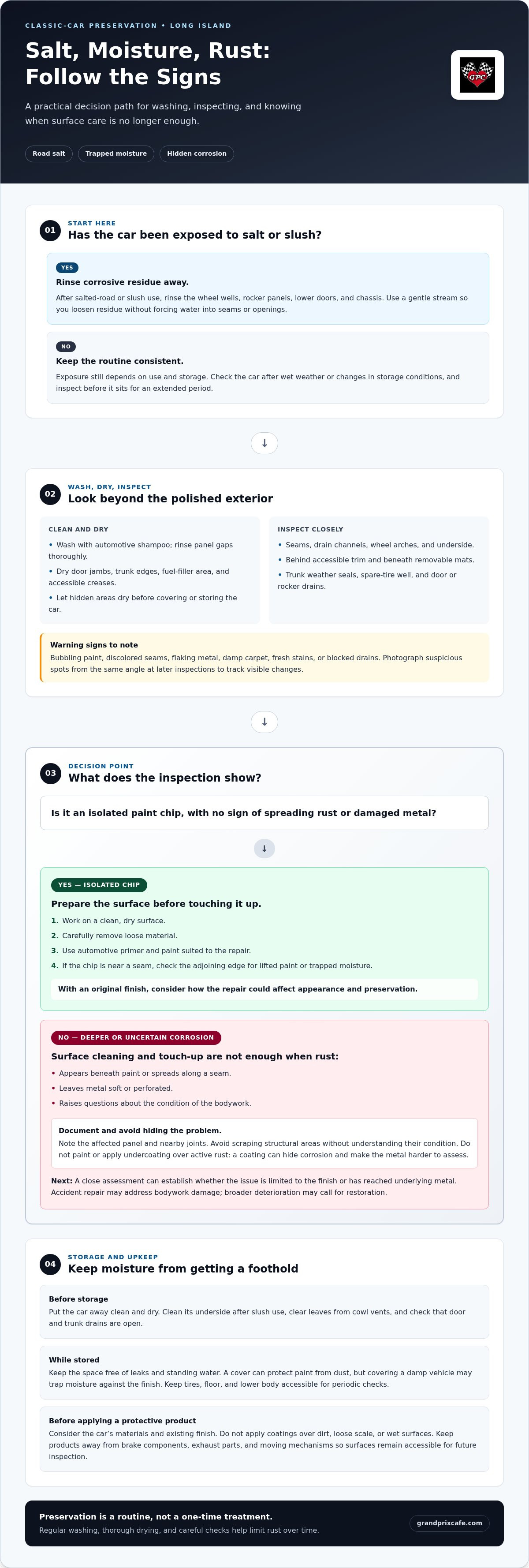
On Long Island, coastal moisture and winter road salt can challenge a classic car’s bodywork. Prevention means removing corrosive residue, limiting trapped moisture, and checking vulnerable areas regularly. Pay particular attention to seams, drain channels, wheel arches, and the underside, where dirt can hold moisture against metal. A polished exterior won’t reveal corrosion beneath trim or inside enclosed sections. Tailor care to the car’s use, whether it travels on treated roads or stays in storage through winter.
After driving on salted roads, rinse the wheel wells, rocker panels, lower doors, and chassis. Use a gentle stream to loosen residue without forcing water into seams or openings. Wash the body with automotive shampoo, then rinse thoroughly to clear cleaner from panel gaps. Dry the door jambs, trunk edges, and area around the fuel filler. Use a microfiber towel on accessible creases, and let hidden areas dry before covering or storing the vehicle.
Inspect the car in good light, including behind accessible trim and beneath removable mats. Look for bubbling paint, discolored seams, flaking metal, or damp carpet. Open the trunk and check the weather seals and spare-tire well. Examine drain openings along the doors and rocker panels, clearing leaves or packed dirt that could block water flow. Photograph any suspicious spots from the same angle at later inspections to track visible changes.
Rinse salt from the chassis and wheel wells after winter-road use.
Clear debris from drains and inspect the surrounding metal.
Dry door jambs, trunk edges, and creases after washing.
Photograph paint damage and corrosion for comparison over time.
Prepare a paint chip on a clean, dry surface before touching it up. Carefully remove loose material, then use automotive primer and paint suited to the repair. With an original finish, consider how the repair could affect the car’s appearance and preservation. Don’t paint or apply undercoating over active rust. A coating can hide corrosion without removing it, making the metal harder to assess later. If a chip is near a seam, check the adjoining edge for lifted paint or trapped moisture.
Storage choices also affect exposure. Put the car away clean and dry, and keep the storage space free of leaks and standing water. A cover can protect the paint from dust, but covering a damp vehicle may trap moisture against the finish. Keep the tires, floor, and lower body accessible for inspection. A stored classic still needs periodic checks, especially after wet weather or changes in storage conditions.
For seasonal use, inspect the car as part of the routine before returning it to storage. Note new chips, fresh stains, or dampness around seals before the vehicle sits for an extended period. Check that door and trunk drains are open, and clear leaves from cowl vents. If the car was driven through slush, clean its underside before storing it. These steps help distinguish ordinary dirt from recurring moisture that needs closer attention.
Choose protective products with the car’s materials and existing finish in mind. Don’t apply coatings over dirt, loose scale, or wet surfaces. Previous repairs on an older vehicle may conceal different materials or layers of finish, so inspect the area before adding a product. Keep applications away from brake components, exhaust parts, and moving mechanisms. The aim is a clean, accessible surface that can still be checked during future maintenance.
If rust appears beneath paint, spreads along a seam, or leaves metal soft or perforated, surface cleaning and touch-up aren’t enough. Note the affected panel and nearby joints, and avoid scraping structural areas without understanding their condition. Accident repair may address bodywork damage, while broader deterioration may call for restoration. A close assessment can establish whether the issue is limited to the finish or has reached the underlying metal.
At Grand Prix Cafe, protecting your vintage investment from the harsh coastal environment of Long Island requires diligence and specialized care. Regular detailing, thorough washing after exposure to maritime air, and routine inspections ensure that your prized automobile remains structurally sound and visually stunning for years to come.
Whether you store your vehicle in a dedicated facility or prepare it for weekend coastal drives, maintaining a proactive stance against oxidation preserves both the historical authenticity and the market value of your classic car.
Grand Prix Cafe: Car Service
Grand Prix Cafe provides car service for owners maintaining a classic. If an inspection reveals corrosion alongside a maintenance concern, addressing both helps keep the vehicle’s condition in view. Year-round indoor car storage is another option when a car will be off the road. A dry, protected setting can limit exposure to outdoor moisture and contaminants, while periodic inspections remain an important part of care.
Consider professional attention when corrosion extends beyond a paint chip, appears around seams, or raises questions about the bodywork. Clear photographs and notes on where the rust appears can help explain the concern and guide next steps. Contact Grand Prix Cafe to discuss service or storage for your classic car.
Make Preservation Part of the Car’s History
A preservation plan can protect the car beyond its next season on the road. Keep records of maintenance, bodywork, storage conditions, and changes in the finish. This history helps you make informed decisions as the vehicle’s use and condition evolve. The right next step depends on whether you’re maintaining a driver, preserving a long-term investment, or preparing a car for its next owner.
For the next stage, Grand Prix Cafe offers car service, classic car sales, and vehicle consignment services. These options can help owners maintain a vehicle or plan its transition to a new custodian. Rust prevention for classic cars on Long Island is an ongoing practice shaped by the car’s exposure, storage, and condition.
Contact Grand Prix Cafe to discuss your classic car’s needs. A thoughtful plan helps you protect its character and keep its story moving forward.
Comments