


How to Consign Your Vintage Vehicle in the Hamptons: A Collector’s Guide
What if the most professional way to sell a vintage car in the Hamptons isn’t a public auction? Owners searching “consign vintage vehicle Hamptons” are often weighing more than the asking price. They want privacy, careful handling, and a valuation grounded in the car’s provenance and condition. Those priorities call for a considered process, not simply a listing.
It’s reasonable to be concerned about preparing a rare vehicle or presenting its technical history to discerning buyers. Professional consignment can bring those elements together. At Grand Prix Cafe in Southampton, mechanical vetting, restoration expertise, and year-round indoor storage support a well-prepared sale.
This guide explains how to approach consignment, from assembling provenance and assessing condition to preparing the vehicle and positioning it for buyers. You’ll learn what to discuss before the car is listed and how accurate presentation can support an informed sale while respecting the vehicle’s history and your privacy.
Table of Contents
The Hamptons Market for Vintage Vehicle Consignment
The East End offers a distinctive setting for vintage vehicle sales. A prospective buyer may be able to inspect a car in person rather than rely solely on photographs and a remote description. For sellers, a local consignment arrangement can connect a vehicle’s history and mechanical condition with interested collectors. Grand Prix Cafe serves owners across Southampton, Westhampton, East Hampton, and Sag Harbor, as well as Long Island and Manhattan.
“Vintage” can refer to different periods and classifications, so precise descriptions matter. Before setting expectations, establish the vehicle’s year, specification, originality, restoration history, and supporting records. For historical context, Understanding Vintage Car Classifications offers a useful starting point. A clear, accurate description helps buyers assess the car on its actual merits rather than on a broad label.
Market interest varies by vehicle. A well-documented European sports car, an American classic, and a vintage utility vehicle may attract different collectors. Matching the car’s qualities to the right audience is more useful than treating every vintage vehicle as interchangeable. Consignment can give owners a considered local route to present a car for inspection by Hamptons-area buyers.
The Hamptons market has a seasonal rhythm, shaped in part by changes in visitor numbers and local activity. Sellers should consider when their intended buyers are most likely to be in the area, while recognizing that collector decisions may take longer than a single season. Rather than rushing to meet a calendar date, prepare the vehicle and its documentation so it can be presented consistently when interest arises. Year-round indoor storage can help protect a collectible between viewing opportunities, particularly in a coastal environment.
Why Local Expertise Matters in Southampton and East Hampton
A local facility makes an in-person inspection more practical. Buyers can examine paint, trim, interior condition, and visible mechanical details, then discuss questions with knowledgeable staff. Local expertise can also help frame a vehicle for Long Island collectors, whose preferences may range from usable driver-quality classics to carefully restored examples. Grand Prix Cafe’s Southampton facility brings vehicle sales, consignment, and restoration expertise together in one place.
The Privacy Factor for High-Profile Sellers
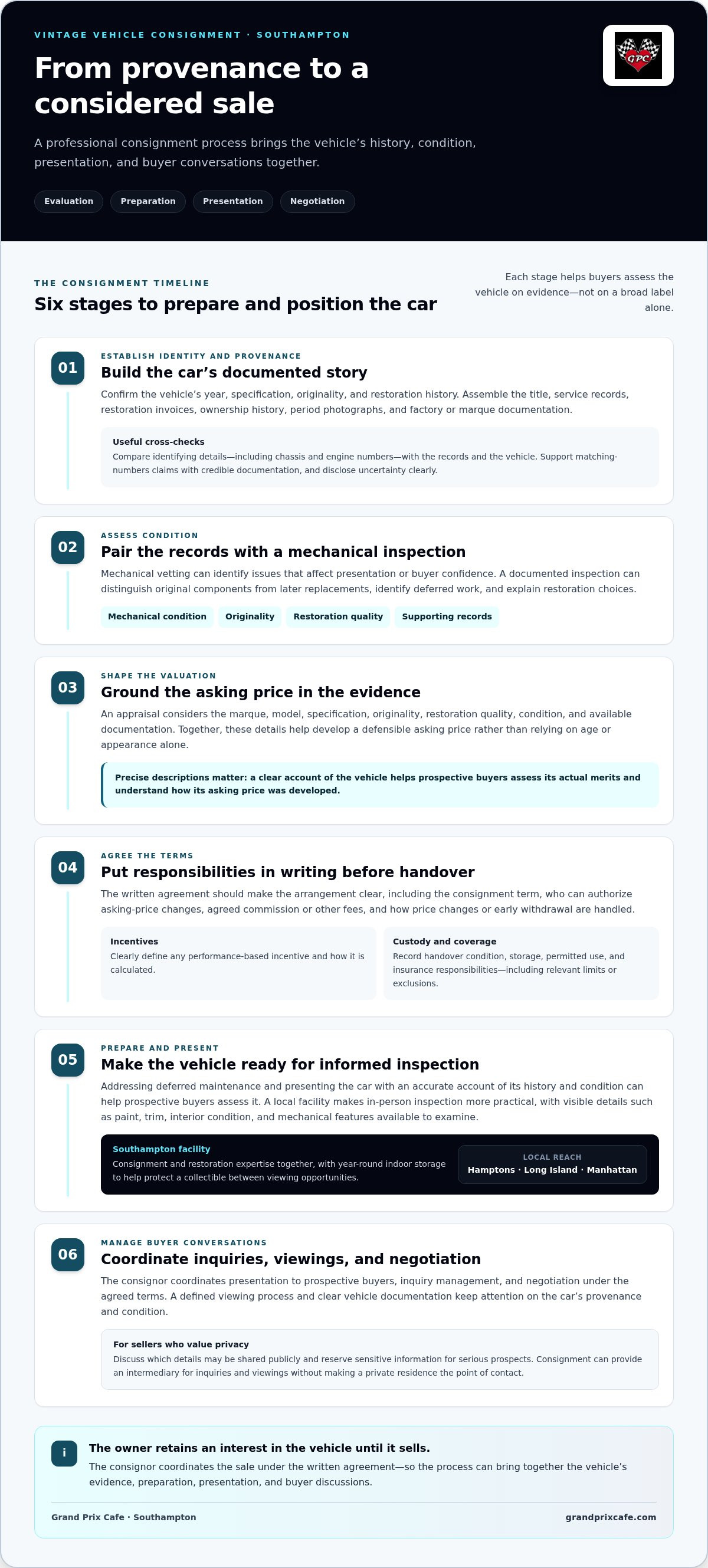
Public online listings can expose a seller’s identity, contact details, or vehicle location more widely than intended. Professional consignment provides an intermediary for managing inquiries and arranging viewings without making a private residence the point of contact. Sellers can discuss which details to share publicly and reserve sensitive information for serious prospects.
A professional point of contact can also help distinguish substantive buyer questions from casual inquiries. Clear vehicle documentation, a defined viewing process, and discreet presentation keep attention on the car’s provenance and condition. For collectors who value privacy, that measured approach can be an important part of the sale.
The Anatomy of Professional Vehicle Consignment
Professional consignment is more than displaying a car for sale. It brings together evaluation, preparation, storage, presentation to prospective buyers, inquiry management, and negotiation. The owner retains an interest in the vehicle until it sells, while the consignor coordinates the sale under agreed terms. For a vintage vehicle, each step should respect both its mechanical condition and its historical record.
The process begins by establishing what the car is and what supports its market position. An appraisal considers marque, model, specification, originality, restoration quality, condition, and available documentation. Mechanical vetting can identify issues that affect presentation or buyer confidence. This evidence helps shape a defensible asking price rather than relying on age or appearance alone.
The Initial Evaluation and Provenance Research
Gather the title and available service records, restoration invoices, ownership history, period photographs, and factory or marque documentation. Technicians can compare identifying details, including chassis and engine numbers, with the records and the vehicle itself. A matching-numbers claim should be supported by credible documentation; its relevance to value depends on the specific model and buyer interest. Disclose any uncertainty clearly.
This work is mechanical curatorship: presenting the car with a clear account of its identity, condition, and history. A documented inspection can distinguish original components from later replacements, identify deferred work, and explain restoration choices. That context helps prospective buyers judge the vehicle on evidence and understand how its asking price was developed.
The Consignment Agreement: Transparency and Terms
There is no single standard consignment duration for every vintage vehicle. A written agreement should state the term, who can authorize changes to the asking price, commission or other agreed fees, and how price changes or early withdrawal are handled. Any performance-based incentive should be clearly defined, including how it is calculated.
For a high-value asset, the agreement should also record the vehicle’s condition at handover, custody and storage arrangements, permitted use, and insurance responsibilities while it is in the showroom. Specify how coverage applies to display, movement, or any authorized road test, and identify relevant limits or exclusions. Addressing these details before the car enters the sales process reduces ambiguity.
Before signing, confirm that the vehicle description, reserve or asking-price instructions, and settlement process are written in language both parties understand. Keep copies of the signed agreement and supporting records. Owners considering how to consign vintage vehicle Hamptons collectors can assess should look for a process that connects documented condition with careful presentation. Grand Prix Cafe’s classic vehicle consignment is based in Southampton and supported by restoration expertise and mechanical vetting.
Consignment vs. Traditional Auction: A Strategic Comparison
The right sale channel depends on your priorities: speed, price control, buyer reach, and the support your vehicle requires. A traditional auction concentrates attention around a scheduled event. A seven-day online auction, for example, creates a defined bidding window, but its outcome depends on which buyers are active during that period. Consignment offers a different route, with time to present the car, receive inquiries, and negotiate against an agreed pricing strategy.
A no-reserve auction exposes a seller to the risk of a sale below their preferred figure if bidding is limited. A reserve may reduce that risk, though it can also affect bidding and whether the car sells. Consignment usually allows the owner and consignor to set an asking price and consider offers without committing to a single auction date. That control doesn’t guarantee a higher sale price; it gives the seller more say over when and on what terms to negotiate.
Price Control and Market Positioning
Consignment can suit a rare or carefully documented vehicle whose best buyer may need time to assess its provenance and condition. Rather than relying on competition in one bidding window, the seller can consider qualified interest as it develops. Terms can also address practical details such as post-sale maintenance or delivery arrangements, where agreed. Clarify these points before marketing begins so they don’t become last-minute obstacles.
Presentation matters in either channel, but the process may differ. A specialist dealer can coordinate mechanical vetting and explain condition findings alongside the vehicle’s history. Auction houses vary in their inspection and presentation practices, so the level of technical detail and support depends on the sale. For a car with specialist features or restoration work, a clear, mechanically informed description helps buyers evaluate what they’re bidding on or considering.
Cost Analysis: Net Proceeds for the Seller
Compare expected net proceeds, not just the headline sale price. The relevant calculation is the amount paid to the seller after agreed seller-side fees and costs. Review the auction’s entry charges, seller commission, transport and preparation expenses, and the terms governing an unsold car. For consignment, understand the commission, any preparation or storage charges, and how those costs are handled if the vehicle doesn’t sell.
A buyer premium is generally charged to the buyer under the auction’s terms. It can raise the buyer’s total cost and may influence how high they’re willing to bid. It isn’t automatically a deduction from the seller’s proceeds, so distinguish it from seller fees when comparing offers. Request a written estimate of likely deductions for each channel, using the same assumed sale price.
Consignment can take longer than a scheduled auction, and a longer timeline doesn’t automatically mean a better return. The advantage is a more measured sales process, with room to position the car and assess offers. Owners considering how to consign vintage vehicle Hamptons collectors may value can explore luxury car consignment New York as part of evaluating a professional, locally based approach.
Preparing Your Collectible for the Marketplace
A vintage car should be prepared as a documented asset, not simply cleaned for photographs. A thorough pre-sale review can reveal issues that affect buyer confidence, support an accurate description, and give the seller a chance to make informed decisions about repairs. The objective isn’t to conceal age or present a decades-old vehicle as new. It’s to show its condition honestly and make its strengths easy to assess.
Mechanical Vetting and Servicing
A classic car mechanic Southampton NY sellers rely on can assess the vehicle’s systems with its age, design, and intended use in mind. Depending on the car, an inspection may include engine operation, braking, steering, suspension, cooling, electrical components, and evidence of leaks. Compression or leak-down testing may be appropriate for assessing engine condition. Record findings and completed repairs so buyers can distinguish known needs from undocumented concerns.
Address deferred maintenance selectively. A minor leak, aging hose, or inoperative component can raise questions beyond the cost of repair because buyers may wonder what else has been overlooked. A technician can help prioritize work that affects safety, operation, or market presentation. Avoid cosmetic or mechanical changes without considering whether they suit the vehicle’s originality and documented history.
Documentation, Detailing, and Preservation
Assemble service records, restoration logs, parts invoices, ownership documents, and any available certificates of authenticity. Organize them by date and label the work clearly. Pairing a repair invoice with photographs or inspection notes can make the vehicle’s history easier to follow. If a certificate or claim cannot be substantiated, describe it accurately rather than presenting it as verified.
Detailing should reveal condition, not disguise it. Use methods suited to the paint, trim, and materials, particularly where original finishes or age-related patina are part of the car’s character. Aggressive polishing can remove material or soften details. Clean the cabin, glass, wheels, and engine bay carefully, and disclose blemishes or prior repairs in the listing.
Photography and Digital Presentation
Photographs should show the full vehicle and the details collectors use to assess it: body panels, interior surfaces, identification plates, engine bay, and undercarriage where practical. Use even lighting and accurate color. Include close-ups of wear or imperfections rather than relying only on flattering exterior views. A clear visual record complements the inspection report and helps remote buyers decide whether to arrange a closer examination.
A concise operating video can document a cold start, idle, dashboard indicators, and the car moving under its own power, when safe and appropriate. Keep the footage factual. Targeted digital presentation can introduce a Hamptons-based vehicle to collectors beyond the local area while preserving a controlled inquiry process. A search for “consign vintage vehicle Hamptons” should lead owners toward a sale plan grounded in accurate preparation, not unsupported claims.
Prepare your collectible with Grand Prix Cafe’s classic car consignment service, supported by mechanical vetting and restoration expertise.
Grand Prix Cafe: The Discreet Choice for Hamptons Collectors
Grand Prix Cafe’s Southampton facility provides a boutique setting for classic car sales and consignment. For owners considering how to consign vintage vehicle Hamptons collectors may value, a local specialist can bring mechanical knowledge and a considered sales approach together. The aim is to represent each car accurately, with its condition, history, and preparation informing how it is presented to prospective buyers.
Restoration expertise matters before and during a sale. A vehicle with known mechanical needs may benefit from informed assessment and suitable preparation; a well-preserved example may call for careful documentation rather than unnecessary work. Grand Prix Cafe’s technicians provide mechanical vetting, while its restoration experience supports a grounded view of condition and presentation. This connection keeps the sales narrative tied to the actual vehicle, not simply its appearance.
A Turnkey Solution from Southampton
Consignment can reduce the seller’s role in presenting the vehicle and responding to prospective buyers. The Southampton facility offers a professional location for viewing, while year-round indoor storage supports preservation between sale opportunities. Grand Prix Cafe provides indoor car storage in Southampton, NY as part of a vehicle’s care while it is being represented.
For a car that needs attention before presentation, restoration and maintenance expertise can help guide preparation decisions. Work should respect the vehicle’s specification and history. Grand Prix Cafe’s vintage car restoration New York expertise connects mechanical integrity with careful stewardship. Practical arrangements for the vehicle should be established as part of the sale plan rather than assumed.
Consignment or Outright Purchase
Consignment and outright purchase serve different priorities. Consignment places the vehicle in a managed sales process, with the outcome dependent on buyer interest and agreed terms. An outright purchase offers a direct alternative for owners who prefer to sell to Grand Prix Cafe rather than wait for a consignment buyer. The appropriate route depends on the seller’s timing, desired involvement, and valuation expectations; discuss these priorities clearly before proceeding.
The Next Steps in Your Consignment Journey
For an initial appraisal discussion, prepare the title and any available service records, restoration invoices, ownership history, and supporting photographs. Note known mechanical issues, modifications, or gaps in the records. A complete file helps establish a clear starting point for assessing condition and market position. Bring the vehicle’s keys and any relevant documentation available to you.
Owners can begin a discreet consignment conversation at Grand Prix Cafe’s Southampton facility. Inquire about professional consignment services to discuss the vehicle, its history, and the sale approach that best suits your priorities.
Set the Next Chapter in Motion
A considered sale allows a collectible to move on with its history intact and its next owner better prepared to appreciate it. If you plan to consign vintage vehicle Hamptons collectors will recognize for its documented character, begin by defining your priorities: preferred timing, acceptable terms, and the level of privacy you expect throughout the process.
Grand Prix Cafe brings together a boutique Southampton facility, specialized mechanical and restoration expertise, and secure indoor storage. These resources support a sale grounded in careful stewardship as well as value. With both consignment and outright purchase available, you can consider which path best fits your circumstances and the vehicle’s future.
Before proceeding, define what a successful outcome means to you beyond the final sale price. A well-managed handoff should respect the car’s legacy and provide a clear path forward for its next custodian. Consign Your Vintage Vehicle with the Experts at Grand Prix Cafe. Start a conversation with Grand Prix Cafe in Southampton about consigning your vehicle and planning its next chapter.
Frequently Asked Questions
What is the typical commission for vintage car consignment in the Hamptons?
There isn’t one commission that applies to every vintage vehicle consignment. The agreed rate and any additional charges should be stated in the written agreement before the car is presented for sale. Review how commission is calculated, whether preparation or storage costs are separate, and what happens if the vehicle doesn’t sell. Compare the estimated net proceeds, not the commission percentage alone, when assessing the proposed terms.
How long does it usually take to sell a classic car through consignment?
Sale timing varies with the vehicle, its condition, asking price, documentation, and the buyers currently seeking that type of car. A rare, well-documented model may attract interest on a different schedule than a more common example. There’s no fixed sale period that suits every consignment. Owners in Southampton, Westhampton, East Hampton, Sag Harbor, and nearby communities should plan for a process that may extend beyond a particular event or season.
Is my vehicle insured while it is being held for consignment at your facility?
Before handover, review the consignment agreement and applicable policy to understand who is responsible for coverage and what limits or exclusions apply. Pay particular attention to storage, movement, display, and any authorized test drive. Make sure the vehicle’s stated value and condition are accurately recorded, and keep copies of the relevant documents with your consignment records.
Can I still drive my car while it is listed for consignment?
Whether you can drive the vehicle during consignment depends on the arrangements set out in the agreement and the car’s location during the sale. A vehicle held at the showroom for buyer viewings may not be available for regular use. Agree in writing on any permitted use, who may drive it, and how mileage or condition changes will be recorded. This helps avoid confusion if a buyer later asks about usage.
What happens if my vintage vehicle requires repairs before it can be sold?
Grand Prix Cafe can assess a vehicle’s mechanical needs and provide restoration, repair, and servicing expertise. The findings can help distinguish urgent work from items that may be disclosed to buyers as part of the sale. Agree on the scope and authorization before work begins. For example, a leak or non-operating electrical component can be evaluated and documented, allowing you to make a considered decision about preparation.
Do you handle the title transfer and legal paperwork for the sale?
Grand Prix Cafe manages the vehicle sale transaction, including coordination of its documentation. The seller should provide the title and records available for the car so the paperwork can be organized accurately. The specific documents and transfer steps depend on the transaction and applicable requirements. Read the agreement carefully, understand what each party is responsible for, and retain copies of the signed sale documents for your records.
How do you determine the listing price for a rare vintage vehicle?
Pricing should reflect the specific vehicle, not just its make or age. The evaluation considers condition, specification, originality, restoration work, provenance, and supporting records, alongside relevant market evidence for comparable vehicles. For owners researching “consign vintage vehicle Hamptons,” this distinction matters: two cars of the same model can warrant different positioning if their histories or mechanical states differ. A considered asking price also leaves room for informed negotiation.
Is consignment better than selling my car at a public auction?
Neither route is automatically better. An auction can concentrate bidding within a scheduled sale, while consignment allows a vehicle to be presented and offers considered over a managed sales period. Compare potential net proceeds, seller costs, pricing control, privacy, and your preferred timeline. Consignment may suit owners seeking a more discreet process and support with the vehicle’s presentation; an auction may fit sellers who prefer a defined bidding event.
Comments