


Vintage Car Brake Upgrade in East Hampton: Owner's Guide
Could the right brake upgrade be the one that changes the least? For a vintage car, newer components aren’t automatically the best answer. The existing system’s condition, the car’s specification, and how it’s driven all matter. If you’re considering a vintage car brake system upgrade in East Hampton, you’ll want dependable performance without compromising originality or fit.
This guide explains how to assess the current brake system, distinguish repairs from upgrades, and compare options against the vehicle’s purpose and provenance. It also outlines how to plan an inspection and test process so decisions are based on the car, not just a parts list.
We’ll look at key system configurations and the trade-offs between restoring original components and making considered changes. Grand Prix Cafe’s in-house 100-point inspection covers mechanical, exterior, interior, safety, and security checks. The GPC Service Department provides servicing, upgrades, restoration, and diagnostics, using original parts where possible and fabricating replacements to original specifications when needed.
Table of Contents
When Does a Vintage Car in East Hampton Need a Brake System Upgrade?
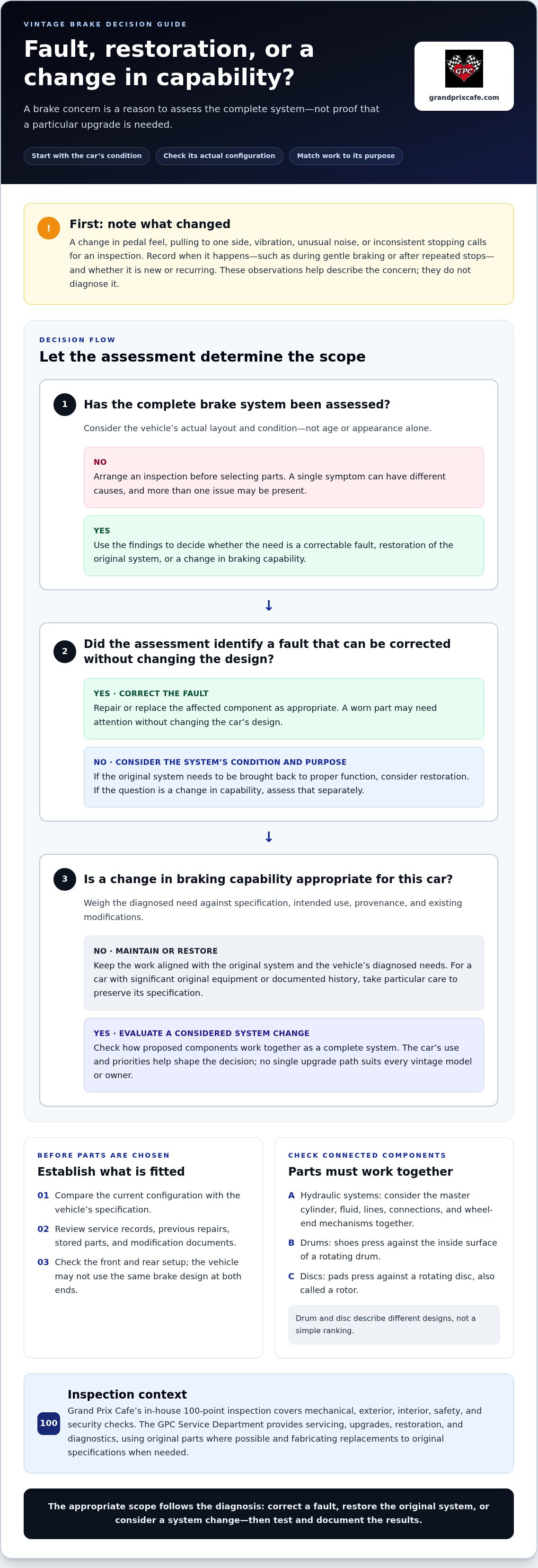
A brake concern can call for three different responses: correcting a fault, restoring the original system to proper function, or changing its capability. These aren’t interchangeable. A worn component may need repair or replacement without changing the car’s design. A broader upgrade is a separate decision, shaped by the vehicle’s condition, specification, history, and intended use. A vintage car brake system upgrade East Hampton owners consider should begin with that distinction, not an assumption that modern components are always necessary.
A brake-system assessment examines the complete system and its condition; one symptom alone does not diagnose a fault. It helps establish whether the concern calls for maintenance, restoration, or a change in capability. It also helps prevent parts being selected before the cause and the car’s configuration are understood. For owners planning a vintage car brake system upgrade East Hampton, diagnosis provides a sound basis for deciding what work is appropriate.
Brake systems use friction or other mechanisms to slow a vehicle. This overview explains how brakes work and describes different brake types. For a specific vintage model, its original design and any later changes matter. Service records, previous repairs, stored parts, and modification documents can help establish what is currently fitted and how it relates to the vehicle’s history.
Which braking symptoms call for an inspection?
A change in pedal feel, pulling to one side, vibration, unusual noise, or inconsistent stopping is a reason to arrange an inspection. Note when it happens, such as during gentle braking or after repeated stops, and whether it’s new or recurring. These observations help describe the concern, but they don’t confirm component failure or establish that a particular upgrade is required.
Similar symptoms can have different causes, and more than one issue may be present. Pulling, for example, is an observed behaviour, not a diagnosis. Inspection should establish the system’s condition before parts are selected. If braking behaviour changes noticeably, don’t treat a conversion or performance component as an automatic solution. The appropriate scope depends on what examination and diagnosis find.
How do originality and driving use affect the decision?
Start with the car’s role. Is it driven regularly, used occasionally for short outings, or primarily preserved as a collectible? Regular use may place different demands on a system than limited use. Neither role dictates one solution. The owner’s priorities and the vehicle’s actual condition should guide whether the aim is to maintain, restore, or change braking capability.
Provenance, existing modifications, and documented maintenance add important context. A car with significant original equipment or a documented history may warrant particular care in preserving its specification. A modified vehicle may need an assessment of how its current components work together. Compare the present configuration with available records, then consider work that respects the car’s identity while addressing its diagnosed needs. No single upgrade path suits every vintage model or owner.
How a Vintage Brake System Works, and Why Its Components Must Match
A vintage car’s brakes are a connected system, not a collection of independent parts. The driver applies force at the pedal, and components carry that input to the brakes at the wheels, where friction slows the car. Each part must be in suitable condition and work with the rest of the system. The layout can vary by model and may have changed over time, so identify the car’s actual configuration before drawing conclusions from its age or appearance.
An upgrade decision is sound only when the proposed components are evaluated for compatibility as part of the complete braking system. Replacing a visibly worn part may be necessary, but it won’t establish whether related parts are sound or whether a replacement suits the vehicle. A vintage car brake system upgrade in East Hampton should therefore begin with inspection and model-specific information, not a parts list.
What do the master cylinder, lines, and fluid do?
In a hydraulic system, pressing the pedal moves the master cylinder, which creates pressure in the brake fluid. The fluid carries that pressure through the lines to the wheel-end mechanisms, which apply the brakes. The lines provide the route; the fluid transmits the input. The exact arrangement varies, so identify the vehicle’s specification and any modifications rather than assuming a particular layout.
Fluid condition, leaks, corrosion, damaged lines, and deterioration at connections are all relevant inspection points. They aren’t diagnoses an owner can reliably settle from appearance alone. A professional assessment should consider the hydraulic components together and establish whether the concern is local or part of a wider condition issue. Selecting a replacement component before that assessment risks leaving a related problem unaddressed.
How do drums, discs, pads, and shoes differ?
Drum and disc brakes use different arrangements to create friction. In a drum system, shoes press against the inside surface of a rotating drum. In a disc system, pads are pressed against a rotating disc, also called a rotor. The names describe distinct designs, not a simple ranking. Check the actual front and rear setup; a vehicle may not use the same design at both ends.
Before replacing or changing any part, establish what’s fitted and whether it remains consistent with the car’s documented specification. A prior conversion or repair may mean the current setup differs from factory records. Pads, shoes, hydraulic parts, and other related components must suit the arrangement they operate within. Compatibility depends on the vehicle and the parts as a whole, so a change in one area can call for a broader review rather than an isolated substitution.
Grand Prix Cafe’s service department provides servicing, upgrades, restoration, and full diagnostic service. For a considered review of a vintage vehicle’s systems and condition, explore Grand Prix Cafe’s vehicle services.
Vintage Car Brake Upgrade Options for East Hampton Owners
Once the vehicle’s configuration and condition are understood, the choices generally fall into three categories: restore the existing system, replace worn components while retaining its design, or consider broader changes. The right scope depends on the car, not on a universal preference for original or modern parts. For a vintage car brake system upgrade East Hampton owners are considering, provenance, intended use, parts sourcing, and compatibility all belong in the decision.
The table is a framework, not a parts recommendation. A car’s present setup may differ from its factory configuration because of earlier repairs or modifications. Technical assessment should establish what’s fitted, what needs attention, and whether proposed parts work together. Consider reversibility as well: keeping removed components and recording changes can preserve useful context for future owners and later restoration decisions.
When is restoration of the original system the right starting point?
Restoration is worth considering when the existing configuration suits the car’s intended use and its components can be returned to proper function. The decision still depends on condition and the correct specification; original parts aren’t automatically serviceable or appropriate in every case. Grand Prix Cafe uses original parts where possible, and engineers can fabricate replacements to original specifications when needed. Sourcing and fabrication options can inform the restoration plan.
When might an owner consider a more extensive upgrade?
A broader change may enter the discussion when inspection, vehicle-specific requirements, and intended driving point beyond restoring or replacing existing components. Before proceeding, assess how proposed changes fit the complete system and weigh the departure from the car’s documented specification. Record what changed, why it changed, and which original parts were retained. This creates a clear history without assuming any effect on the vehicle’s market value.
For a collectible used occasionally, preserving its configuration may carry particular weight; a car driven regularly may prompt a different assessment. Neither use alone settles the choice. A considered scope balances the vehicle’s condition and provenance with the owner’s practical needs.
Planning a Vintage Brake Upgrade: Inspection, Scope, and Testing
A clear process connects the reported concern to the work performed and its verification. For a vintage car brake system upgrade East Hampton owners are planning, document each decision as the project moves from initial observations to controlled testing. Reviewing related components before selecting parts helps keep the scope appropriate to the vehicle, rather than focusing only on the part most visible or easiest to replace.
Record symptoms and vehicle details. Note when the change in braking behaviour occurs, whether it’s consistent, and how it differs from the car’s usual response. Include the make, model, year, known service history, and current brake configuration. Records of earlier repairs or modifications can help clarify what’s fitted.
Inspect the system. Assess the existing components and their condition in relation to the complete setup. Consider related parts before settling on the cause or choosing an upgrade scope. Findings help distinguish a repair need from restoration or a broader system change.
Agree on the scope. Establish what work is proposed, which parts are appropriate, and whether the plan retains or changes the current specification. Discuss originality priorities and document the reasoning before work begins.
Complete the work. Keep a record of the parts used and the work performed. Retain relevant documentation and, where practical, removed components for future reference.
Inspect and test. Have qualified technicians verify the completed work and carry out appropriate controlled testing before the vehicle returns to the road.
What should the initial inspection establish?
Begin with the vehicle’s identity and history: make, model, year, known maintenance, reported symptoms, and the brake arrangement currently fitted. The assessment should establish component condition and compatibility in context, rather than apply a fixed checklist that may not suit the car. Grand Prix Cafe’s in-house 100-point inspection covers mechanical, exterior, interior, safety, and security checks. It provides a broad vehicle inspection, not a brake-only test.
For further context on how mechanical history and preservation inform a wider project, the guide to vintage car restoration in New York discusses the care involved in preserving a vehicle.
What should happen before the car returns to the road?
After the work, qualified technicians should inspect the completed system and carry out controlled testing suited to the vehicle and the work performed. General verification points include checking for leaks, confirming correct operation, and assessing whether the brakes respond consistently. Record the test process alongside parts and changes, so future servicing can refer to what was completed and how it was checked.
For related maintenance context, the classic car mechanic service guide considers ongoing care for collector vehicles. A vintage car brake system upgrade East Hampton project should finish with a clear service record and an understood test process. To plan servicing, diagnostics, restoration, or upgrade work, discuss your vehicle service with Grand Prix Cafe.
Vintage Brake Service for East Hampton Cars: A Considered Next Step
The soundest starting point is an assessment of the individual vehicle. Its specification, condition, history, and intended use should guide whether the work calls for servicing, restoration, or a broader upgrade. For owners considering a vintage car brake system upgrade in East Hampton, this approach keeps decisions tied to the car rather than to a predetermined parts choice.
The GPC Service Department provides servicing, upgrades, restoration, and full diagnostic service. Work is considered in light of each vehicle, with original parts used wherever possible. When a suitable replacement needs to be made, engineers can fabricate parts to original specifications. These options support a measured discussion of how to address the vehicle’s needs while respecting its character and documented history.
How can Grand Prix Cafe support a vintage-car service plan?
Its findings can contribute to understanding the car’s overall condition as part of a wider service plan. The service department’s restoration and upgrade work can then be considered in relation to the vehicle’s specification and the owner’s priorities.
Grand Prix Cafe can collect and deliver vehicles from anywhere in the world. For owners in East Hampton, Southampton, Westhampton, Sag Harbor, Long Island, and Manhattan, collection and delivery can be part of planning service with the GPC Service Department.
What information helps begin a brake-system discussion?
A clear account of the car helps frame the work. Share its year, make, and model, along with known brake-system history, previous modifications, and maintenance records. Describe any symptoms and when they occur. Note recent work, how the car is typically used, and whether retaining original components or specification is a priority. These details help place the concern in context before a scope is established.
If previous collision damage may relate to the vehicle’s current condition or repair history, specialized accident repair for vintage vehicles is relevant context. Including records of earlier repairs can help clarify what was changed and what remains original.
A thoughtful service plan should leave you with a clear understanding of the work completed and its relationship to the vehicle’s history. To discuss your vintage car’s service needs, contact Grand Prix Cafe.
Set a Clear Direction for Your Vintage Car
Brake work can become part of a longer stewardship plan for a collector vehicle. Before authorizing a change, consider what you want the car to remain, how you expect to use it, and which decisions should be preserved in its service history. A vintage car brake system upgrade East Hampton owners consider can then be approached as a deliberate choice, not simply a response to the availability of newer components.
Once the vehicle’s needs are understood, the next step is to discuss a scope that reflects its specification and your priorities. A clear conversation can frame the work, whether the aim is continued maintenance, restoration, or a considered change. Keep the focus on a plan that respects the car’s identity while addressing the reason for the assessment.
Begin a conversation with Grand Prix Cafe about your vintage car and its service needs. With a thoughtful plan in place, you can move forward with greater clarity and confidence in the decisions made for your car.
Frequently Asked Questions
Can I convert drum brakes to disc brakes on a vintage car?
Possibly, but feasibility depends on the specific vehicle, its current brake configuration, component compatibility, and how you use it. A conversion should follow an inspection that establishes what’s fitted and whether the proposed parts suit the car. The change may affect originality, particularly if it alters visible or documented components. Record the work and retain relevant details, including what was removed, for future maintenance and provenance.
Will a brake upgrade affect my vintage car’s originality?
That depends on the work and the car’s provenance. Replacing worn parts with components that match the existing specification differs from making a substantial system change, especially one that is visible or departs from documented history. Before work begins, identify which parts will change and why. Keep a record of the parts used and work completed so future owners or technicians can understand the vehicle’s configuration.
How do I know whether my vintage car needs new brake fluid?
The fluid’s condition and the vehicle’s service history help determine whether it needs attention. There’s no universal interval that suits every vintage car, because the appropriate schedule depends on the vehicle and its specified fluid. A technician can inspect the system, consider its history, and check for leaks or signs of contamination. A soft pedal alone doesn’t establish that the fluid is the cause.
Can I drive a vintage car if its brake pedal feels soft?
A new or worsening change in pedal feel should be treated as a safety concern, not as a diagnosis. Several issues may cause it, and the pedal sensation alone can’t identify which one is present. Don’t continue driving if you’re unsure the car can brake safely. Arrange a professional assessment; if safe braking is in doubt, arrange recovery rather than driving the vehicle to a workshop.
Do vintage brake upgrades require changing the master cylinder?
Not automatically. Whether the master cylinder needs attention depends on the vehicle’s original design, its present condition, and the components being restored or changed. A generic conversion rule isn’t a substitute for checking the exact model’s specifications. The assessment should consider the master cylinder alongside the rest of the system, then establish whether it’s compatible with the planned work before selecting parts.
Should I keep the original brake parts after an upgrade?
Where practical, retaining removed parts and recording the work can help preserve useful information about the car’s history. Whether a component is worth keeping depends on its condition, authenticity, storage requirements, and relevance to the vehicle’s provenance. Label retained parts with identifying details and note when and why they were removed. Keeping them doesn’t guarantee a resale benefit, but it can assist future maintenance decisions.
Can Grand Prix Cafe collect a vintage car from East Hampton for service?
Grand Prix Cafe can collect vehicles from anywhere in the world. The GPC Service Department provides servicing, upgrades, restoration, and diagnostics for vintage and classic cars. For owners in East Hampton and nearby areas including Southampton, Westhampton, Sag Harbor, Long Island, and Manhattan, vehicle collection and delivery can be part of planning service with Grand Prix Cafe.
Comments