


Seasonal Classic Car Storage in the Hamptons: A Collector’s Guide
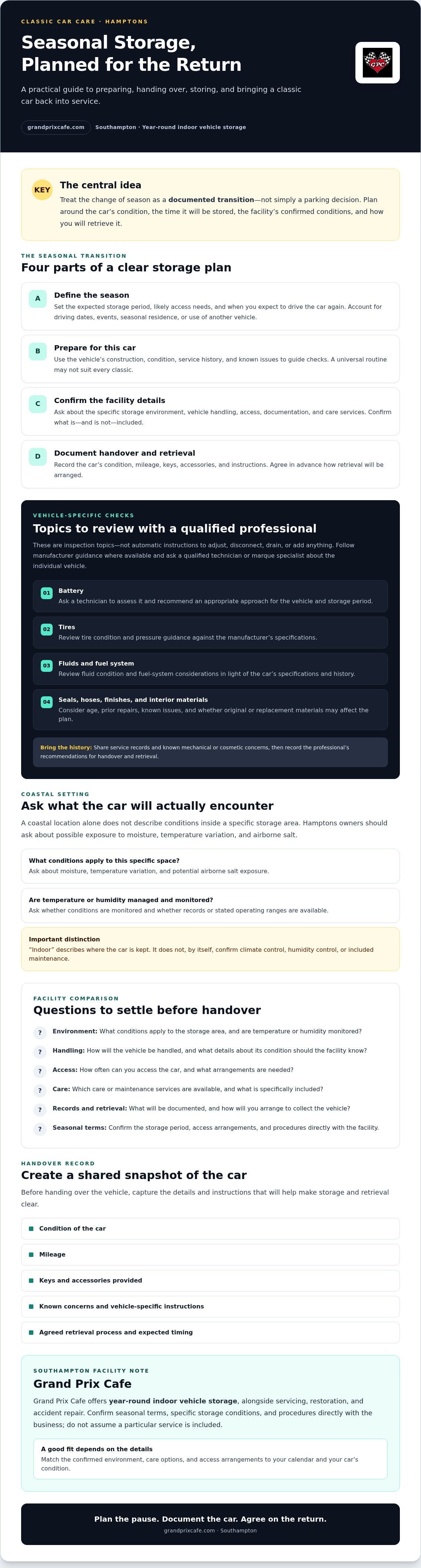
What matters most when putting a classic car away is planning how it will return to the road. For seasonal classic car storage Hamptons owners should treat the change of season as a documented transition, not simply a parking decision. Coastal conditions, including salt air and changing temperatures, make it important to understand the environment and care procedures a facility actually provides.
Before handing over a vehicle, get clear answers about what to prepare, what happens during storage, and how to arrange retrieval. A dedicated automotive facility may offer a different level of vehicle knowledge than ordinary storage, but confirm the details rather than assuming what is included.
This guide offers a practical checklist for preparing your car and bringing it back into service. It also covers questions to ask when comparing facilities, access arrangements, and available care. Grand Prix Cafe in Southampton offers year-round indoor vehicle storage; discuss seasonal terms and specific procedures directly with the business. A clear plan helps you make an informed choice and prepare for the next driving season.
Table of Contents
Why seasonal classic car storage in the Hamptons needs a plan
Seasonal storage is a planned period off the road, with preparation, agreed storage arrangements, and steps for returning the car to use. Ordinary parking may not include a care plan or retrieval schedule. Long-term preservation is different again: a vehicle left unused for an extended period may need a broader conservation approach.
For a classic, storage is more than time away from driving. Decisions should reflect the vehicle’s condition and intended use, so important questions aren’t left until the day you need the car. The contrast is clear in the general account of an automobile graveyard, where vehicles are left to decay rather than kept under a considered plan.
Which vehicles and ownership patterns suit seasonal storage?
A car driven throughout the year has different access needs from an occasional-use classic brought out mainly during a particular season. Seasonal residents may want storage to align with their time in the Hamptons; local collectors may plan around driving dates, events, or use of another vehicle. Owners with multiple cars should decide which need frequent access. Before choosing an arrangement, define the storage period, how often you may need the car, and when you expect to drive it again.
What Hamptons conditions should owners ask about?
A coastal location alone doesn’t tell you what conditions a vehicle will encounter in storage. Ask about potential exposure to moisture, temperature variation, and airborne salt, and what conditions apply to the specific storage area. Indoor storage does not, by itself, confirm climate or humidity control or mean that vehicle maintenance is included. Get those details directly from the facility.
Preparation also depends on the individual car. Its materials, condition, prior use, and time off the road all affect what may need attention. A recently driven vehicle with sound components may have different considerations from one with known mechanical or cosmetic issues. Treat the plan as vehicle-specific, and discuss concerns with a qualified service professional rather than assuming one routine suits every classic.
For seasonal classic car storage Hamptons owners can make a clearer choice by matching confirmed facility conditions and access arrangements to their calendar and the car’s needs. Discuss preparation and retrieval from the outset to make the seasonal pause a managed transition.
How seasonal storage affects a classic car between drives
A car’s storage needs depend on more than how long it will be off the road. Its condition, construction, fuel system, repair history, and planned storage period all influence which preparations are appropriate. A procedure suitable for one vehicle may not suit another, particularly when components or materials differ from modern standards.
Storage preparation should be tailored to the individual vehicle, its condition, and the length of time it will be off the road. Use the manufacturer’s guidance where available, and consult a qualified technician or marque specialist before making vehicle-specific decisions. Don’t treat a generic checklist as a set of instructions.
Which mechanical and material considerations deserve attention?
Before storage, ask a qualified technician to assess the battery and recommend an appropriate approach for the vehicle and storage period. Review tire condition and pressure guidance, fluid condition, and fuel-system considerations against the manufacturer’s specifications. These are inspection topics, not automatic instructions to disconnect, inflate, drain, or add products.
Age and history matter. Older seals, hoses, finishes, and interior materials may respond differently to storage than newer replacements. Prior repairs can also change what deserves attention. Share known issues and service records with the technician, then record recommendations so the handover and retrieval plan reflects the car’s actual condition.
Why does the storage environment matter?
Indoor storage describes where a car is kept; it doesn’t establish whether temperature or humidity are managed. Those are separate facility features to verify. Ask what conditions apply to the specific space, whether they’re monitored, and whether records or stated operating ranges are available. Don’t infer climate or humidity control from the word “indoor.”
Match the answers to the vehicle’s materials and condition. A car with known corrosion concerns, older trim, or recent restoration may prompt different questions from one with a different history. The storage environment is only one part of the decision. Separately confirm whether vehicle-care procedures are included and who is responsible for them.
When considering seasonal classic car storage Hamptons arrangements, bring the vehicle’s specifications, service history, and intended storage period into the conversation. Grand Prix Cafe in Southampton offers year-round indoor vehicle storage and car service. Ask directly about seasonal terms, facility conditions, and the specific care procedures available for your car. Discuss your vehicle’s storage needs before deciding on a preparation plan.
How to compare seasonal classic car storage in the Hamptons
Compare documented arrangements, not promotional language. For seasonal classic car storage Hamptons owners should ask each facility the same questions, then separate confirmed features from details that remain unclear. If a facility mentions “specialist care,” ask what is done, by whom, and under what terms.
What should a collector ask before choosing a facility?
Ask how the vehicle is positioned, who handles it, and how its intake condition is recorded. Clarify the access-request process and how seasonal retrieval is arranged. For each care item, ask whether it is included, available by separate arrangement, or not offered. Verify every promised service in writing, including its scope, responsibility, and retrieval terms.
How should owners compare local storage arrangements?
Compare options serving Southampton, East Hampton, Sag Harbor, and Westhampton by their stated services and confirmed terms, not by location alone. Consider how the car will reach the facility from home or the city, but confirm transport separately rather than assuming storage includes it. Match verified capabilities to the vehicle’s condition, intended storage period, and likely access needs.
Keep a short comparison record of confirmed features, unanswered questions, written terms, and who provided each answer. If a facility describes indoor storage, don’t infer environmental controls or ongoing maintenance. Ask directly. For further context on indoor storage in the area, consult the guide titled Professional Indoor Car Storage in Southampton NY: Preserving Automotive Integrity, then verify facility-specific details with the provider.
A seasonal handover checklist for classic cars in the Hamptons
A clear handover record aligns the owner’s expectations with the facility’s actual arrangements. Use this sequence to prepare the car, document its condition, and plan its return. Owner observations are useful, but mechanical decisions should be made by a qualified automotive professional.
Inspect: Walk around the vehicle and note visible damage, existing issues, and anything that may need attention before storage.
Document: Photograph the car and record its mileage, recent service, known concerns, keys, and accessories being handed over.
Discuss preparation: Share the manufacturer’s guidance and ask a qualified specialist about vehicle-specific preparation. Agree on any proposed service before work begins, including its scope and approval process.
Confirm handover: Clarify who may move or service the car, how authorization will be obtained, and how operating instructions, alarm details, and relevant documents should be shared through the provider’s process.
Plan retrieval: Confirm how to request access, arrange seasonal collection, and coordinate any condition check before driving.
What should owners do before handing over the vehicle?
Keep copies of your photographs and written notes. Point out known leaks, electrical concerns, or unusual starting behavior rather than expecting a facility to discover them as part of storage. Confirm which keys and accessories are being left and who is authorized to request work. Put approvals and agreed service details in writing before work begins.
How should a classic return to the road after storage?
Arrange a condition check before driving, particularly after an extended storage period. A specialist can assess tires, brakes, fluids, battery condition, and other systems according to the vehicle’s specifications. Don’t assume indoor storage includes inspection or maintenance; confirm what has and hasn’t been done. Drive only once the car has been judged road-ready, and make the first trip cautiously so you can notice any change in handling, braking, or engine behavior.
This written sequence gives the owner and provider a shared reference from intake through retrieval. For further reading, look for Preventing Mechanical Decay in Stored Vehicles when that guide is published. Owners considering seasonal classic car storage Hamptons arrangements can also discuss storage and related car service with Grand Prix Cafe in Southampton. Discuss your car’s storage requirements and confirm seasonal terms and procedures directly.
Arrange seasonal classic car storage with Grand Prix Cafe
Grand Prix Cafe is an automotive center in Southampton offering year-round indoor vehicle storage. Its services also include car service, restoration, and accident repair. For owners considering seasonal classic car storage Hamptons arrangements, indoor storage may be part of a broader vehicle-care relationship, but confirm the specific terms and procedures directly.
Storage does not automatically include maintenance, inspections, battery care, or managed environmental conditions. Before making plans, ask whether seasonal bookings are available for your intended dates, what conditions apply to the storage space, how access requests are handled, and which vehicle-care services, if any, are available by separate arrangement.
What should owners include in a storage inquiry?
Give the facility enough context to respond to the vehicle and storage period. Include:
The make, model, year, and any relevant specifications.
Current condition, known issues, and recent service or restoration work.
Intended storage dates and likely retrieval timing.
Questions about facility conditions, vehicle handling, access, and available services.
Ask for current seasonal arrangements and applicable terms to be confirmed before you commit. If the car may need service or repair, describe the concern, but don’t assume that work is part of storage.
What happens after the initial conversation?
Put the agreed arrangements in writing. Confirm responsibilities, access procedures, documentation, seasonal terms, and any service scope. Keep inspection or repair work distinct from the storage agreement unless it’s explicitly discussed and approved. Grand Prix Cafe offers car service, restoration, and accident repair, but verify directly whether work is available for your particular vehicle and what it involves.
For related mechanical needs, consult Professional Classic Car Mechanic in Southampton NY: Expert Mechanical Curatorship. A defined inquiry and written confirmation make it easier to coordinate storage with any separate work the vehicle may require.
If you’re ready to discuss your vehicle and seasonal requirements, Discuss your classic car storage needs with Grand Prix Cafe. Confirm current arrangements, facility conditions, access, and requested care directly. Contact Grand Prix Cafe to begin the conversation.
Plan your classic car’s next seasonal transition
A considered storage plan starts with the car, not a standard routine. Assess its condition and intended storage period, document the handover, and confirm facility conditions, access, handling, and any care services in writing. Before driving again, arrange a vehicle-specific condition check so the car’s return to the road reflects its actual needs.
For seasonal classic car storage Hamptons owners can consider Grand Prix Cafe, a Southampton-based automotive center offering year-round indoor vehicle storage. Car service, restoration, and accident repair are also available when related work is needed. Confirm current seasonal arrangements and the scope of any requested care directly with the business.
Discuss your seasonal classic car storage needs with Grand Prix Cafe and ask informed questions about your vehicle and timing. Clear expectations and a documented plan can help you approach the next season with confidence and look forward to driving when the car is ready.
Frequently Asked Questions
When should I arrange seasonal classic car storage in the Hamptons?
Start the conversation before your intended handover date, particularly if storage needs to align with a seasonal move or driving schedule. Whether your car is in Southampton, Westhampton, East Hampton, Sag Harbor, elsewhere on Long Island, or Manhattan, share its details, the desired storage period, and expected retrieval timing early. Then confirm availability, access procedures, and applicable arrangements directly with the facility. Don’t assume a booking deadline or that space is available.
Is indoor storage enough to protect a classic car over winter?
Indoor storage reduces direct exposure to outdoor conditions, but the term alone doesn’t confirm temperature or humidity control, monitoring, or maintenance. Suitability depends on the vehicle and the facility’s actual conditions. Ask what environment is maintained, how conditions are checked, and whether records are available. Clarify which services are included, optional, or unavailable. Use those answers, rather than the word “indoor” alone, to assess whether the arrangement fits your car.
Should I disconnect the battery before storing a classic car?
Not as a universal rule. The appropriate approach depends on the vehicle, battery type, electrical system, alarm, and storage duration. Disconnecting a battery without considering those factors may not suit every classic. Check the owner’s manual or ask a qualified specialist for vehicle-specific advice. Before handover, ask whether the storage provider offers battery care and confirm exactly what it involves rather than assuming it is part of storage.
How do I prepare a classic car for seasonal storage?
Document the car’s condition, mileage, known issues, and recent service. Gather the keys, relevant instructions, and records the facility requests. Arrange a professional assessment if the vehicle’s condition or storage period warrants one. Tire, battery, fuel, and fluid procedures should follow the car’s specifications, not a generic routine. Before handover, agree in writing who may move or service the vehicle, how approval is obtained, and what responsibilities the provider accepts.
Can a classic car stay in storage all winter without being driven?
That depends on the vehicle’s condition, the storage environment, and its maintenance plan. Routine exercise isn’t appropriate as a blanket recommendation; starting or driving a car may require suitable conditions and correct operation. Ask a specialist what is appropriate for your vehicle and intended storage period. If inspections or maintenance are agreed with the facility, confirm the scope and timing in writing. Don’t assume the car will be started or serviced during storage.
What should I check before driving a classic car after seasonal storage?
Arrange a condition check before the first drive, especially after an extended storage period. A qualified technician can assess tires, brakes, fluids, battery condition, and other systems relevant to the vehicle. Follow the owner’s manual and the technician’s advice. If you notice a leak, warning light, unusual sound, or other abnormal condition, don’t drive until it has been evaluated. Proceed only when the car has been judged road-ready.
What should I ask a Hamptons car storage facility before booking?
Ask about indoor conditions, vehicle handling, access requests, intake documentation, and retrieval arrangements. Clarify whether battery care, inspections, or maintenance are included, optional, or unavailable, and get agreed responsibilities in writing. For local logistics around Southampton, Westhampton, East Hampton, Sag Harbor, Long Island, or Manhattan, ask whether the facility serves your location and whether transport is offered. Don’t assume transportation or specific environmental controls are part of a storage arrangement.
Comments