


Signs of a Bad Classic Car Restoration: A Collector’s Inspection Checklist
A flawless finish can be the first reason to look closer. Fresh paint and bright trim may conceal corrosion, rushed repairs, or mechanical wear, so the signs of a bad classic car restoration aren’t always visible at first glance. A short test drive may not reveal them either.
It’s reasonable to expect a restored car to match its description. But “restored” can refer to work of very different scope. A polished appearance alone doesn’t confirm sound structure, properly functioning systems, or accurate records. Look for mismatches between the car’s condition, the materials and workmanship, its documentation, and the way it behaves on the road.
This checklist covers the body, chassis, mechanical systems, and restoration history. Use it to distinguish cosmetic flaws from concerns that warrant closer investigation, identify records to request, and decide when an independent classic-car specialist’s assessment could help before you commit to a purchase. Whether you’re considering a car in Southampton, Westhampton, East Hampton, Sag Harbor, elsewhere on Long Island, or in Manhattan, the same evidence-based approach applies.
Table of Contents
What Do Signs of a Bad Classic Car Restoration Actually Tell You?
A bad restoration isn’t simply a car with imperfect paint or visible age. It’s work that raises concerns about workmanship, safety, originality, or the accuracy of its records. Since “restored” can describe very different scopes of work, ask what was done, what was retained, and what the owner intended. The overview of vehicle conservation and restoration defines restoration alongside preservation and modification, useful distinctions when evaluating a car’s history.
Mismatched evidence deserves investigation, not an instant verdict. A paint flaw, an altered component, or a missing invoice may have a reasonable explanation. Concern grows when separate clues point to the same unanswered question.
Poor workmanship, age, and originality are different issues
Wear, age, and maintenance history can resemble rushed or incomplete restoration work. A worn seat may reflect years of use, while a component that differs from factory specification may be an intentional modification. Ask the seller to explain the restoration goals and identify which parts were repaired, replaced, or retained. Then assess workmanship separately from originality. A carefully executed restoration can include non-original components, while an original-looking car may still need attention.
Use a pattern of clues, not a single red flag
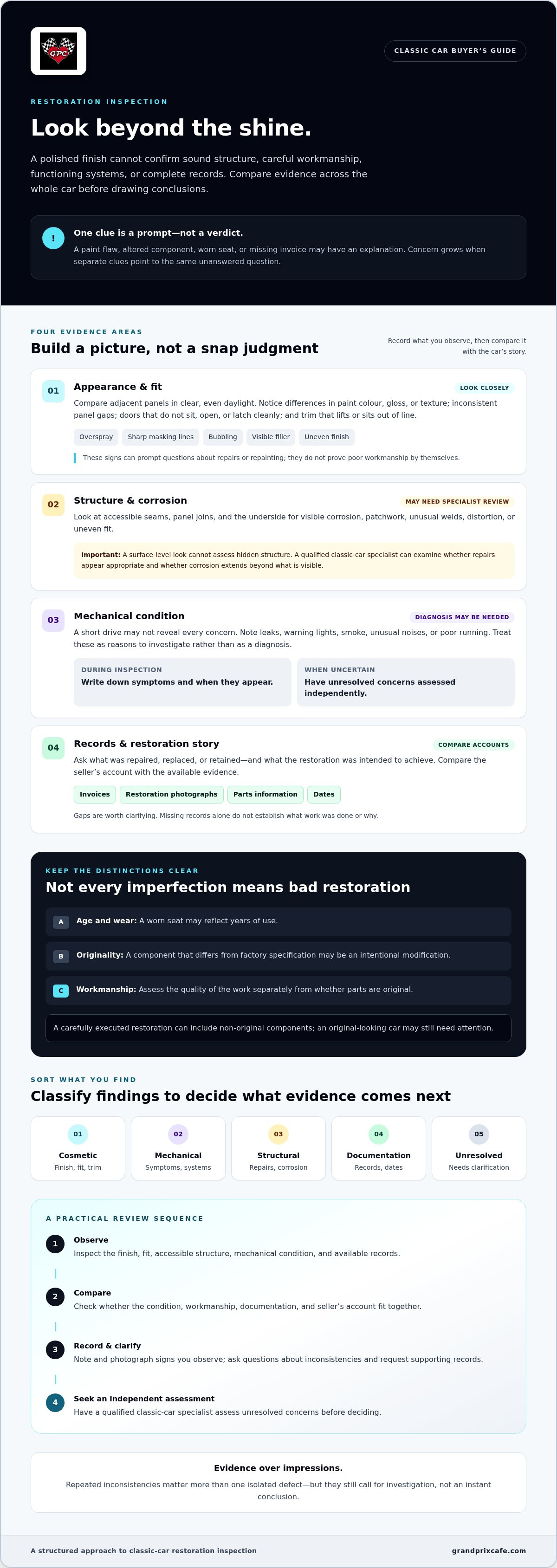
Build a picture from four areas rather than relying on one striking detail. Record what you observe, then compare clues across the car and with the seller’s account.
Appearance: Paint, panel alignment, trim fit, and consistency of finish.
Structure: Visible signs of corrosion, repairs, or uneven fit that merit closer examination.
Mechanical condition: Leaks, warning lights, smoke, unusual noises, or poor running that call for diagnosis.
Records: Photographs, invoices, parts information, and dates that support the restoration story.
Repeated inconsistencies carry more weight than one isolated defect. For example, a seller’s claim of extensive bodywork may prompt questions if the records are sparse and visible repairs appear uneven. That combination still doesn’t establish what happened or why the work looks that way. Photograph and note the clues, request clarification, and have a qualified classic-car specialist assess unresolved concerns before drawing conclusions about condition, safety, or whether the car was misrepresented.
Inspect the Paint, Bodywork, and Structure for Restoration Warning Signs
Inspect the exterior in clear, even daylight. View adjacent panels from several angles and compare their colour, gloss, and texture. A difference may reflect a repair or repaint, but it doesn’t establish poor workmanship by itself. Progressive’s classic car inspection checklist also recommends looking beyond the visible finish to areas such as the undercarriage.
Paint and panel fit: what inconsistencies can suggest
Check whether panel gaps appear reasonably consistent from one side of the car to the other. Notice how doors sit when closed, whether they open and latch cleanly, and whether trim follows the body without lifting or misalignment. Look for overspray on rubber seals or nearby components, sharp masking lines, bubbling, and visible filler. These are reasons to ask questions, not proof of a failed restoration. Previous repairs, age, and later paintwork can also explain inconsistencies.
A paint-thickness gauge may help identify variation across panels. Treat its readings as one clue, not a verdict. A reading alone can’t establish the quality, timing, or history of the work. Ask the seller what was repainted and why, then compare the explanation with photographs or invoices if available.
Structural repairs and corrosion deserve closer attention
Look for visible seams, patchwork, unusual welds, distortion, or corrosion in accessible areas. Pay attention to places where panels meet and to the condition of the underside, but don’t rely on a surface-level look to assess hidden structure. Depending on the vehicle’s design, the chassis or unibody may need examination by a specialist who can assess whether repairs appear appropriate and whether corrosion extends beyond what’s visible.
Southampton and the wider Hamptons have a coastal setting, so a car’s storage and use history may make corrosion a relevant question. That context is not proof the vehicle has rust. Ask where it was kept, inspect accessible seams and structural areas, and request a closer assessment if anything raises concern. The signs of a bad classic car restoration become more meaningful when paint irregularities, panel fit, and possible structural repairs point to a related issue.
Keep a record of what you see. Photograph the location, note the panel or area, and separate observations from conclusions. If the exterior or underside raises questions, a specialist assessment can help clarify what the visible evidence does and doesn’t show. For information about classic-car restoration and service in Southampton, consult Grand Prix Cafe.
Check the Mechanical Work, Interior, and Records Against the Restoration Story
A restoration description should be specific enough to check. If the seller says the engine was rebuilt, ask when the work was done and look for supporting invoices, dated photographs, or parts records. Compare those materials with the car’s current condition. Missing paperwork doesn’t prove that work was never completed, but it leaves details to verify.
Mechanical symptoms call for diagnosis
If possible, observe the car starting from cold, then note idle quality, smoke, leaks, warning lights, and unusual sounds. During a permitted road test, pay attention to braking, steering, shifting, and how the vehicle runs under ordinary conditions. These observations help identify questions, but they don’t diagnose the cause. A qualified mechanic can recommend checks, such as compression testing where appropriate to the vehicle. A short drive can’t replace a mechanical inspection.
Compare records, identification, and restoration claims
Match invoices and dated photographs to the work described by the seller. Check whether parts records and work dates support the stated scope, and compare the vehicle identification number and relevant paperwork for consistency. Treat discrepancies as questions for clarification, not as legal conclusions. Interior materials, stitching, switchgear, and trim can also be compared with the claimed work. Fresh upholstery may fit a documented interior restoration, while worn fittings may simply indicate that the work did not include them. A vintage car restoration guide can provide additional context for considering scope and workmanship.
Use the clues below to decide what to verify next. None establishes a diagnosis on its own.
Several unresolved clues may be signs of a bad classic car restoration, but they’re prompts for investigation, not a verdict. Keep observations separate from conclusions, and seek a specialist’s assessment when the records and condition don’t align.
Follow This Classic-Car Restoration Inspection Checklist Before You Buy
A methodical inspection turns impressions into useful questions. Work through the car in a consistent order, keep observations factual, and separate what the seller tells you from what a qualified specialist can verify.
1. Review the claims. Write down the stated restoration scope, major work, and any known unfinished items before inspecting the car.
2. Inspect in daylight. Check the body, interior, and accessible structural areas in clear light. Note inconsistencies without treating them as proof of poor work.
3. Document each clue. Photograph concerns and record their exact location, such as the left door edge, engine bay, or floor area. Include the date and any explanation the seller provides.
4. Compare the evidence. Review available invoices, dated photographs, and parts records alongside the seller’s description. Mark gaps that need clarification.
5. Arrange specialist review. If structural, mechanical, safety-related, or documentation concerns remain unresolved, request an independent classic-car specialist’s inspection before committing.
Questions to ask about the restoration
Ask who completed the work, which areas were addressed, and whether supporting records are available. Clarify whether the goal was preservation, repair, modification, or a broader restoration, since those scopes can produce very different results. Ask about previous repairs and known unfinished work, too. Record the answers, but treat them as the seller’s account until records or an inspection support them.
Know when specialist checks are needed
A visual review and road test can help identify questions, but they can’t settle every concern. A qualified mechanic or restoration specialist can assess issues that require technical diagnosis. Ask in advance what the inspection will cover and request the findings in writing. Inspection methods and scope vary, so confirm that the assessment addresses the specific questions raised by your review. For local mechanical expertise, see this resource on a classic car mechanic in Southampton.
Use the checklist to identify and organize signs of a bad classic car restoration, not to reach a final verdict on your own. If you’re in Southampton, Westhampton, East Hampton, Sag Harbor, elsewhere on Long Island, or in Manhattan, Grand Prix Cafe can discuss classic-car service or restoration: learn about its services.
What to Do About a Bad Classic Car Restoration
Inspection findings are most useful when they’re organized by type. Classify each observation as cosmetic, mechanical, structural, documentation-related, or unresolved. A paint inconsistency may be cosmetic; a leak or unusual noise needs mechanical diagnosis; a concern about corrosion or repairs to a structural area calls for closer assessment. Missing records leave questions about the work, but don’t prove it wasn’t done.
Decide whether to proceed, investigate, or walk away
Compare the findings with your intended use and restoration goals. A car needing cosmetic attention may suit a buyer prepared for unfinished work, while unresolved structural or mechanical concerns deserve qualified advice before purchase. Don’t infer value, safety, or future repair needs from appearance alone. Base those judgments on vehicle-specific evidence and an appropriate assessment.
Use three practical options:
Proceed: The findings are understood, documented, and acceptable for your plans.
Investigate: Request missing records, clarification, or a specialist’s written assessment before deciding.
Pause or walk away: Don’t commit while material concerns remain unresolved or the available evidence doesn’t support the seller’s account.
Keep your photographs, inspection notes, seller responses, and any written findings together. This creates a clear record of what you observed and what still needs confirmation. It also helps you explain your concerns to a specialist without treating an initial clue as a diagnosis.
Choose a restoration professional for the next step
Before agreeing on work, discuss the vehicle’s condition, documented history, and the specific issues you want assessed. Ask what the proposed work would cover and how the findings will be communicated. The signs of a bad classic car restoration are prompts for careful, vehicle-specific investigation, not a substitute for professional judgment.
Grand Prix Cafe offers classic-car restoration, accident repair, and servicing in Southampton, New York. Details about classic-car restoration and repair are available on its website.
Make Your Next Decision With Clear Evidence
The signs of a bad classic car restoration matter most when considered together. Compare the body and structure with the mechanical condition, interior, and records, then separate observed clues from conclusions. One flaw may have a simple explanation; a pattern of inconsistencies calls for further investigation.
Before committing, document your findings and request clarification where the restoration story is incomplete. If structural or mechanical concerns remain unresolved, seek a vehicle-specific assessment and use its findings to weigh the car against your intended use and tolerance for unfinished work. A careful decision doesn’t require certainty about every detail, but it should be based on evidence rather than appearance alone.
Grand Prix Cafe offers classic-car restoration and accident repair in Southampton, New York. If you’re considering follow-up work or want to discuss a vehicle’s restoration needs, contact Grand Prix Cafe about classic-car restoration or repair. Collectors in Southampton, Westhampton, East Hampton, Sag Harbor, Long Island, and Manhattan can use the same inspection principles to prepare specific questions about a vehicle.
Frequently Asked Questions
What are the most common signs of a bad classic car restoration?
Common signs include uneven panel gaps, doors that don’t close cleanly, paint bubbling, overspray, visible filler, corrosion, mechanical symptoms, and records that don’t support the seller’s description. None proves poor restoration alone. Look for a pattern across the body, structure, mechanical systems, and documentation. For example, visible repair work combined with missing records may justify asking more questions and arranging a specialist assessment.
Can a classic car look restored but still have structural problems?
Yes. Fresh paint and repaired body panels can conceal corrosion or previous work in areas that aren’t readily visible. A visual inspection of the exterior can’t confirm the condition of a chassis, frame rails, floor pans, or unibody structure. If you have concerns, ask a qualified specialist to inspect relevant areas based on the car’s design. A clean-looking finish isn’t proof of sound underlying structure.
How can I tell whether a classic car has been poorly repainted?
Compare colour, gloss, and paint texture across nearby panels in even daylight. Look for overspray on seals or trim, sharp masking lines, bubbling, and uneven panel fit. A paint-thickness gauge may reveal variation, but its readings can’t establish the quality or history of the work by themselves. Ask what was repainted and why, then compare the explanation with available photographs or invoices.
Should I buy a classic car with incomplete restoration records?
Incomplete records don’t automatically mean the car was restored poorly, but they leave important details unverified. Ask what work was done, who completed it, and whether dated photographs, invoices, or parts records are available. Compare the seller’s account with the vehicle’s current condition. If structural or mechanical questions remain unanswered, pause the purchase and seek a qualified assessment before deciding whether the uncertainty fits your plans.
Can I inspect a classic car restoration myself?
Yes. A personal inspection can help you identify questions before purchase. Check the car in daylight, observe panel fit and visible finishes, note interior condition, review available records, and photograph each concern with its location. You can also observe starting and running behaviour if permitted. However, this first look can’t confirm hidden structural condition or diagnose mechanical faults. Use it to guide questions, not replace specialist advice.
What should a professional classic-car inspection include?
Ask for an inspection scope suited to the vehicle and your concerns. It may address bodywork, accessible structure, mechanical condition, interior, identification details, and records. The appropriate checks vary by car, so confirm which areas will be examined and whether testing is recommended. Request written findings that distinguish observed conditions from items requiring further diagnosis. This gives you a clearer basis for questions and purchase decisions.
Does coastal storage in the Hamptons cause classic-car corrosion?
Coastal exposure can be a reason to investigate corrosion, but location alone doesn’t prove a vehicle has rust. Cars around Southampton, Westhampton, East Hampton, or Sag Harbor can have different use and storage histories. Ask where the car was kept and examine accessible seams and underside areas for signs of corrosion or previous repairs. If anything is unclear, request a specialist’s assessment of relevant structural areas.
Comments