


Classic Car Carburetor Tuning in Southampton
A carburettor can be clean and still be out of tune. Classic car carburetor tuning in Southampton involves more than adjusting a single setting: servicing, rebuilding, jetting and balancing each address different parts of how the engine runs. The right work depends on the carburettor’s condition and the way it is configured.
It’s reasonable to expect a well-tuned carburettor to support smooth running, responsive power and efficient fuel use. But adjustments need to suit the engine and its components: a change that helps one setup may not suit another. Carburettor condition and calibration can also affect emissions.
This article explains what professional carburettor servicing and rebuilding involve, why jetting and balancing matter, and how they can affect performance, fuel economy and emissions. It also outlines what a specialist considers when assessing a classic or vintage vehicle, helping you understand the work before deciding on the next step.
Table of Contents
Carburettor jetting and balancing
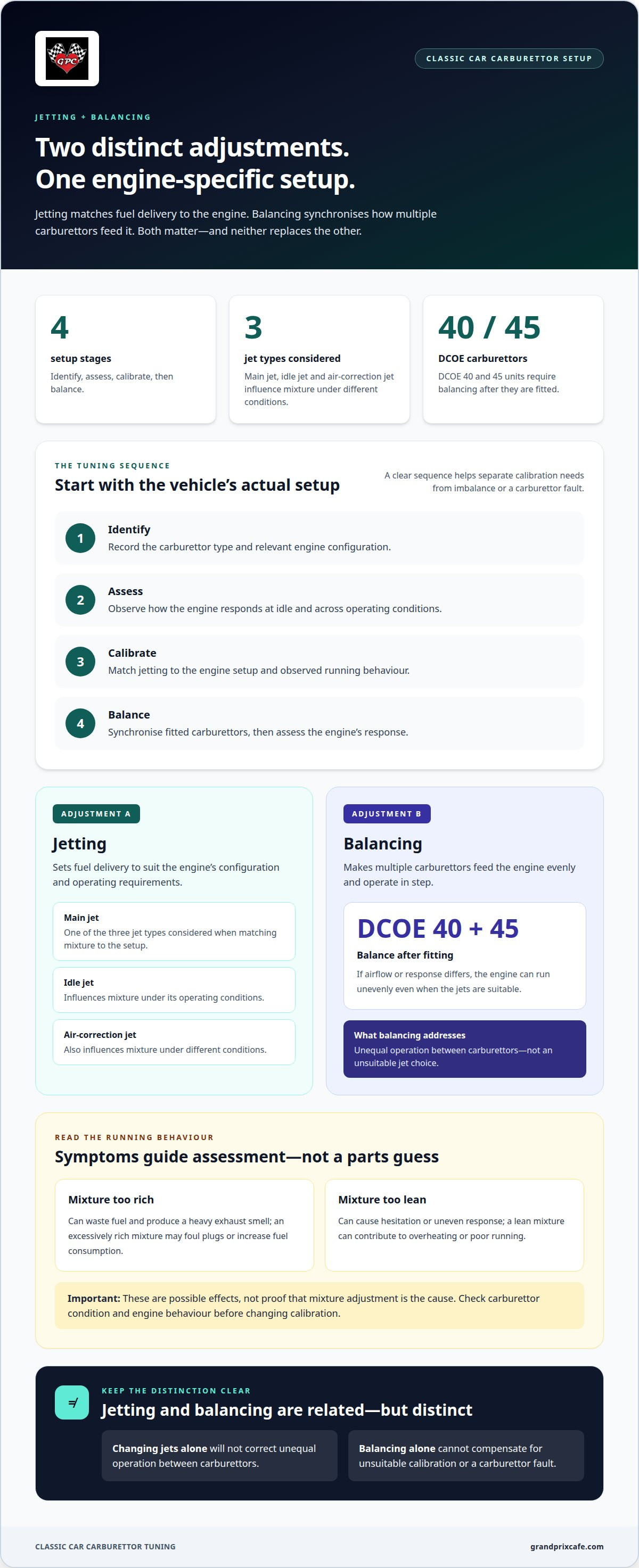
Jetting matches fuel delivery to an engine’s configuration and operating requirements. A carburettor’s main jet, idle jet and air-correction jet each influence the mixture under different conditions. The right selection depends on the engine, carburettor and other components, not a universal setting. For example, a modified engine may need different calibration from an otherwise standard one.
Balancing addresses how evenly multiple carburettors feed the engine. DCOE 40 and 45 carburettors require balancing after they are fitted. If their airflow or response differs, the engine may run unevenly, even when the jets are suitable. A specialist therefore treats jetting and balancing as related, but distinct, parts of the setup.
A sound tuning process starts with the vehicle’s existing configuration. The specialist identifies the carburettor type, reviews the engine setup and assesses how it runs. Jet choices are considered against that combination. After fitting, the carburettors are balanced and the engine’s response assessed. If the results point to a mixture issue, calibration can be refined rather than changed without a clear reason.
Identify: Record the carburettor type and relevant engine configuration.
Assess: Note how the engine responds across idle and operating conditions.
Calibrate: Match jetting to the setup and observed running behaviour.
Balance: Synchronise fitted carburettors, including DCOE 40 or 45 units.
These steps help distinguish a jetting issue from an imbalance. Changing jets alone won’t correct unequal operation between carburettors. Likewise, balancing cannot compensate for unsuitable calibration or a carburettor fault. For classic car carburetor tuning in Southampton, the aim is to assess the whole setup: carburettor condition, engine specification, jet selection and balance. This supports consistent running while preserving the character of the original installation.
Power, fuel economy, and emissions
A classic engine’s mixture affects combustion, throttle response and exhaust output. In Southampton, applicable emissions or inspection requirements depend on the vehicle and relevant local rules; carburettor adjustment alone cannot establish compliance.
Power and Fuel Economy Effects
The correct mixture helps an engine use fuel effectively at idle, during acceleration and at a steady speed. A mixture that is too rich can waste fuel and produce a heavy exhaust smell, while one that is too lean can cause hesitation or uneven response. The specialist considers the carburettor alongside the engine’s condition, ignition and intended use, rather than treating fuel economy as a matter of changing jets alone.
For example, a classic driven mainly in town spends more time at low speeds than one used for sustained cruising. Those conditions can reveal different tuning problems. Assessment should consider how the engine starts, idles and responds under load, then relate those observations to power delivery and fuel use. A change is useful only if it suits the vehicle’s complete setup.
Symptoms and Tuning Risks
Common signs include difficult starting, an unstable idle, hesitation during acceleration, poor throttle response or a noticeable change in fuel use. A specialist distinguishes these symptoms from faults elsewhere, since ignition problems or worn components can cause similar behaviour. The pattern matters: hesitation as the throttle opens differs from an engine that runs unevenly at idle.
Incorrect tuning can make these symptoms worse. An excessively rich mixture may foul plugs or increase fuel consumption; a lean mixture can contribute to overheating or poor running. These are risks, not proof that mixture adjustment is the cause. A sound assessment checks the carburettor’s condition and the engine’s behaviour before changing its calibration.
For emissions, start by identifying the vehicle’s inspection context and assessing its running condition accordingly. No single setting guarantees a particular result across all classic models. Carburettor design, engine specification and overall condition influence exhaust output, so tuning should be considered alongside these factors. If an inspection concern prompts a booking, describe the vehicle and its symptoms clearly. This helps focus the assessment without assuming a failed test has just one cause.
Classic and vintage carburetor tuning
Classic and vintage engines need tuning that respects their original design and present condition. Weber, Solex and Pierburg carburettors each call for an assessment suited to their construction.
Tune-Up Inclusions
A tune-up starts by identifying the carburettor and assessing its condition and operation. For servicing, the unit is stripped and inspected, then cleaned ultrasonically, lubricated and reassembled with new gaskets, diaphragms and seals. These steps address wear or contamination that adjustment alone cannot correct. The scope depends on whether the carburettor needs calibration, internal servicing or both.
On a vintage vehicle, preserving suitable original components matters alongside sound running. A specialist considers the carburettor type, engine configuration and reported symptoms before deciding what work is appropriate. For example, a Weber, Solex or Pierburg may need servicing before its settings can be assessed reliably. A tune-up should distinguish cleaning and repair from adjustment, rather than treating every fault as a mixture problem.
Tuning Time
There is no single duration for every classic car tune-up. Work takes longer when inspection reveals worn parts, contamination or the need to strip and rebuild the carburettor. A straightforward assessment and adjustment differs from ultrasonic cleaning, lubrication and replacement of internal seals. The carburettor’s condition and the scope required determine the sequence and time involved.
For a more useful estimate, provide the vehicle, carburettor type and symptoms. A Solex needing adjustment presents a different task from a Weber that requires dismantling and new gaskets. If tuning follows a repair or engine change, that work also shapes the assessment. The technician can define the necessary steps after evaluating these details.
A classic carburettor has no universal tuning interval. Arrange an assessment when starting, idle or throttle response changes, or after work alters the engine or carburettor setup. A vehicle returning to use after storage may also need its fuel system and carburettor condition assessed before adjustments are made.
The practical takeaway is to match the work to the component. Identify whether the issue calls for adjustment, cleaning or rebuilding, then assess the Weber, Solex or Pierburg in the context of its engine. This helps preserve the vehicle’s original character while addressing the actual cause of poor running.
Southampton classic car carburetor tuning garages
A garage specializing in classic carburettors should assess the carburettor type, engine configuration and running symptoms together. In Southampton, these details help distinguish a focused tuning assessment from a general adjustment that may not address the cause.
Look for a process that accounts for carburettor types such as Weber, Solex and Pierburg. A specialist can identify whether the job calls for inspection, cleaning, servicing or tuning, then relate the work to how the vehicle runs. For example, an uneven idle and hesitation under acceleration may point to different issues, so diagnosis should consider both symptoms rather than assume one setting is responsible.
Carburettor condition matters before calibration. Servicing can involve stripping and inspecting the unit, ultrasonic cleaning, lubrication, and replacing gaskets, diaphragms and seals. These steps address contamination and worn components that adjustments alone cannot resolve. For DCOE 40 and 45 carburettors, balancing after fitting is also part of the setup. Matching the work to the model and condition helps preserve the vehicle’s original character.
Useful details for an initial assessment include the car’s make and model, carburettor type, recent engine work and symptoms. A change after an engine repair, for instance, provides helpful context. So does a vehicle that starts poorly but runs more evenly once warm. These specifics help define the work without assuming every classic needs a rebuild.
Identify the unit: Weber, Solex, Pierburg or another carburettor type.
Describe the symptoms: Starting, idle and acceleration behaviour.
Note recent work: Engine or carburettor changes that may affect setup.
Set the scope: Inspection, servicing, rebuilding or tuning as indicated.
For Southampton owners considering a classic as well as its mechanical care, explore classic cars for sale as a separate part of the decision.
Grand Prix Cafe: Classic Car Sales
Grand Prix Cafe offers classic car sales for readers considering a different vehicle after reviewing their current car’s needs. For an owner preparing to sell, vehicle consignment services provide another route. Car service can support ongoing vehicle care, while year-round indoor car storage offers a place to keep a classic protected between drives.
These options suit different stages of ownership. A prospective buyer may be weighing a classic’s condition and maintenance needs; an existing owner may be considering a sale or storage. The right next step depends on whether you plan to buy, retain or consign your vehicle.
For a conversation about classic car sales or the available ownership options, contact Grand Prix Cafe.
Choose the right next step for your classic
Use the vehicle’s history and intended use to guide your next steps. A car driven regularly may need a different maintenance plan from one kept mainly for display. Before arranging work, note what has changed in its running and whether recent repairs or engine changes may affect its setup. These details help keep decisions focused on the individual vehicle.
For classic car carburetor tuning in Southampton, a considered assessment can help align the work with the car’s condition and your priorities. Grand Prix Cafe provides car service, as well as classic car sales and vehicle consignment services for owners considering their next stage of ownership. Contact Grand Prix Cafe to discuss your vehicle and the service that best fits your plans.
Contact Grand Prix Cafe to discuss your classic car needs, and take the next step with clarity.
Frequently Asked Questions
What carburetor brands and types do Southampton classic car specialists service?
Southampton classic-car specialists service Weber, Solex and Pierburg carburettors. Weber examples include 32/34, 32/36 and 38 units, alongside DCOE 40 and 45 types. The appropriate work depends on the individual carburettor’s type and condition. Provide the vehicle model and carburettor details when arranging an assessment, so the required work can be scoped accurately.
How much does classic car carburetor tuning cost in Southampton?
The price depends on the case and is provided after a quote request. Key factors include the carburettor type and condition, and whether the work involves adjustment, servicing or rebuilding. For example, a Weber requiring calibration differs from one needing dismantling and replacement seals. Sharing the vehicle’s details and symptoms helps define the work required for a quote.
Comments