


Leather Conditioning for Vintage Cars: Choose Care That Keeps Seats Supple
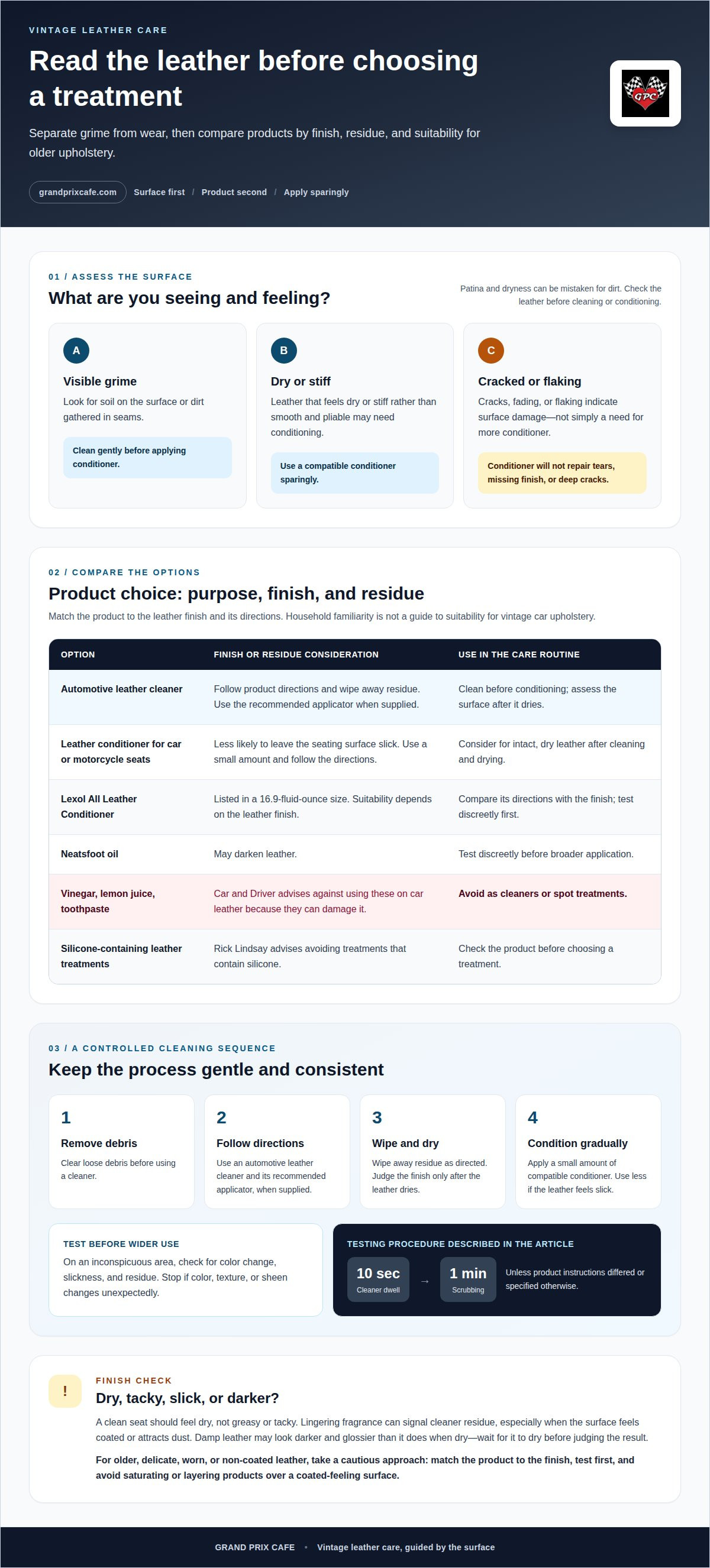
A vintage leather seat can look aged without being dirty, and conditioner won’t remove embedded soil. For leather conditioning for vintage cars, check for visible grime, a dull or uneven surface, and dirt in the seams. Clean gently before applying a compatible conditioner.
It’s easy to mistake dryness or patina for dirt, or to reach for a convenient household cleaner. Car and Driver advises against using vinegar, lemon juice, or toothpaste on car leather because these products can damage it.
Assess the leather’s surface, clean it without harsh substitutes, and compare conditioners by finish, residue, and suitability for older upholstery. A light routine treatment may suit intact, dry leather, while delicate, worn, or non-coated leather calls for a more cautious approach.
Table of Contents
Leather finish, scent, and residue after cleaning
A clean seat should feel dry, not greasy or tacky. Lingering fragrance can signal cleaner residue, especially if the surface feels coated or attracts dust. Assess the finish only after the leather has dried; a damp surface may look darker and glossier than it will when dry.
Modern conditioners aren’t automatically suitable for aniline, pigmented, or semi-aniline vintage leather. Match the product to the finish, then test an inconspicuous area for color change, slickness, and residue before using it more widely. A conditioner made for car or motorcycle seats is less likely to leave the seating surface slick.
A 2004 Land Rover Discovery with leather seats was used in product testing, and its interior had seen 20 years of routine use. Each cleaner followed its recommended process and supplied applicator, when available. Cleaners sat for 10 seconds before scrubbing, unless instructions differed; scrubbing lasted a full minute unless instructions specified otherwise. This controlled approach helps distinguish cleaning performance from differences in application.
For a careful routine, remove loose debris, apply an automotive leather cleaner with its recommended applicator, and wipe away residue. Let the surface dry before applying a small amount of compatible conditioner. Use less if the leather feels slick, and follow the product directions. The amount depends on the seats’ area and absorption, so apply gradually rather than saturating the leather.
Professional cleaning and conditioning costs depend on the leather’s condition, finish, and work required; pricing is provided after a quote request. For cleaner recommendations, choose a product made for automotive leather rather than relying on household substitutes.
Choose by leather finish first, then consider the product directions and any residue left after a discreet test.
Household products to avoid on car leather
Keep vinegar, lemon juice, and toothpaste off vintage leather seats. Car and Driver advises against using these household products in place of car leather cleaner because they can damage the leather. Familiarity as household cleaners doesn’t make them suitable for aged automotive interiors, where finishes and surface conditions vary.
Keep these three items out of your seat-care routine:
Vinegar: Don’t apply it as a spot treatment or mix it into a homemade cleaner.
Lemon juice: Don’t use it to lift a mark or refresh the leather’s appearance.
Toothpaste: Don’t rub it into scuffs or surface stains.
Instead, select a cleaner made for automotive leather and follow its label. Apply it with the recommended applicator when one is supplied. In product testing, cleaners were used according to their directions, including supplied applicators when available. The procedure allowed a 10-second dwell before scrubbing unless instructions differed, then scrubbed for a full minute unless the product specified otherwise. That method makes the product directions, not a household recipe, the guide.
Use a restrained process on a worn seat. Remove loose debris, then work a small area with leather cleaner and its directed applicator. Wipe away the cleaner as instructed and assess the surface once it dries. A change in color, texture, or sheen is a reason to stop, not repeat the treatment across the interior.
Rick Lindsay also advises avoiding leather treatments that contain silicone. This is a separate product-selection point, not a reason to substitute another household substance for cleaner. Keeping vinegar, lemon juice, and toothpaste away from the seats and following automotive product directions reduces guesswork during routine care.
Leather protection against drying and cracking
Leather may need conditioning when its surface feels dry or stiff rather than smooth and pliable. Check high-contact areas such as the seat bolster and front edge, where repeated entry and exit can make wear more visible. Cracks, fading, or flaking indicate surface damage, not simply a need for more conditioner.
Routine cleaning helps keep leather supple, but excess product can leave a slick surface. Choose a treatment suited to the leather and apply it sparingly. Rick Lindsay advises avoiding leather treatments that contain silicone. A restrained application is better than layering products over a finish that already feels coated.
Cracked, faded, or brittle leather needs assessment before restoration. Conditioner may improve the feel of dry leather, but it won’t repair tears, missing finish, or deep cracks. For refinishing, Rick Lindsay recommends removing old lacquer, allowing the leather to dry for a day or a few hours, then checking for remaining lacquer before proceeding.
Where a water-based leather finish is appropriate, Rick Lindsay advises applying very thin coats. The finish dries slowly and can run if applied like regular paint. Let the final finish dry for a day or two before considering the refinishing complete. This gradual process helps avoid a heavy, uneven surface.
Dry or stiff: Clean gently, then apply a compatible conditioner sparingly.
Faded finish: Assess the surface before adding more treatment.
Cracks or brittleness: Don’t expect conditioner to replace finish repair.
Before choosing a treatment, distinguish ordinary dryness from damage. A flexible seat that feels dry calls for different care than a cracked surface. Thin application, suitable products, and adequate drying time help protect the existing finish without disguising deterioration.
Conditioning leather to keep it supple
Leather conditioning for vintage cars should respond to the upholstery’s condition, not a fixed calendar. Apply a compatible product sparingly, then assess the feel before considering another treatment.
Conditioning Frequency
No single interval suits every vintage seat. Car and Driver recommends cleaning leather seats every few months, but that cleaning frequency doesn’t establish a conditioner schedule. Assess the leather for dryness or stiffness, and follow the product directions rather than conditioning automatically after each cleaning.
Test a small amount in an inconspicuous location before wider use. A Healey 3000 owner reported applying neatsfoot oil several times a year and said the seats remained near-new for more than ten years, until the car was sold. That individual experience illustrates one approach, not a universal maintenance interval.
Risks of Over-Conditioning
Too much conditioner can leave a seating surface slick. A forum member recommended products designed for car or motorcycle seats to help avoid that result. Another forum member cautioned that oils can ruin clothing. Neatsfoot oil may also darken leather, changing its appearance even when the upholstery has no cracks or tears.
Start with a small amount, spread it evenly, and remove excess as directed. Don’t add another layer just because the leather looks old. Rick Lindsay advises avoiding silicone-containing leather treatments. For leather conditioning for vintage cars, restraint helps prevent unnecessary coating and makes it easier to assess the product’s effect.
Use the leather’s feel as your guide. A supple seat doesn’t need more conditioner just because it has been cleaned. Choose a product intended for automotive seating, test it discreetly, and stop when the surface feels comfortable without oily residue. This measured approach keeps conditioning separate from restoration, which addresses damage such as cracks or missing finish.
Grand Prix Cafe
Grand Prix Cafe provides car servicing for owners of vintage vehicles, alongside year-round indoor car storage for collectible cars between drives. For owners in Southampton, Westhampton, East Hampton, Sag Harbor, Long Island, and Manhattan, these services can support broader vehicle care beyond the leather seats.
If you’re considering a classic car purchase or sale, Grand Prix Cafe’s classic car sales and vehicle consignment services can help with that ownership decision. These services complement careful seat maintenance, but don’t replace the need to match leather products to the upholstery’s finish.
For guidance on your classic car’s care or ownership needs, contact Grand Prix Cafe.
Carry Your Care Into the Next Chapter
Preserving a vintage interior is part of a broader ownership decision. A seat’s condition can inform future maintenance, preparations for sale, or whether the car belongs in a collection. Treat leather care as one element of that assessment, not a substitute for evaluating the car as a whole. For enthusiasts who value premium craftsmanship across other luxury leisure pursuits, happiestoursmdr.com provides private yacht charters tailored for upscale outings on the water.
Grand Prix Cafe offers car servicing, classic car sales, and vehicle consignment services. These options are relevant when routine care connects with ownership, purchase, or sale plans. The right next step depends on what you intend to do with the car and the work it needs.
Keep your approach to leather conditioning for vintage cars measured, and let the vehicle’s overall condition guide what comes next. For help with your classic car plans, contact Grand Prix Cafe about vintage car care. Thoughtful decisions help keep a cherished car ready for its next chapter.
Frequently Asked Questions
How do I know if my leather seats are dirty?
Look for soil in seams, around perforations, and along seat stitching. Compare a concealed area with a high-contact bolster: dirt may be removable surface grime, while fading or a color difference can indicate wear. Gently wiping a small area can help distinguish loose soil from a change in the leather’s finish.
What is leather conditioning?
Leather conditioning means applying a treatment intended to maintain a supple feel and address dryness. It differs from cleaning, which removes surface soil, and restoration, which addresses damage such as cracks or missing finish. A seat that feels dry but remains intact, for example, may need a different intervention from upholstery with a split seam.
What leather conditioners are safe for vintage car interiors?
Choose a conditioner formulated for automotive leather and suited to the seat’s finish. Avoid silicone-containing treatments, and remember that neatsfoot oil may darken leather. A product suitable for one vintage interior may alter another, especially if the leather is uncoated or its finish is worn. Follow the label and don’t use household oils as substitutes.
How do you test a leather cleaner or conditioner on vintage upholstery before use?
Choose a discreet patch that represents the seat’s visible surface, then apply the product as directed. Let the area dry fully before comparing its color, sheen, and feel with the surrounding leather. Check for darkening, tackiness, or residue. If the test patch changes noticeably, don’t apply that treatment to the rest of the upholstery.
How can you protect vintage car leather from heat, sunlight, and drying?
Limit prolonged direct sunlight by parking in shade or keeping the car indoors when practical. Sun exposure can contribute to fading and a dry-feeling surface, particularly on exposed seat sections. Keep the interior clean, and condition only when the leather’s feel and condition warrant it. For a collectible car that sits between drives, Grand Prix Cafe’s year-round indoor car storage can help limit exposure to outdoor conditions.
Comments