


Classic Car Interior Deep Cleaning Prices in East Hampton
A classic car’s interior needs more than a routine vacuum. For classic car interior deep cleaning in East Hampton, the package scope and price depend on the cabin’s condition, its materials, the level of soil, and the work required. A professional service can include vacuuming and debris removal, upholstery shampooing, and surface conditioning, with the approach suited to the interior rather than treated as a standard modern-car clean.
It’s reasonable to want a clear idea of what a package covers before arranging the work. The price depends on the individual vehicle and is provided after a quote request; the main cost factors are the interior’s condition, the materials being cleaned, and the selected services. This guide explains what cleaning, shampooing, conditioning, vacuuming, and debris removal involve, how those details shape package pricing, and what to expect from professional care. It also outlines how restoration needs differ from routine interior cleaning, so you can identify the service that best fits the vehicle.
Table of Contents
Interior cleaning and shampooing
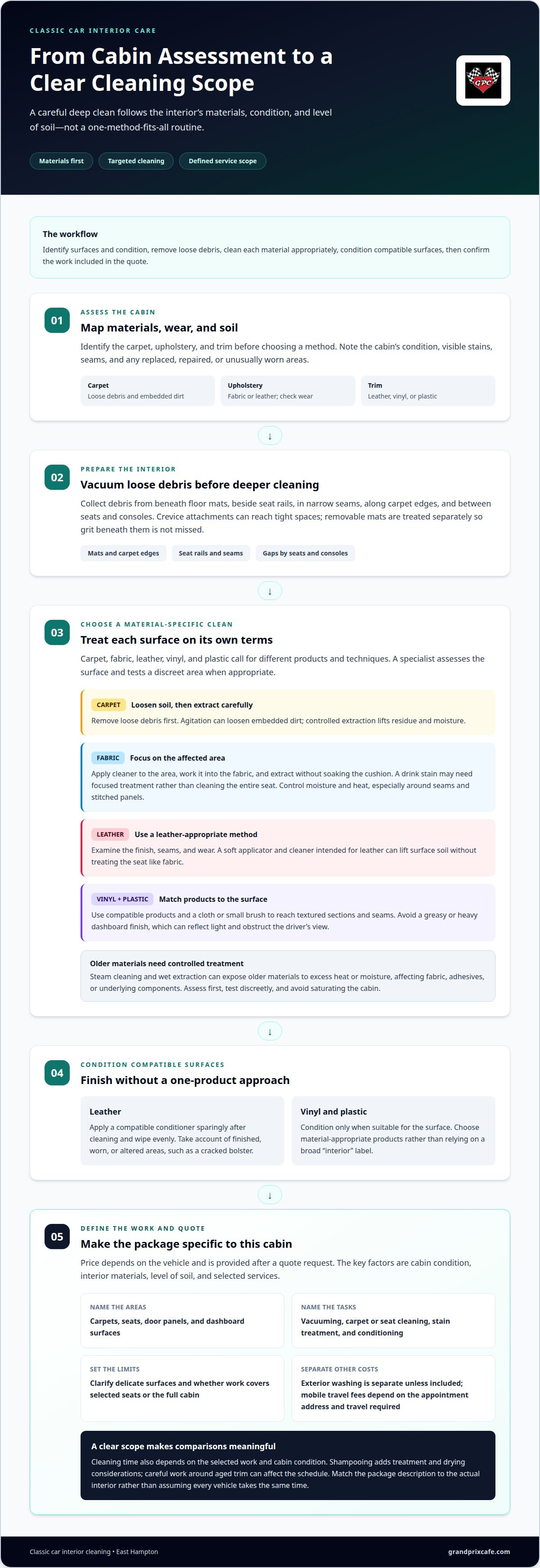
Begin by identifying the carpet, upholstery, and trim. A classic car’s materials and condition should guide the cleaning method.
Carpet and Seat Shampooing
For carpet, loose debris is removed before any further cleaning. Agitation can loosen embedded dirt, while controlled extraction lifts residue and moisture. Seat cleaning also depends on upholstery: fabric and leather need different approaches. Treating carpet and seats according to their materials helps avoid using one method throughout the cabin.
Fabric Seat Shampooing
Fabric seats need measured cleaning, especially around seams and stitched panels. Cleaner can be applied to the affected area, worked into the fabric, and extracted without soaking the cushion. A drink stain, for example, may call for focused treatment rather than cleaning the entire seat. Check that the process accounts for moisture and tests a discreet area before visible fabric is treated.
Steam cleaning and wet extraction can expose older materials to excess heat or moisture. These may affect fabric, adhesives, or underlying components. A careful specialist assesses the material first, tests a discreet spot, and controls heat and moisture rather than saturating the cabin.
For mobile auto detailing in East Hampton, service coverage and travel fees depend on the appointment address and travel required. Include both the East Hampton location and any travel charge in the quote before confirming service.
When discussing interior care, clarify which materials and areas need attention and how each will be treated. If fabric seats are involved, ask how the approach controls moisture. A clear scope should distinguish carpet, seats, and any specific stain treatment.
Leather, vinyl, and plastic cleaning and conditioning
Identify each surface before cleaning. Leather seats, vinyl door panels, and plastic dashboards need different treatment.
Leather Seat Cleaning and Conditioning
For leather seats, a specialist first examines the finish, seams, and existing wear. A soft applicator and cleaner intended for leather can lift surface soil without treating the seat like fabric. After cleaning, a compatible conditioner is applied sparingly and wiped evenly. Look for a process that distinguishes finished leather from worn or altered areas, such as a cracked bolster.
Vinyl and Plastic Conditioning
Vinyl door panels and plastic dashboards collect fingerprints, dust, and residue around seams. Material-appropriate products and a small brush or cloth can reach textured sections. Use conditioning only when suitable for the surface, and avoid a greasy or heavy finish, especially on a dashboard where reflected light can obstruct the driver’s view.
Choose cleaning products for the specific material, not a broad “interior” label. Leather cleaner is intended for leather, while vinyl and plastic need compatible formulas. With original trim, assess a discreet area before treating the rest. This can reveal color transfer, fading, or an existing coating.
For a mobile detailing appointment, the specialist can assess the cabin’s actual surfaces before selecting products. Point out replaced trim, repaired panels, or areas with unusual wear. For example, a re-dyed seat may respond differently from untouched leather. This information helps guide cleaning and conditioning choices without assuming every component has the same finish.
Interior deep-cleaning packages and prices
A cleaning scope should reflect the work included, not just the vehicle’s size. Compare the specific tasks, such as vacuuming, carpet and seat cleaning, and care for interior surfaces.
The price depends on the vehicle and is given after a quote request; key factors include cabin condition, interior materials, soil, and selected services. For example, a lightly soiled cabin needing vacuuming differs from one with stained carpet, heavily used seats, and several material types. A clear package description separates included cleaning from additional work, so the scope can be understood before service begins.
Cleaning can be scoped by task. One service may focus on loose debris and surface cleaning; additional work may include carpet or seat cleaning where appropriate. The useful distinction is which areas are included. Clarify whether the scope names carpets, seats, door panels, and dashboard surfaces rather than relying on a general label such as “full detail.” Exterior washing is separate unless specifically included.
Cleaning time also depends on the selected work and the cabin’s condition. A compact coupe with modest dust requires a different sequence from a larger classic with stained upholstery and debris beneath removable mats. Shampooing adds treatment and drying considerations; careful work around aged trim can also affect the schedule. The scope, material types, and degree of soiling determine the time needed, so the package description should match the actual interior rather than assume every vehicle takes the same time.
Before approving the work, review its steps and limits. Clarify whether stain treatment, conditioning, or attention to delicate surfaces is included. If only the front seats need work, distinguish that from cleaning every seat and the carpet. A specific scope makes comparisons clearer and separates interior work from exterior detailing.
Interior vacuuming and debris removal
Vacuuming removes loose material before deeper cleaning. In classic vehicles, debris can collect beneath floor mats, beside seat rails, and in narrow seams. A thorough pass also reaches carpet edges and the gaps between seats and consoles, where finer grit may be hidden.
Work from accessible upper surfaces toward the floor, collecting debris rather than moving it elsewhere in the cabin. Crevice attachments reach tight spaces around seat mounts and door pockets. A soft brush can loosen dust from textured carpet, while careful handling protects delicate trim. Treat removable mats separately so grit beneath them is not left behind.
Seat position affects access. A movable seat can be adjusted to reach the carpet beneath it, then returned to its original position. Take particular care around exposed wiring, aged upholstery, and loose trim. Debris near a seat track, for example, should be removed without pulling at carpet or disturbing fragile fittings.
Before service, point out loose trim, recent repairs, and items stored in the cabin. Remove belongings that should not be handled and identify anything that must stay in place. This helps distinguish personal property from debris and draws attention to areas that need care.
Vacuuming alone does not remove every mark. Sand embedded in carpet may need agitation before extraction, while a leaf in a door pocket requires direct removal. The technician can identify whether dry debris removal is sufficient or whether a separate cleaning step suits the affected surface. Clear expectations matter: vacuuming removes loose particles, but it does not replace stain treatment or shampooing.
For a classic car with debris beneath seats or around delicate fittings, arrange professional vehicle service through Grand Prix Cafe vehicle services.
Grand Prix Cafe: Classic Car Sales
Grand Prix Cafe offers classic car sales and vehicle consignment for owners considering a purchase or sale. If a vehicle needs more than interior cleaning, its car servicing, restoration, and accident repair address broader care needs. Year-round indoor storage is also available for vehicles between drives.
Choose the service according to the need: interior cleaning concerns the cabin, servicing and restoration address vehicle care, and sales or consignment relate to ownership plans. Year-round indoor storage provides an option when a car needs to be kept between drives.
Contact Grand Prix Cafe to discuss your classic car needs.
Plan the Next Step for Your Classic Car
Set a goal for the cabin before arranging care. A vehicle intended for regular use may need a different scope from one being prepared for sale or storage. For classic car interior deep cleaning in East Hampton, consider the car’s condition and how you plan to use it next. That context helps define the work needed.
Grand Prix Cafe’s car service supports ongoing vehicle care, while classic car sales and vehicle consignment services relate to ownership and selling decisions. The price depends on the individual vehicle and is provided after a quote request; condition, materials, and selected work shape the scope. A focused discussion can connect the interior’s needs with your plans for the car.
Contact Grand Prix Cafe about interior cleaning and take the next step with a clear plan for your vehicle.
Frequently Asked Questions
What is included in a classic car interior deep-cleaning package?
A cleaning scope can cover cabin vacuuming, debris removal, carpet or seat cleaning, and care for interior surfaces. Name areas such as the trunk, removable mats, and storage pockets, since they may need separate attention. Clarify whether a specific stain or odor is included or whether the work covers general interior cleaning.
How do detailers safely clean vintage leather, vinyl, and fabric interiors?
Safe cleaning begins with identifying each surface and assessing its condition. Aged leather, vinyl, and fabric may show fading, repairs, or weakened seams that affect how they respond. A repaired seat panel, for example, may need a different approach from an untouched section. Do not assume one cleaner or process suits every material in the cabin.
Comments