


Classic Car Exhaust System Repair in East Hampton for Rare Cars
A classic car’s exhaust isn’t simply a worn component to replace. For classic car exhaust system repair in East Hampton, the work should address the fault while respecting the vehicle’s original configuration and historical integrity.
Exhaust noise, leaks, corrosion, or damaged connections can affect how a classic car performs and sounds. Yet a repair that changes the exhaust configuration can raise a separate concern: according to the United States Environmental Protection Agency, changing a vehicle’s exhaust configuration from its EPA-certified configuration may expose the repair shop to liability under the federal tampering prohibition.
This guide explains how a specialist assesses exhaust problems in classic and rare cars, what affects the repair, and why original specifications matter. You’ll also learn what information helps a professional assess the vehicle and how restoration experience can support careful service. Use these points to discuss the work, preserve what makes the car distinctive, and choose a sensible next step.
Table of Contents
Classic and rare car repair
Classic exhaust work should fix the fault while respecting the vehicle’s original design. For East Hampton owners, the repair depends on the system’s condition, configuration, and required parts.
Repair and Replacement Costs
Classic car exhaust replacement costs depend on the damaged components, parts availability, and labor. A localized leak may require different work from corrosion across several connected sections. A useful estimate separates parts from labor and explains whether repair or replacement will address the fault. The price depends on the case and is provided after a quote request, with the vehicle’s condition, required parts, and labor shaping the estimate.
For classic car exhaust system repair in East Hampton, preserving the correct configuration matters. According to the United States Environmental Protection Agency, changing a vehicle’s exhaust configuration from its EPA-certified configuration may expose the repair shop to liability under the federal tampering prohibition.
Choosing a Local Repair Shop
Look for experience with vintage vehicles, not just routine exhaust replacement. A specialist should explain how the proposed work suits the car’s construction and existing system. Customer reviews can offer context about communication, workmanship, and repair documentation. Consider them alongside the shop’s vehicle-specific explanation, rather than treating a general rating as proof of expertise.
New York inspection requirements for a classic car depend on its applicable inspection category. Ask how the recommended exhaust work relates to inspection needs and the car’s original configuration. Useful questions include: “What caused the failure?” and “Which parts will the repair address?” You can also ask how the work will preserve the existing exhaust configuration.
Repair Timing and Custom Pipes
Repair time depends on the fault, the system’s condition, and the availability of suitable parts. Damage across several sections or parts that need sourcing can take longer to address than a contained repair. After assessing the exhaust and identifying the required components, the shop can explain the expected sequence of work.
Some shops fabricate custom pipes when a vehicle’s exhaust requires a tailored fit. Ask whether fabrication suits the car’s original configuration and what the finished work includes. Clear answers help you understand the scope before authorizing repairs.
Classic car exhaust repair shops near East Hampton, New York
For a classic car in East Hampton, start by considering the vehicle’s marque, exhaust layout, and condition. A general exhaust repair approach may not suit a rare model. The key is whether the proposed work accounts for the car’s specific design.
Assessing classic-car experience
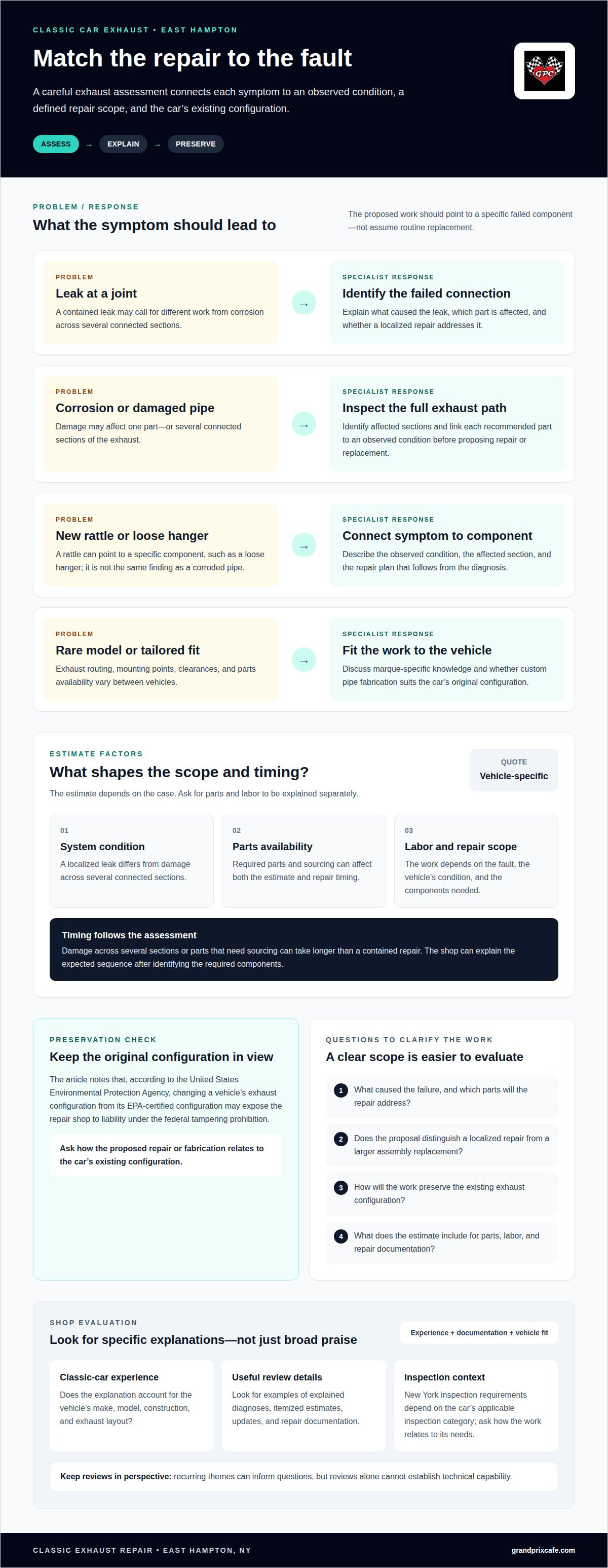
Look for a clear explanation of how the shop will assess the exhaust system. For example, a specialist should distinguish a leak at a joint from corrosion affecting a muffler or pipe. Ask how the diagnosis will identify the failed component and define the repair scope. This helps show whether the assessment addresses the actual fault or assumes routine replacement.
Model-specific knowledge matters, too. Exhaust routing, mounting points, and clearances vary between vehicles. Familiarity with the relevant marque can inform the inspection and parts decisions. For a rare car, discuss how the proposed work will preserve the existing configuration and suit the vehicle’s construction.
Interpreting customer reviews
Reviews can offer context about communication and repair documentation. Look for specific examples, such as a reviewer describing an explained diagnosis, an itemized estimate, or updates during the work. Those details are more informative than broad praise. Consider whether the comments concern classic vehicles or describe general service experiences.
Look for recurring themes across reviews rather than treating one account as conclusive. Comments about unclear scopes or changing explanations can prompt useful questions. Positive mentions of careful documentation may indicate a transparent process, though reviews alone cannot establish technical capability.
Comparing repair approaches
Before booking in East Hampton, clarify what the assessment includes and how the findings will be documented. Ask whether the shop will inspect the full exhaust path, identify affected sections, and explain replacement options. A written scope helps you see which work addresses the fault and which choices relate to preservation.
For example, a proposal should distinguish a localized joint repair from replacement of a larger assembly. The shop should link each recommended part to an observed condition. That explanation gives you a practical basis for understanding the work before authorizing it.
East Hampton NY classic car exhaust system specialists and customer reviews
Choosing a specialist in East Hampton, New York, involves more than proximity. Classic exhaust systems vary in pipe routing, mounting points, muffler placement, and original configuration. A useful assessment connects a specific symptom, such as a new rattle, to an identified component and repair scope. That makes the proposed work easier to understand.
What specialist knowledge looks like
A specialist should explain how the vehicle’s make, model, and exhaust layout inform the assessment. A loose hanger and a corroded pipe, for example, call for different findings and repair plans. A clear explanation identifies the observed condition, affected section, and proposed response. This helps distinguish a vehicle-specific diagnosis from a generic replacement recommendation. For a rare model, the explanation should also address how the work relates to its existing configuration.
Reading customer reviews with care
Reviews can show how a shop communicates, documents work, and handles questions. Look for examples, such as a reviewer describing a clear diagnosis or receiving an itemized repair scope. Comments about classic vehicles are more relevant than general praise that does not describe the work. Recurring themes across reviews provide context, but one account cannot establish a shop’s technical ability.
Consider a review’s detail and relevance before drawing conclusions. A comment about a routine muffler replacement may reveal little about work on a rare car. A review describing clear updates or explained findings can help you assess communication. Broad statements such as “excellent service” offer limited information without a specific repair example.
Using reviews to guide a decision
Compare what reviews describe with the shop’s explanation for your vehicle. A sound discussion connects the reported symptom, inspection findings, and recommended repair. A proposed pipe replacement, for example, should relate clearly to the identified condition. Customer feedback can help set expectations for communication, while the vehicle-specific assessment explains the technical work.
Classic car exhaust repair cost in East Hampton NY
A classic car exhaust estimate depends on the repair scope, parts, and labor. A joint leak differs from damage across several exhaust sections, and the vehicle’s configuration can affect which replacement components fit. For East Hampton owners, a useful starting point is an inspection that identifies the fault and explains the proposed work.
The price depends on the case and is provided after a quote request. Factors include the affected components, labor, parts availability, and whether custom fabrication is needed. A localized repair may involve fewer operations than replacing several connected sections. For a rare model, sourcing or tailoring a suitable part can change the parts and labor required.
Review the estimate by separating its main components. The parts description should identify what will be repaired or replaced, such as a damaged pipe, muffler, or connection. The labor description should explain the work, including removal, fitment, and any fabrication. Ask how each item relates to the inspection findings so you understand the scope before authorizing work.
For classic car exhaust system repair in East Hampton, the repair choice should also respect the car’s existing configuration. A low-cost replacement that does not suit the vehicle may not meet preservation priorities. Compare options by fit, repair scope, and how they address the observed fault, not just by the bottom line. A clear estimate links each cost to a specific task or component.
Before approving the work, clarify whether the estimate covers the full identified repair or only a specific section. A quote for one pipe, for example, may exclude other damaged components found during inspection. Understanding the distinction helps define the scope and avoid assumptions about what the estimate includes.
Grand Prix Cafe: Classic Car Sales
Grand Prix Cafe offers car service, accident repair, classic car sales, and vehicle consignment services. If your exhaust concern is part of a broader maintenance or ownership decision, these services may be relevant next steps. Car service addresses general vehicle needs, while accident repair is relevant when exhaust damage follows a collision. For owners considering a change, classic car sales and consignment services offer ways to buy or sell a vehicle.
The right path depends on your immediate need: maintaining a vehicle, addressing accident damage, or arranging a sale. These are distinct decisions, shaped by the vehicle’s condition and your plans.
Contact Grand Prix Cafe to discuss your classic car needs.
Make the Next Decision with Care
An ownership decision can extend beyond the immediate repair. For classic car exhaust system repair in East Hampton, use the diagnosis and proposed work to decide what the vehicle needs next, whether continued maintenance or a broader ownership change. The right direction depends on the car’s condition and your plans for it.
Grand Prix Cafe offers car service for ongoing vehicle needs, classic car sales for those considering a different vehicle, and vehicle consignment services for owners preparing to sell. These options support different stages of classic-car ownership without deciding the exhaust repair for you. Keep the vehicle’s history and your priorities in view as you consider the next step.
For a conversation about your vehicle and its future, contact Grand Prix Cafe about your car. A thoughtful next step can help you move forward with clarity.
Frequently Asked Questions
What exhaust repairs are common in classic cars?
Common repairs include replacing worn exhaust gaskets, clamps, mounting hangers, or damaged pipe sections. Several parts may have deteriorated together, so the repair may need to address connected components rather than one isolated spot. For example, a loose hanger can cause movement that strains nearby joints. The repair plan should match the car’s system and the condition found during inspection.
How to find an exhaust leak on a classic car and repair it
Have a specialist inspect the full exhaust path, identify the affected section, and distinguish a joint leak from corrosion or other damage. The repair should address the identified fault while preserving the car’s existing exhaust configuration.
Comments