


How Does Classic Car Consignment Work? A Seller’s Guide
What happens to your car, your asking price, and your say in the final offer after you consign it? The question “how does classic car consignment work” comes down to control: who manages buyer enquiries and viewings, how offers are handled, and what the written agreement leaves in your hands.
It’s sensible to weigh those details before placing a valued vehicle in someone else’s care. Consignment gives you professional representation without selling the car outright at the start, but fees, timing, custody, and approval rights depend on the agreement. Make sure those terms are clear before the keys change hands.
This guide follows the sale from an initial vehicle assessment and agreed asking terms through marketing, buyer discussions, and completion. It explains the terms to review, including commission, expenses, agreement length, vehicle care, and how proceeds are calculated. It also compares consignment with a private sale, auction, and outright purchase, so you can choose a route that fits your car, timetable, and preferred level of involvement. Grand Prix Cafe offers classic-car consignment and outright vehicle purchases for sellers in Southampton, Westhampton, East Hampton, Sag Harbor, Long Island, and Manhattan.
Table of Contents
What does classic car consignment mean for a seller?
Classic car consignment is an arrangement in which a vehicle’s owner authorizes a dealer to market the car and facilitate its sale under agreed written terms. The dealer presents the vehicle to potential buyers, while the owner and dealer follow the authority and conditions set out in their agreement. The car is offered through a managed listing rather than bought outright by the dealer at the outset.
That distinction matters. Consignment is one form of consignment, a broader sales arrangement in which an owner entrusts goods to another party to help sell them. For a classic car, the agreement should spell out what the dealer may do, which decisions remain with you, and how the sale and payment are handled. The legal effect can depend on the written terms and applicable law, so read the agreement rather than relying on assumptions about ownership or responsibility.
Who does what in a consignment sale?
A dealer’s sales role can include presenting the car to prospective buyers, responding to enquiries, arranging viewings, and supporting negotiations and transaction steps. The agreement defines the specific work involved. Review it to understand what sales tasks are included and what preparation, if any, is part of the arrangement.
Your role remains active, even when the dealer handles sales tasks. Decide whether the proposed terms suit your priorities, and understand the asking price, the dealer’s authority to negotiate, any costs or commission, how the vehicle will be handled, and how your proceeds are calculated. If the dealer receives an offer, the agreement should state whether you approve the final price or have authorized another process. The dealer can manage the sales work, but you should understand and accept the written arrangement before proceeding.
An assessment can help establish an accurate description of the car’s condition. Grand Prix Cafe’s 100-point Inspection Service covers mechanical, exterior, interior, safety, and security checks. The inspection provides information about the vehicle, not a decision about the sale price.
How is consignment different from an outright purchase?
With an outright purchase, the owner sells the vehicle directly to a buyer. If a dealer buys the car, it is a direct purchase rather than a managed listing: the dealer makes an offer, and the owner decides whether to accept it. The purchase terms determine how and when the sale is completed.
With consignment, the dealer markets the vehicle and facilitates a sale to a prospective buyer under the agreed arrangement. The car is not sold to the dealer at the start, and payment follows the sale terms. Neither route guarantees a particular price or timeframe. The right choice depends on your preferences, the car, and the terms available. Grand Prix Cafe offers both classic-car consignment and outright vehicle purchases.
How does the classic car consignment process work, step by step?
To understand how does classic car consignment work in practice, follow the sale from the first conversation to the final payment. The steps below are a general guide; the written agreement defines the actual process, responsibilities, and payment arrangements. Pay particular attention to who can negotiate or accept an offer.
Discuss the vehicle and your goals. The initial conversation covers the car’s make, model, condition, history, and your preferred selling approach. Be clear about priorities such as price expectations, timing, and how involved you want to be.
Assess the car. The dealer can inspect the vehicle or review information about its condition and provenance. Clarify what the assessment covers and how the findings will inform the listing. An inspection provides information, not a guaranteed sale price.
Review and agree to written terms. Read the agreement before authorizing the listing. It should explain the dealer’s role, fees or commission, any costs, sale authority, vehicle custody, agreement duration, and how and when proceeds are paid. Confirm how offers and price changes are handled.
Prepare the vehicle and listing. Preparation may involve gathering vehicle details, records, photographs, or other presentation work. Make clear what the dealer will do, what information you need to supply, and which preparation tasks are included in the agreement.
Market the car. Once the listing is ready, the dealer presents it to prospective buyers through its chosen channels. Review how the car will be described and marketed, and avoid assuming a particular level of exposure or a sale outcome.
Manage buyer interest. The dealer handles enquiries, viewings, and offers according to the agreed process. Understand whether the dealer can negotiate within set limits, must seek your approval, or has other authority. Set out the asking price and any minimum acceptable amount clearly.
Complete the transaction. If an offer is accepted, the parties follow the agreement’s process for sale paperwork, transfer arrangements, and payment. Know how deductions are calculated and when the remaining proceeds are due.
What happens before the vehicle is listed?
Before committing, compare the proposed description with what you know about the car. Share relevant condition details and history accurately, and raise anything that could affect a buyer’s expectations. Establish what the assessment and listing preparation include. This helps define the dealer’s work and reduces the risk of a listing that misrepresents the vehicle.
What happens after a buyer shows interest?
Agree in advance how the dealer will communicate offers and arrange viewings, and whether you must approve the final price. The eCFR’s U.S. federal regulations on consignment sales concern alcohol beverages, not classic cars, so they should not be treated as vehicle-sale rules. For a classic car, rely on the written agreement and relevant advice for your jurisdiction.
Grand Prix Cafe offers classic-car consignment alongside outright vehicle purchases for sellers in the Southampton area and across Long Island.
Is consignment better than selling privately, at auction, or outright?
No selling route is right for every classic car or owner. Consider how much work you want to manage, how you prefer to reach buyers, and which decisions you want to retain. Consignment delegates agreed parts of the sales process, but vehicle custody, fees, authority to negotiate, and timing are set by the terms. Compare those details before weighing convenience against involvement.
When might consignment suit a classic-car owner?
Consignment may suit an owner who wants professional handling of buyer enquiries and sales tasks without managing every part of a private listing. It can also work for someone who wants a dealer to represent the car while remaining involved in the decisions set out in the agreement. The trade-off is accepting the agreed fees, responsibilities, and limits on authority. Delegating work does not guarantee a particular sale price or timeframe.
When might another selling route fit better?
A private sale may suit an owner prepared to manage the listing, respond to prospective buyers, arrange viewings, negotiate, and coordinate completion. It offers direct involvement, but leaves more of the work in your hands. An auction uses a bidding format, which some sellers may prefer, though the result depends on bidding and the auction’s terms. Review its fees and reserve arrangements before committing.
An outright purchase may suit an owner who would rather consider a direct offer than place the car in a managed sale. The offer and completion terms determine whether that route meets your needs; it does not guarantee a faster or higher-value outcome. Grand Prix Cafe offers both classic-car consignment and outright vehicle purchases.
To decide how does classic car consignment work for your situation, compare the routes against your priorities: personal involvement, price authority, custody, costs, and timing flexibility. Then assess the written terms against those priorities. A clear fit matters more than choosing the route that sounds easiest in general.
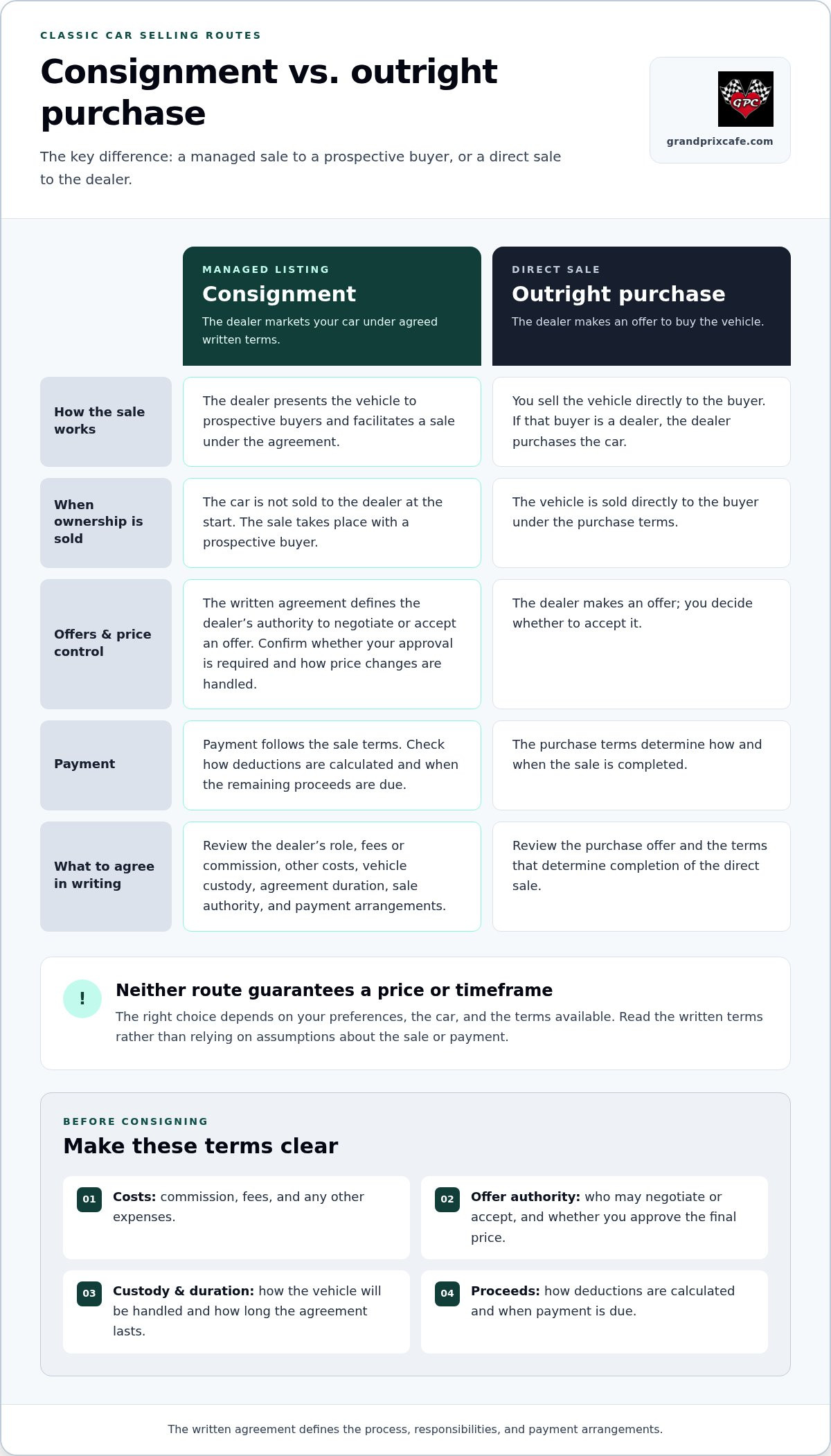
What should you prepare and clarify before consigning a classic car?
Start with an accurate picture of the vehicle and a clear understanding of the proposed arrangement. Gather the information and paperwork you have, note what you know about the car, and record questions to resolve before signing. Requirements vary by transaction, so use this as a practical checklist rather than a universal list of documents or legal requirements.
Which vehicle details help prepare a consignment?
Organize available service records, ownership paperwork, keys, and information about the car’s history and condition. Include known repairs, modifications, maintenance, and issues that could affect a buyer’s understanding of the vehicle. If records are incomplete, distinguish documented facts from your recollection rather than presenting estimates as confirmed history.
Clear disclosure helps the dealer prepare a listing that sets sound expectations for prospective buyers. It can also surface questions to address during a viewing or buyer discussion. Records and condition details support an informed presentation, but they don’t guarantee a sale or a particular result.
Before the car is listed, establish how it will be described and what preparation is included. If there will be an inspection, understand its scope and how the findings will be used. Grand Prix Cafe’s 100-point Inspection Service covers mechanical, exterior, interior, safety, and security checks. An assessment provides information about condition; it is not a guaranteed valuation.
For useful buyer-side context on evaluating presentation and vehicle details, consult this classic car sales guide.
Which agreement terms deserve careful attention?
Read the written terms closely. They define how the arrangement works, including who has the vehicle, who may take specific sales actions, and how payment is handled. Before agreeing, make sure the following points are clear in writing:
Fees and expenses: Identify the commission or other charges, how they are calculated, and whether costs may arise before a sale.
Duration and withdrawal: Understand how long the arrangement lasts and what process applies if you want to withdraw the vehicle or end the agreement.
Custody and insurance: Establish where the car will be kept, who is responsible for its care, and how insurance responsibility is allocated while it is in the dealer’s custody or elsewhere.
Authority over offers: Clarify who may discuss or negotiate an offer, whether your approval is required to accept it, and how a change to the asking price is handled.
Payment and completion: Confirm how the sale proceeds are calculated, what deductions apply, and when payment is due under the agreement.
These terms shape your practical control of the sale. Don’t rely on verbal assurances that aren’t reflected in the written arrangement, and seek jurisdiction-specific advice if you need help interpreting its legal effect. Compare Grand Prix Cafe’s classic-car consignment service with its outright purchase option when considering how to sell.
How Grand Prix Cafe supports a classic car consignment
Understanding how does classic car consignment work helps you compare selling routes, but the practical details depend on the vehicle and written arrangement. Grand Prix Cafe offers classic-car consignment and outright vehicle purchase. These are distinct options: consignment places the car in a managed sale, while an outright purchase is a direct-sale alternative. Your preferred level of involvement and the proposed terms can guide your decision.
Start with a conversation about the car, its history, known condition, and your selling goals. You can consider whether you want the vehicle marketed through consignment or prefer an outright purchase. The agreement should set out the terms, including fees, authority over offers, custody, and payment. Review those details before deciding how to proceed.
What does Grand Prix Cafe bring to the process?
Vehicle assessment is one part of preparing a classic car for sale. It provides a structured assessment across these areas, but is not a guarantee of condition, sale value, or a completed sale. For further context on consignment, explore this luxury car consignment guide.
Collection and delivery are available for vehicles from anywhere in the world. This can help owners whose cars are not located near the point of sale. The collection and custody arrangements, including any related responsibilities, should be understood as part of the proposed written terms.
Grand Prix Cafe’s stated approach emphasizes quality workmanship, extending the life of a car, and protecting the owner’s investment. In a consignment arrangement, those priorities go hand in hand with accurate vehicle information and careful review of the agreement. A useful discussion should clarify the selling route and the terms that would apply, without assuming a particular sale price or timeframe. The service supports owners in Southampton, Westhampton, East Hampton, Sag Harbor, Long Island, and Manhattan.
What is a practical next step for an interested seller?
Prepare a concise overview of your vehicle before discussing it. Include its make, model, year, known condition, available service history, and details about provenance or repairs that may help describe it accurately. Be ready to explain your selling goals, including whether you want to consider consignment or a direct purchase. This gives the conversation a practical focus and helps identify questions to resolve.
Before committing, review the proposed written terms closely. Make sure you understand the fees, the dealer’s permitted actions, how offers are handled, who is responsible for the vehicle while it is in custody, and how payment is arranged. The inspection and collection services add useful context, but the agreement remains the reference for responsibilities and the sale process.
If you’re considering a selling route for your classic, discuss classic car consignment with Grand Prix Cafe and review the proposed terms before deciding how to proceed.
Set your priorities before choosing a route
Before making a decision, define what a successful sale means to you. Is your priority to stay closely involved, spend less time managing buyer enquiries, or understand the terms before your car is marketed? Ranking these priorities can help you assess a proposal based on fit rather than promises.
Knowing how does classic car consignment work gives you a useful framework, but your circumstances should guide the choice. Consider your preferred level of involvement, flexibility around timing, and which decisions you want to retain. Then assess whether the proposed arrangement aligns with those priorities. A considered decision is a sound next step, whether you choose consignment or another selling route.
If you’re ready to discuss your vehicle and selling goals, speak with Grand Prix Cafe about classic car consignment. Review the proposed terms and choose the route that fits your priorities.
Frequently Asked Questions
How does classic car consignment work?
Classic car consignment is an agreed arrangement in which a dealer facilitates a sale to a prospective buyer. The owner and dealer discuss the vehicle and selling terms, then the dealer presents the car and handles the agreed sales tasks. Before signing, find out how counteroffers are handled and what happens if you change your mind before the sale is completed.
Do I still own my car while it is on consignment?
Consignment generally authorizes a dealer to facilitate a sale rather than selling the car directly to that dealer. Ownership, custody, and the dealer’s authority can have contractual and legal details that depend on the agreement and applicable law. Read the document carefully, especially clauses about possession and sale authority. If you’re uncertain about a clause’s legal effect, seek qualified advice before signing.
How much does classic car consignment cost?
There isn’t one fee structure for every consignment arrangement. The written terms should identify any commission, fees, expenses, and how deductions affect the amount payable to you. Review what happens if the car doesn’t sell or you withdraw it, since charges or responsibilities may still apply under the agreement. Another dealer’s advertised rates won’t establish the terms of your own arrangement.
How long does it take to sell a classic car on consignment?
There’s no guaranteed sale period. Timing can depend on the vehicle’s condition, asking terms, buyer interest, and how it is presented. A stated listing period applies to that dealer’s program, not to consignment generally. Before signing, understand the agreement’s duration and what happens if the car remains unsold, including whether it addresses an extension, withdrawal, or continuing responsibilities.
Can I sell my classic car without consigning it?
Yes. You can manage a private sale, consider an auction, or explore a direct purchase. A private sale leaves you responsible for presenting the vehicle and managing buyer discussions; auction terms and outcomes depend on the chosen format. Grand Prix Cafe offers consignment and outright vehicle purchases. Compare the proposed terms with the amount of work you want to take on before choosing a route.
What should a classic car consignment agreement include?
The agreement should make responsibilities and sale procedures clear. Review how fees are calculated, how long the arrangement lasts, where the vehicle will be kept, and how custody and insurance responsibilities are handled. Check who may negotiate or accept offers, whether you can withdraw the car, and how payment is calculated and arranged. Clauses vary by transaction and jurisdiction, so seek qualified legal advice if you need help interpreting them.
Do I need to leave my car with the consignment dealer?
Not necessarily. Vehicle custody depends on the arrangement and written terms. Establish where the car will be kept, how buyer viewings are arranged, and who is responsible for its care and insurance during that period. Grand Prix Cafe can collect vehicles from anywhere in the world. Clarify the collection and custody arrangements for your vehicle before proceeding.
Comments