


Tire Pressure Monitoring for Stored Cars and Sensor Care
Updated: Nov 12
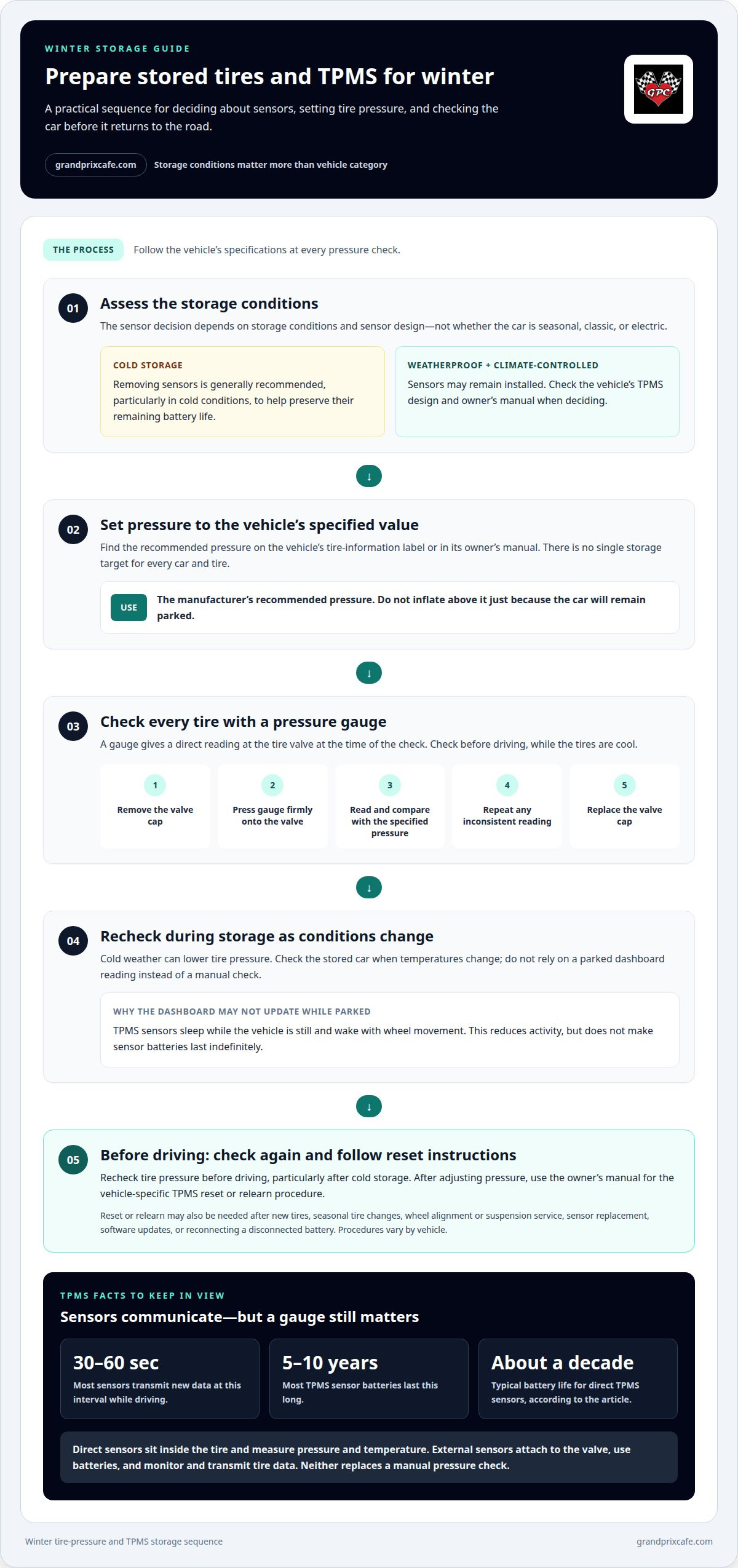
For winter storage, removing TPMS sensors is generally recommended, particularly in cold conditions, to help preserve battery life. Sensors can remain installed when a vehicle is kept in a weatherproof, climate-controlled environment. Tire pressure monitoring for stored cars has limits while a vehicle is parked: sensors sleep and wake with wheel movement, so manual pressure checks remain important.
It’s reasonable to expect the dashboard system to keep you informed, but TPMS does not replace checking pressure with a gauge. This article explains when sensor removal makes sense, how to check tire pressure manually, and how sensors transmit pressure and temperature data. It also covers what to consider when preparing a stored car for winter and before it returns to the road.
Table of Contents
Should TPMS Sensors Be Removed for Winter Storage?
Whether to remove TPMS sensors during winter storage depends on storage conditions and sensor design. Sensors may remain installed when a vehicle is stored in a weatherproof, climate-controlled environment. The right choice depends on storage conditions and sensor design.
Direct TPMS sensors sit inside the tire and measure pressure and temperature. External sensors attach to the valve, use batteries, and monitor and transmit tire data. Sensors send radio signals to the vehicle’s system. While driving, most transmit new data every 30 to 60 seconds.
When parked, TPMS sensors sleep and wake with wheel movement. This reduces activity while the vehicle remains still, but does not make sensor batteries last indefinitely. Most TPMS sensor batteries last 5-10 years; direct TPMS batteries usually last about a decade. Removing sensors for storage is one way to preserve their remaining battery life.
Storage advice does not automatically change for seasonal, classic, or electric cars. The relevant factors are the vehicle’s TPMS design, its owner’s manual, and whether storage is cold or climate-controlled. For example, a classic car kept in a weatherproof, climate-controlled space may retain its sensors.
Cold weather can lower tire pressure, so check a stored car when temperatures change. TPMS sensors may sleep while the vehicle is parked, so their readings do not replace a direct pressure check. Recheck the tires before driving, particularly after cold storage.
After adjusting tire pressure, follow the vehicle’s owner’s manual for TPMS reset or relearn instructions. Procedures vary by vehicle, and the manual provides the applicable steps. A reset may also be needed after new tires, seasonal tire changes, wheel alignment or suspension service, sensor replacement, software updates, or reconnecting a disconnected battery.
Manual tire pressure checks
A pressure gauge gives a direct reading at each tire’s valve stem. For a stored car, compare the readings with the vehicle’s specified pressure, not an assumed storage figure.
Manual Pressure Check Practices
A manual check measures tire pressure with a gauge rather than relying on dashboard information. It shows the pressure at the time of the check, including after the vehicle has been parked.
Check each tire before driving, while the tires are cool. Remove the valve cap, press the gauge firmly onto the valve stem, and read the result. Compare it with the pressure on the vehicle’s tire-information label or in its owner’s manual. Repeat any inconsistent reading, then replace the cap.
Storage Pressure Recommendations
Storage pressure means the vehicle maker’s recommended tire pressure, applied while the car is stored. That specification is more useful than a generic storage target because recommended pressure varies by vehicle and tire.
Use the pressure listed on the vehicle label or in the owner’s manual. Don’t inflate beyond that recommendation just because the car will remain parked. Indoor storage can make pressure checks easier, but it does not change the need to follow the car’s specified value.
Should you use tire cradles, jack stands, or move the car to limit flat spots? Tire cradles support the tire’s contact area, while moving the car changes where each tire rests. Jack stands can lift the vehicle’s weight off its tires, but use them only with suitable equipment and support points.
Should you inflate tires above the recommended pressure for long-term storage? No. Use the vehicle’s specified pressure rather than adding air as a precaution. Overinflation can reduce the tire’s contact area and affect how it sits under the vehicle’s weight.
What are the risks of overinflating tires during storage? Excess pressure can place added stress on a tire and make the ride harsher when the car returns to use. Use a gauge instead of guessing, and recheck pressure before driving.
For a vehicle kept indoors, year-round indoor car storage offers an alternative to leaving it exposed to changing outdoor conditions.
Tire pressure data transmission
A TPMS sensor sends a radio message that the vehicle’s receiver can interpret as tire data. Messages can include pressure, temperature, and a sensor identifier. The receiver uses the identifier to associate incoming information with a wheel, helping the dashboard present readings for the correct tire.
The same radio transmission has a privacy dimension. In a ten-week study, researchers collected TPMS signals from more than 20,000 vehicles and gathered more than six million tire sensor messages. These figures show how repeated transmissions can create a substantial record of nearby vehicle signals.
The study found that signals could be captured from distances greater than 50 meters. Researchers also developed methods to match signals from a car’s four tires. That matching can help distinguish a vehicle’s tire signals from other transmissions in the same area, but it also illustrates how sensor identifiers can reveal that a vehicle passed within receiver range.
TPMS sensor IDs are broadcast unencrypted, so a receiver set up to collect nearby signals could potentially track when a vehicle passes. This is local radio reception, not remote access to a car: the receiver must be within range and configured to collect the signals. Sensors sleeping while a vehicle is parked does not make every transmission private once they wake and send data.
Proposed protections include a rolling code, similar to the code used for car keys, and preventing sensors from being forced to transmit their IDs if they have been in motion within the previous 5 minutes. These are proposed security improvements, not features to assume in a vehicle’s TPMS. The researchers’ paper was accepted for publication at IEEE WONS 2026, bringing the transmission and privacy questions into technical discussion.
What tire pressure should I use when storing a car?
Use the pressure specified by the vehicle manufacturer for the tires fitted to the car. There is no single storage pressure for every vehicle. Find the recommended value on the tire-information label or in the owner’s manual. If the car has a different tire or wheel setup, follow the applicable manufacturer information for that configuration.
Do not choose a target from a general storage chart or add air simply because the car will be parked. Start with the vehicle’s recommendation. Tire markings provide information about the tire itself, but do not replace the car’s pressure specification. For a classic vehicle, consult its manual or pressure label.
Before storage, check every tire with a gauge and compare the readings with the specified pressure. Keep a simple record to review when preparing the car for use again.
Locate the pressure information on the vehicle label or in the owner’s manual.
Match the recommendation to the tires currently fitted, rather than a previous setup.
Measure each tire and record its reading before placing the car in storage.
A stored car’s tire pressure can change as its surroundings change, so the initial reading is not a permanent reference. Recheck the tires before driving and compare them with the same manufacturer specification. If a reading differs, adjust it to the recommended value and check again with a gauge. TPMS can provide a warning, but it does not set a universal storage target.
For long-term parking, correct tire pressure goes hand in hand with a suitable storage environment. Do not treat extra inflation as a substitute for checking the vehicle’s specifications. Using the same reference makes it easier to distinguish a pressure change from a change in the car’s tire or wheel setup.
If indoor storage is part of your plan, explore year-round indoor car storage as an option for keeping the vehicle sheltered while it is off the road.
Grand Prix Cafe
Grand Prix Cafe offers Car Service and year-round indoor car storage for owners preparing to take a vehicle off the road. If you’re planning care for a stored car, these services provide a practical next step: arrange suitable storage and address general service needs before the car returns to use.
For classic vehicles, Grand Prix Cafe also offers Classic Car Sales and Vehicle Consignment Services. The right option depends on whether you plan to keep, buy, or sell a car, as well as its storage needs. Discussing the vehicle and its intended use can help clarify which service fits your plans.
If you’d like to discuss storage or service for your vehicle, contact Grand Prix Cafe.
Plan the Car’s Next Season
Include the next service appointment in your storage plan before the car returns to regular use. A pressure reading can prompt a closer look at tire condition, while the vehicle’s intended use helps shape upcoming maintenance decisions.
If you’re deciding whether to keep, buy, or sell a vehicle, Grand Prix Cafe offers Car Service, Classic Car Sales, and Vehicle Consignment Services. Each is a distinct option connected to understanding the car’s condition and your plans for it.
A considered approach to tire pressure monitoring for stored cars connects storage care with what comes next. Plan for the return to driving, display, or a change in ownership. For enthusiasts curating a dedicated showroom or display garage with automotive artwork and photography, First4Frames Gallery provides helpful guidance on choosing the right framing specialists to preserve and showcase fine prints. This gives the next decision a clear starting point and keeps the vehicle’s care aligned with its future use.
When you’re ready to consider the next step, contact Grand Prix Cafe. A thoughtful plan can make the move from storage to what comes next feel straightforward.
Frequently Asked Questions
What is TPMS & How Does it Work?
TPMS means Tire Pressure Monitoring System. In a direct system, sensors measure tire pressure and temperature, then transmit radio signals to the vehicle’s receiver. The receiver associates sensor IDs with wheel positions and presents the information through the vehicle’s warning or display system. For tire pressure monitoring for stored cars, the key point is that readings depend on the sensors transmitting data.
How often should I check tire pressure on a stored car?
Check tire pressure before driving after storage, and again if a warning or visible change raises concern. The right interval for checking during storage depends on the vehicle and storage conditions. A pressure log makes it easier to compare readings over time: record the date, each tire’s reading, and any adjustments, then review it before returning the car to use.
Do tire pressure monitoring systems work while a car is parked?
TPMS sensors generally sleep while a car is parked and wake when the wheels move. They do not continuously send fresh readings during stationary storage. A dashboard reading should not be treated as a live measurement for a car that has not moved. Before driving a stored vehicle, check its tires directly rather than relying only on the display.
Can a TPMS sensor battery drain while a car is in storage?
Yes, each sensor has a battery, and storage does not eliminate battery use. Sensors sleep while parked, reducing activity, but their batteries still have a finite lifespan. Removing sensors during cold winter storage is recommended to help preserve battery life. In a weatherproof, climate-controlled environment, sensors may remain installed.
Comments